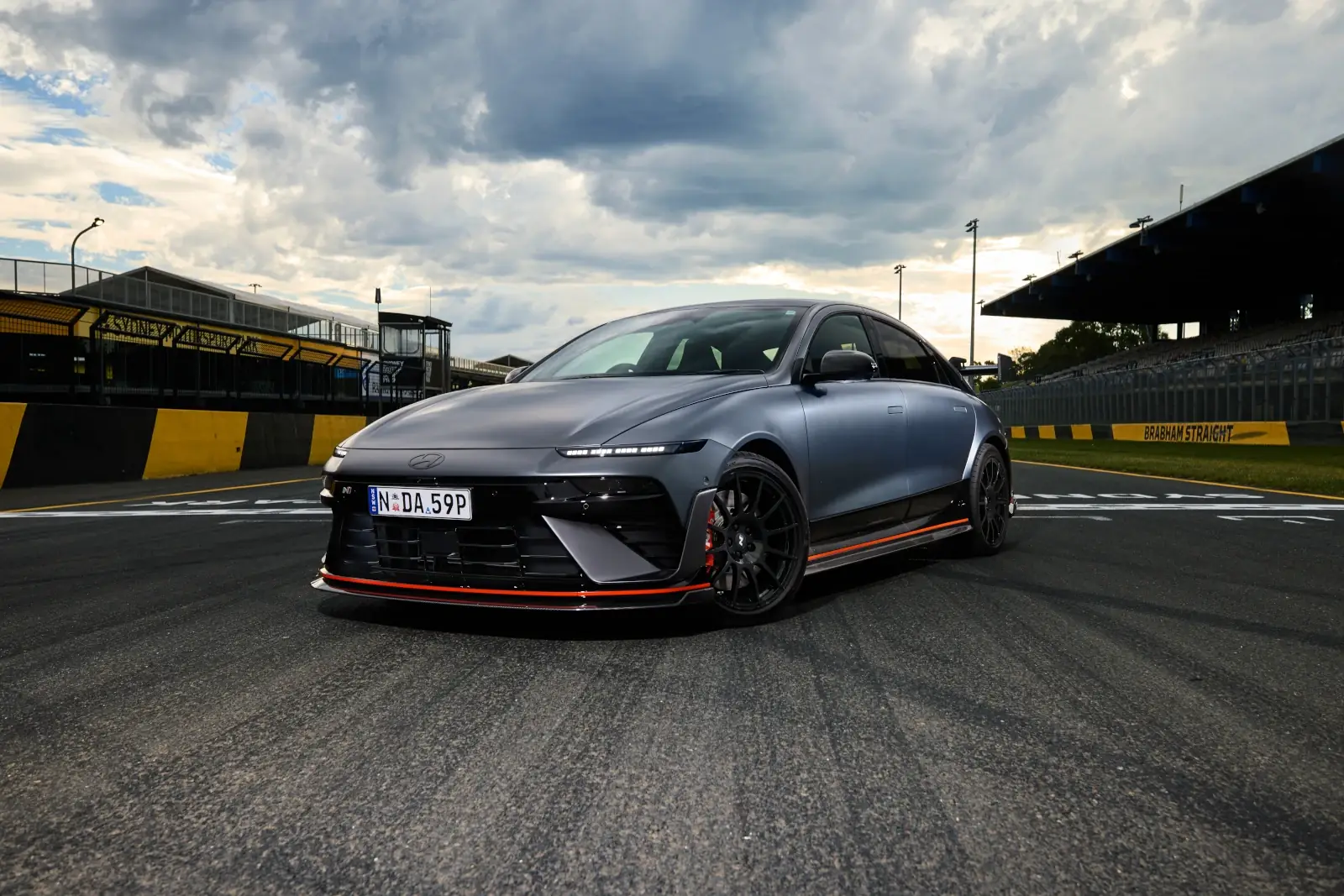
Two years after launching the widely acclaimed Ioniq 5 N, Hyundai has upped the ante again with their latest N division performance EV, the Ioniq 6 N. Featuring the same plethora of track-focused drive modes as the 5 N, plus 2 years of additional testing and development, the Ioniq 6 N improves on its predecessor in many ways.
For starters, the Ioniq 6 N is a sports sedan so it is inherently stiffer, lighter and more aerodynamic compared to the SUV shape of an Ioniq 5. Similar to the 5 N though, Hyundai has stiffened the 6 N over the regular version with increased weld points, more structural adhesives and rear bulkhead diagonal braces that boost torsional stiffness by 19.8 % alone.
The exterior receives numerous upgrades too, which both increase performance and certainly make the Ioniq 6 N unmistakable for a normal Ioniq 6. The optional N Performance carbon fibre body kit parts pictured in this article are not cheap, but they improve downforce even further and look amazing in person.

Briefly touching on specifications, the Ioniq 6 N shares the same 84 kWh battery pack and 478 kW / 770 Nm (with N Grin Boost activated) dual motor powertrain as the Ioniq 5 N. The lighter and more aerodynamic Ioniq 6 N gets up to 487 km WLTP range compared with 448 km on the 5 N.
The Ioniq 6 N also shaves 0.2 seconds off the 0 – 100 km/h time of the 5 N, achieving 3.2 seconds with N Launch Control, or 2.95 seconds with roll-out subtracted as is commonly quoted in marketing material for many performance vehicles.
Suspension in the Ioniq 6 N features stroke-sensing integrated Electronically Controlled Suspension (ECS) and an electronic Limited Slip Differential (e-LSD), both of which have been significantly updated or modified since the Ioniq 5 N. Hyundai representatives said this gives the 6 N an entirely different feel or character to the 5 N.
All of the hardware and software upgrades combine to make the Ioniq 6 N the real deal when it comes to performance EVs. It is truly a track-ready car for those who actually want to make the most of their purchase by taking it to a racetrack, and also have the money to spend on the tyres you will inevitably be chewing through.
I was lucky enough to tag team with Giles Parkinson on the recent Hyundai Ioniq 6 N launch event, and took his place for the track driving section which was located at Sydney Motorsport Park or Eastern Creek Raceway.
Even after 20 or so laps around the racetrack, I barely scratched the surface of all the options buried within the different drive modes in this car. There is clearly hours and hours worth of tweaking available to drivers who want to spend the time eking out every last bit of performance and fun out of their vehicles.

For novice track drivers like me, I found the Ioniq 6 N was very approachable. With traction control on sport mode and most things left on their default settings, I set off on my first 5-lap stint with Australia’s top seeded international rally driver, Brendan Reeves, in the passenger seat providing expert tips.
Straight away I could feel how quick the Ioniq 6 N is, with my first planting of the accelerator pedal slapping a wide grin on my face that stayed with me for the rest of the day. The first few corners also showed off the insane amount of grip available in this car, although with so much power I found it was easy to go too fast into corners and leave the braking too late.
Pressing the red N Grin Boost button on the steering wheel and flooring it down the main straight was so much fun, hitting speeds over 220 km/h before slowing down for the first corner. Unlike some powerful EVs which seem to lose oomph past 100 km/h, the Ioniq 6 N felt like it kept on pulling hard well beyond this.
Over the next few stints driving on my own, I worked on improving my braking before the corner for smoother driving, as well as trying out some of the unique modes like N e-Shift, N Pedal and N Torque Distribution. Unfortunately we weren’t allowed to try out N Drift Optimiser as we had to save the tyres for an afternoon track session, but it would be tons of fun I’m sure.
To see what the Ioniq 6 N is truly capable of, Brendan also took me for a hot lap, which demonstrated that this car really is a performance monster in the hands of a professional, very experienced driver. If you ever get a chance to drive one, or even ride in one, you won’t be disappointed.
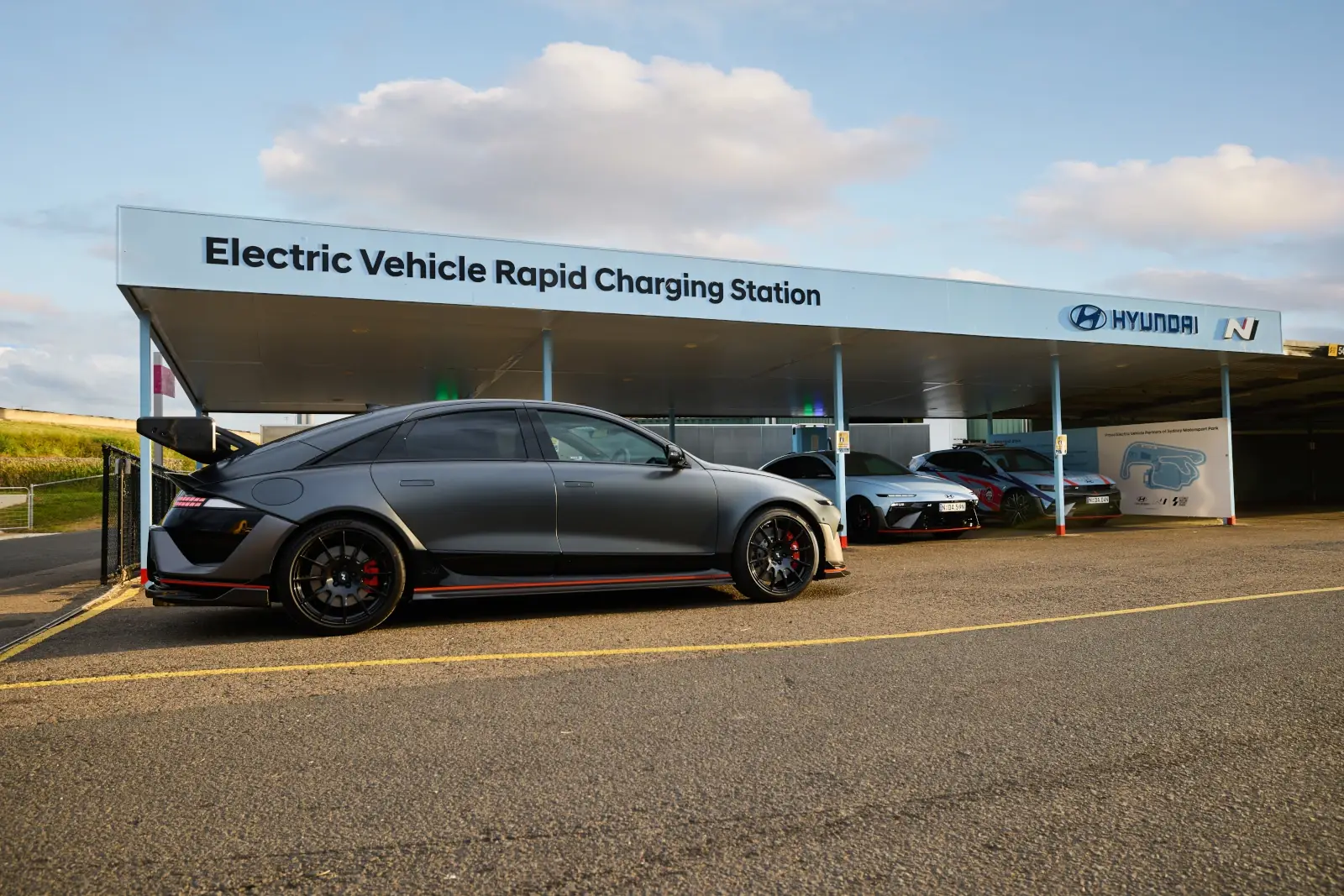
When you need to take a break, charging the Ioniq 6 N is quick due to the 800 V E-GMP architecture. Hyundai quotes 10 – 80 % charging time of 18 minutes, when connected to a 350 kW charging station. During the launch we were using roughly 15 % of the battery for every 5 lap session, for what it’s worth.
Hyundai describes the track-honed Ioniq 6 N also as a refined, comfortable everyday companion. You can read Giles Parkinson’s opinion on what it was like to drive this car on the road, although I will reserve my own judgement until a few weeks away, when I am borrowing a vehicle from Hyundai Australia for a week long review.
The Ioniq 6 N is now available to order on Hyundai’s website or through dealerships, with a starting price of $115,000 plus on-road costs. Details of the optional N Performance accessories are below.
The standard wheel and N Performance accessory wheel are both forged, and the N Performance accessory wheel is 1.5kg lighter per corner. The N Performance carbon fibre body kit is available for customers to order as individual parts, pricing below excludes fitment, which costs $600 per part:
| N Performance Part | Price (ex-fitment) |
| Carbon Fibre Rear Wing Spoiler, ASSY | $7,288.50 |
| Carbon Fibre Front Splitter, ASSY | $2,483.75 |
| Carbon Fibre Side Skirts, ASSY | $4,809.75 |
| Carbon Fibre Rear Diffuser, ASSY | $4,089.75 |
| 20-inch Lightweight Forged Alloy Wheel QTY1 | $1,096.58 |
| Underbody Turning Vane, LH | $20.79 |
| Underbody Turning Vane, RH | $20.79 |
| Carbon Fibre Wheel Cap_4EA | $223.32 |
| Door Scuff, ASSY | $824.79 |
| Total (with 4x alloy wheels) | $24,147.76 |
Downforce settings on the Ioniq 6 N – N Performance rear wing:
| Setting | Downforce |
| Positive (8 degrees) | 305 kgf @ 257km/h |
| Neutral (0 degrees) | 282 kgf @ 257km/h |
| Negative (-8 degrees) | 265 kgf @ 257km/h |
See The Driven’s detailed EV sales data here: Australian electric vehicle sales by month in 2026; by model and by brand.
Sign up for The Driven’s free daily newsletter and get the latest EV news and analysis delivered straight to your inbox.