The refreshed Tesla Model Y has already been on the road since May, and with strong sales since then it remains firmly on top of the Australian EV sales charts, comfortably outselling the BYD Sealion 7 in second place by a ratio of roughly 2 to 1.
Similar to the Model 3 refresh that occurred in 2024, if you wanted the top-spec performance model you had to be patient. Details for the new Model Y Performance were first revealed with the local launch in September, priced from $89,400 plus on-road costs.
This is a price rise of $6,500 compared to the old Model Y Performance and $20,500 more than the Long Range AWD version beneath it, but there is now a longer list of performance upgrades that we’ll explore shortly.
Keen customers who placed an order at launch should be getting their new cars before Christmas, although new orders won’t be arriving until February 2026 according to Tesla’s configurator at the time of writing.
The Driven recently had the opportunity to test out a new Model Y Performance and see how it compares against the rest of the Model Y lineup as well as other performance focused EVs.
Performance upgrades galore
So, what extra goodies does Tesla throw in for an extra $20k over the Long Range All-Wheel Drive Model Y to make it worthwhile?
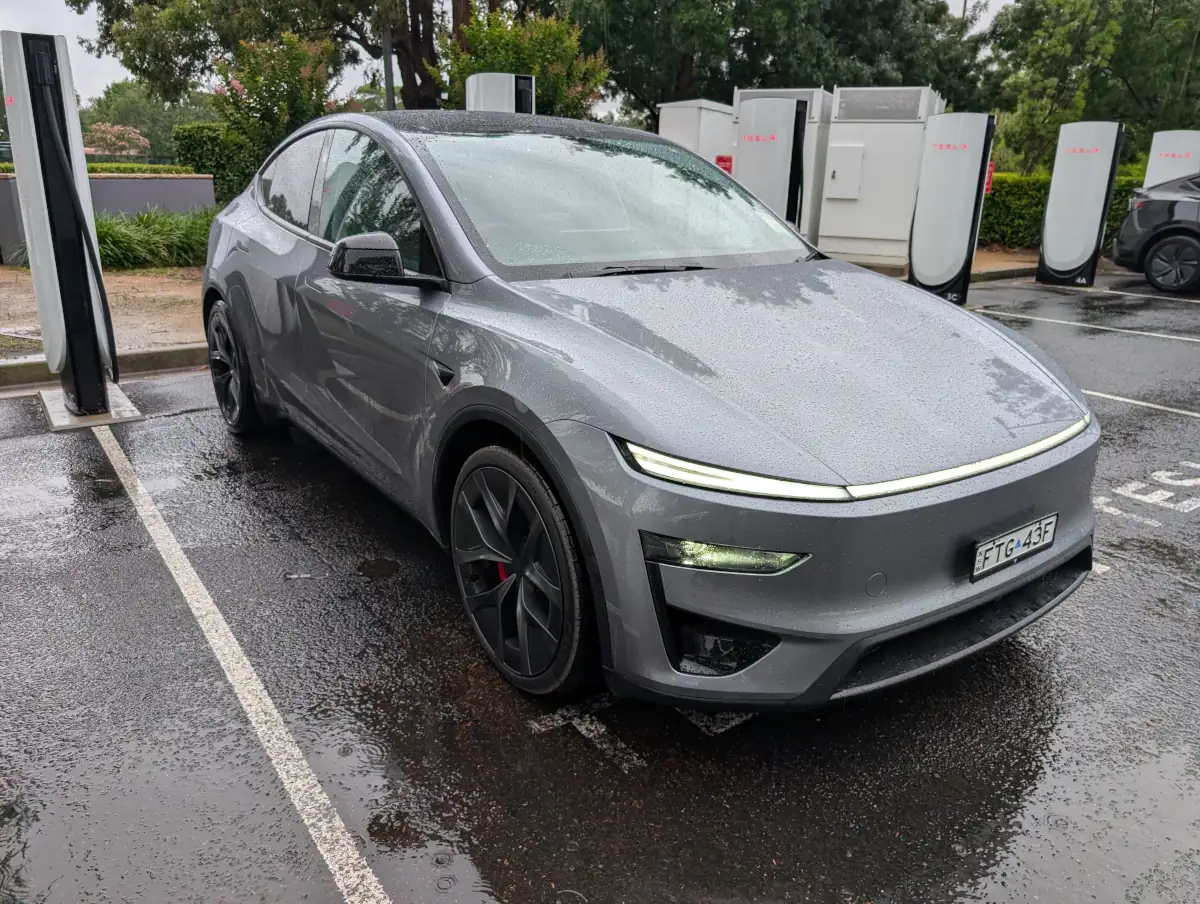
Starting on the outside, the Performance is more aggressive looking due to blacked out side mirrors, upgraded aerodynamic elements like a bigger front intake and rear diffuser as well as forged 21″ Arachnid 2.0 wheels with red performance brakes and staggered Pirelli P Zero tyres.
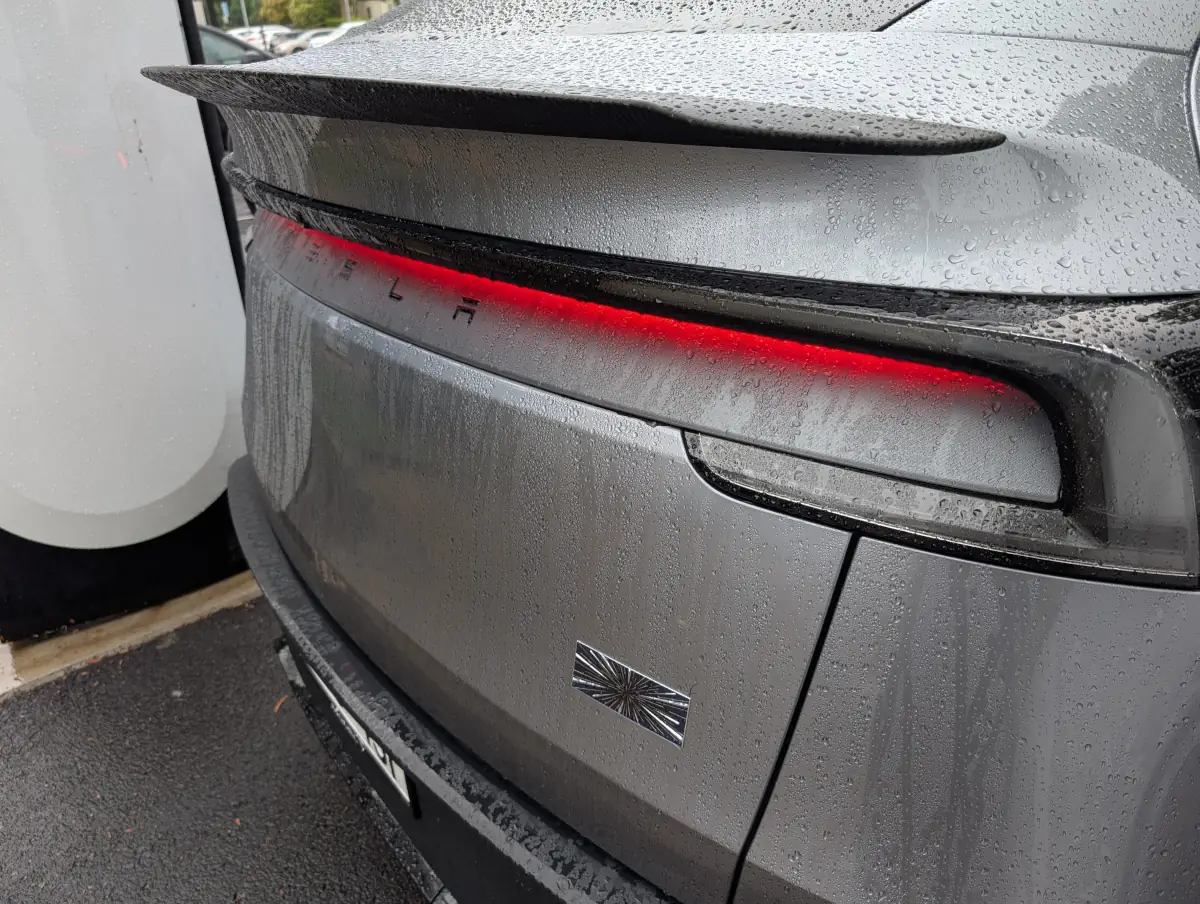
A carbon fiber spoiler on the boot, redesigned rear bumper with additional air slots behind the rear wheels and the ludicrous badge are also giveaways that you are looking at the back of a Model Y Performance. Don’t confuse the blue ludicrous badge for the red launch edition though, which looks similar.
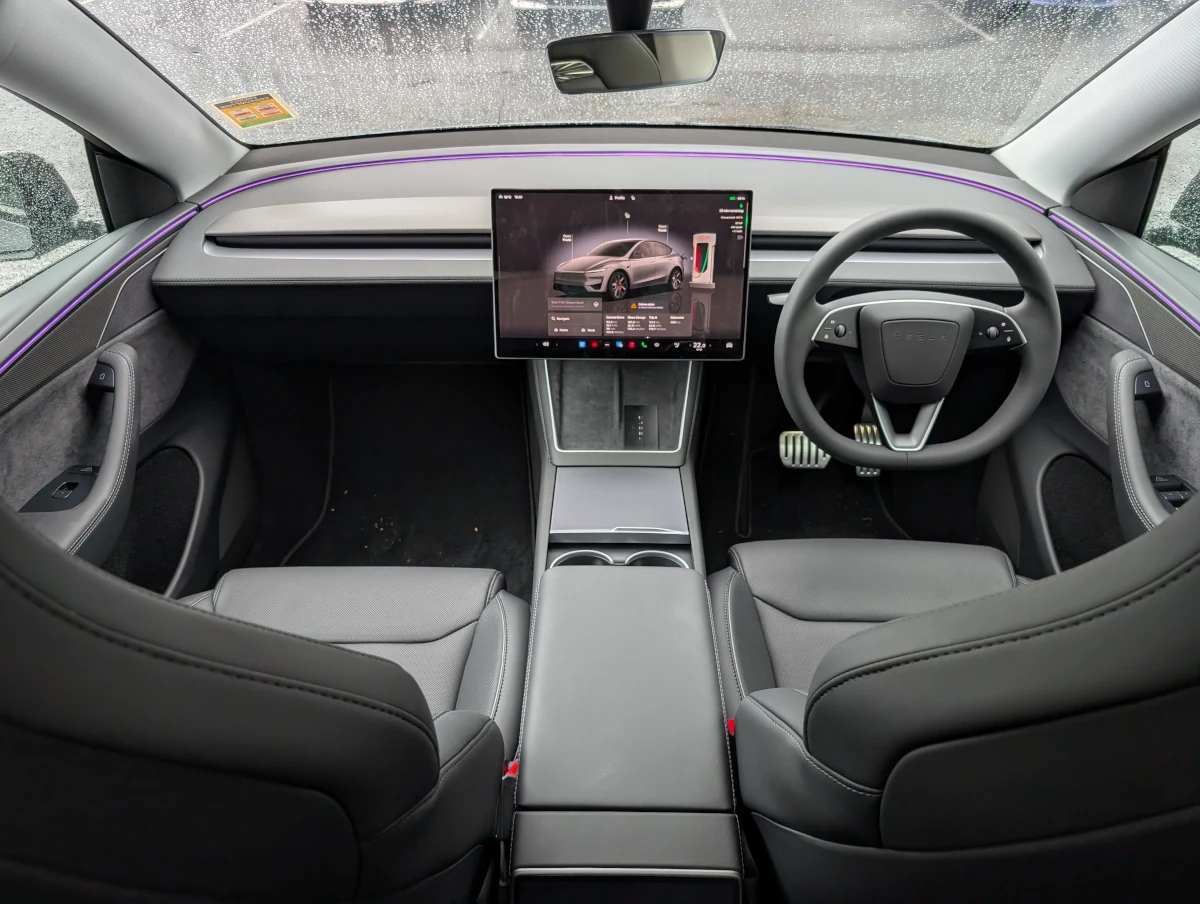
Stepping inside there are also quite a few visible upgrades, starting with performance sport seats which feature thigh extension and bolstered side support compared to the standard seats, while retaining heating and ventilation functions.
After a couple of hours driving in these seats I found they were firmer than the seats in all of the other Tesla seats I’ve tried, and ended up being a bit less comfortable as a result. The rest of my family including the kids in the back agreed, so it wasn’t just me.
Other differentiating features that are not as obvious are carbon fibre trim on the dash and door panels, metal pedals and a new 16″ first-row QHD touchscreen. The bezels on the new touchscreen are noticeably smaller and it does appear crisper, although the difference is not huge as the original screens are already clear and responsive.
Just like the refreshed Model 3 Performance, the Model Y Performance includes a new performance powertrain and adaptive suspension. Headline figures are 0-100 km/h in 3.5 seconds, an improvement of 0.2 seconds, and a top speed of 250 km/h which is 49 km/h faster than other Model Y variants.
With all of this performance, WLTP range drops marginally from 600 km in the Long Range down to 580 km in the Performance, which is impressive given performance EVs from most other brands take a big range hit compared to their non-performance versions.
Adaptive suspension comes with 2 different modes – Standard and Sport, selectable through the Dynamics page in the settings menu. This page also contains 3 acceleration modes – Chill, Standard and Insane, plus other driving adjustments like steering feel and traction control settings for slippery surfaces or off-road assistance.
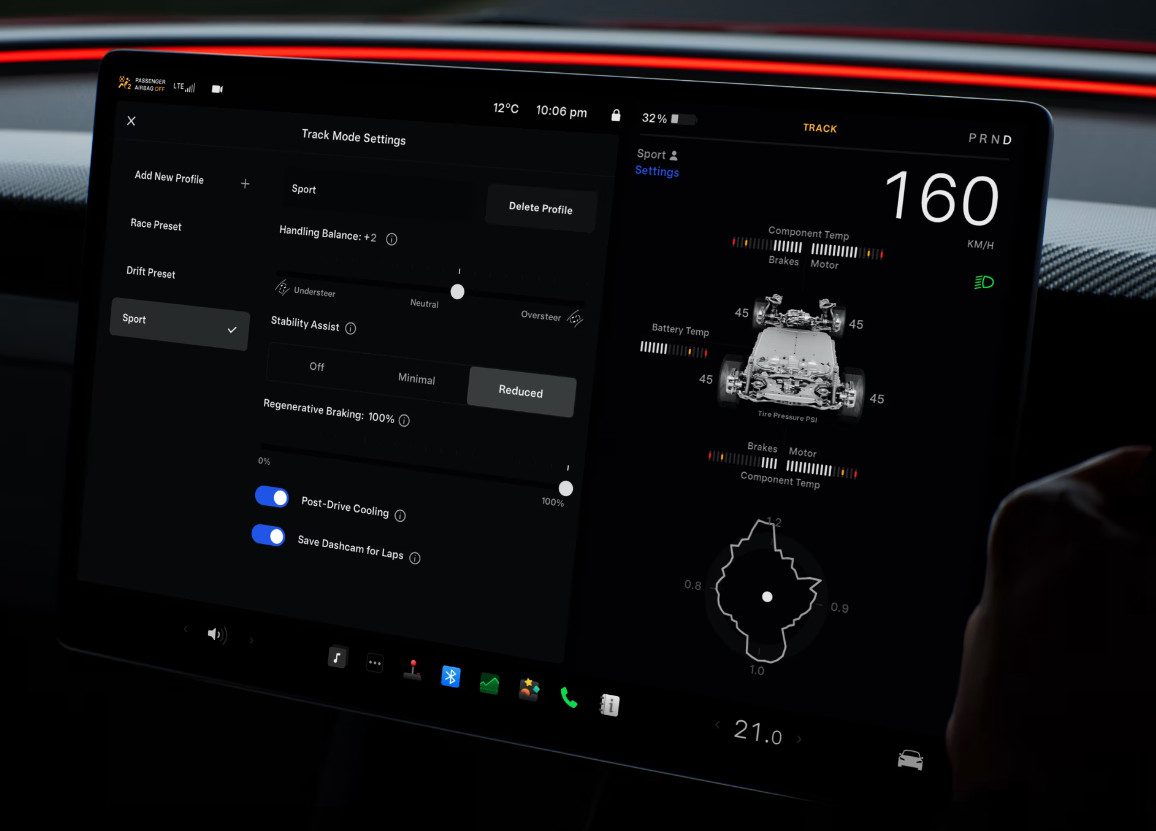
Track Mode V3 and launch mode are also unique to Tesla Performance vehicles. Track Mode allows drivers to control the balance of power between front and rear motors, reduce or completely disable stability assist as well as view detailed information on component temperatures such as the battery and motors in real time.
While not as comprehensive as the unique drive modes in Hyundai’s Ioniq 5 N or upcoming Ioniq 6 N, there is more adjustment in the Model Y Performance than other performance EVs, and it should satisfy everyone apart from the most hardcore enthusiasts looking for a more track focused car.
Something else I noticed while playing with Tesla’s configurator is there is no extra cost for any of the exterior paint colours on the Model Y Performance, unlike the other variants which cost between $1,500 and $2,600 extra if you want something other than white.
The list of upgrades and features in the new Model Y Performance is comprehensive and covers many different aspects of the car. All up, there is now a much bigger jump from the Long Range to the Performance than the old model, which more than justifies the larger price gap in my opinion.
Possibly of interest to some, the Model Y Performance is the first Tesla in Australia to be sourced from Gigafactory Berlin, confirmed by its VIN starting with XP7 as opposed to LRW for Gigafactory Shanghai or 5YJ for cars built in Fremont, California.
There were no discernable quality differences that I could see or feel inside the vehicle or out compared with recently made examples from China, although it could also help to explain a slightly higher price than the old model.
Still no bi-directional charging for Australia, yet
Another key feature I was hoping would debut with this car is bidirectional charging. In the US, Tesla has already enabled vehicle to load (V2L) capability on the new Model Y Performance, with vehicle to home/grid (V2H/G) support coming in the future.
I asked Tesla Australia if or when we will see bi-directional charging enabled locally, or when it may be coming to other models. The response I got was, “Not available in Australia, yet” so my interpretation is that we will see these features arrive here at some point, we just don’t know when.
Model 3 Performance more popular than Model Y Performance
Thinking about who might buy the Model Y Performance and how popular Tesla’s performance variants are in general, I decided to analyse the EV sales data we get from the Electric Vehicle Council to see how many performance variants Tesla sells for each of its models.
The first thing that jumped out is the old Model Y Performance has not been very popular at all this year. With only 45 sales up to the end of November 2025, it represents just 0.2 % of Model Y variants sold.
| Variant | Count | Percentage |
| Model Y Rear-Wheel Drive | 12713 | 62.8 % |
| Model Y Long Range AWD | 7483 | 37 % |
| Model Y Performance | 45 | 0.2 % |
| Model Y 2025 sales | 20241 | |
However, this is not necessarily a true representation of popularity as the Model Y changeover and delayed introduction of the Model Y Performance variant must be taken into account. During this period Tesla was selling off inventory stock of the outgoing model which could have skewed the data as well.
Looking at 2024 data that does not have these abnormalities, Model Y Performance made up a more significant 3.2 % of sales with 672 units out of 21,253 in total last year.
Still, the Model 3 Performance is consistently much more popular in general with 679 sales in 2025 accounting for 11.3 % of all Model 3s sold. During 2024 the Model 3 Performance made up 7.1 % of sales with 1,217 units out of 17,094 in total.
| Variant | Count | Percentage |
| Model 3 Rear-Wheel Drive | 4091 | 67.8 % |
| Model 3 Long Range AWD | 1260 | 20.9 % |
| Model 3 Performance | 679 | 11.3 % |
| Model 3 2025 sales | 6030 | |
Well balanced and much improved driving experience
The list of upgrades found in the new Model Y Performance basically mirrors that of the refreshed Model 3 Performance, so it was no surprise the driving experience has also improved in all of the same areas I discovered while testing that car 18 months ago.
Acceleration in the Model Y Performance is instantaneous, as you would expect from a Tesla performance vehicle, with no detectable lag in the accelerator pedal. It may not feel much faster off the line than the old version, but the new performance motors seem to retain more oomph at higher speeds.
Standard acceleration mode is a good balance for everyday use, easily quicker than most other cars for when you don’t need supercar-level Insane mode. Personally I don’t like Chill as it feels like you are hamstringing the car, so it is nice to have a middle option available for daily driving.
Insane acceleration also unlocks launch mode, where you hold both pedals down hard and release the brake to take off, triggering an instant grin the few times I tried it.
The Model Y Performance suspension benefits from both the refreshed Model Y setup as well as its unique adaptive suspension, which combine to give the car more predictable and comfortable handling compared to the previous version that was firm with no software adjustments available.
In Standard mode the suspension softens up and irons out bumpy city roads noticeably better than Sport mode, although Sport still feels comfortable enough that you could use it all the time. Overall the suspension offers a good balanced feel compared to some other performance EVs which have very firm or uncomfortable suspension.
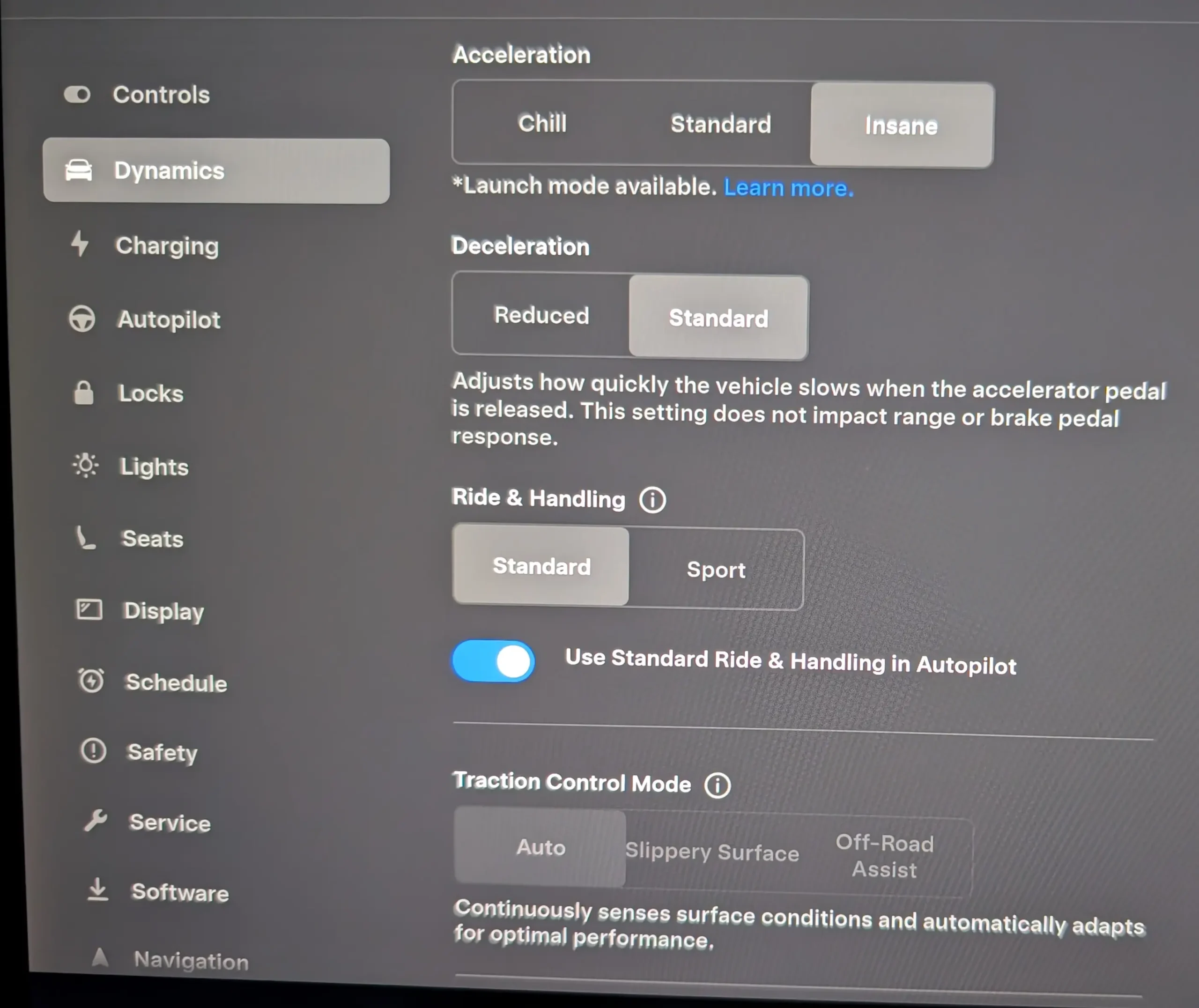
There is also a setting to use Standard handling in Autopilot or FSD (Supervised) so you can relax your arms and legs a bit more if you hit some traffic or a boring stretch of road, even if you can’t fully relax and take your eyes off the road yet.
One of the days I went out testing the Model Y Performance on familiar back roads was a dreary wet one, but the car was not fazed. The updated suspension and Pirelli P Zero tyres still provided plenty of grip, along with confidence inspiring traction control that keeps things in check without limiting power longer than necessary.
A couple of years ago I learned first hand just how much work traction control does in a powerful EV, when I had the opportunity to switch it off using track mode in my own car during a driving skills course. I very quickly ended up sideways on the wet skid pan, even without completely flooring the accelerator.
Tesla makes very efficient vehicles, and the Model Y Performance is no exception. During a weekend away with the family down the south coast, we used 148 Wh/km to cover nearly 350 km at mostly highway speeds with a fully loaded car. Somehow this is even better than what I measured with the Model 3 Performance which is impressive.
No Full Self-Driving (Supervised) updates yet
Tesla seems to equip all of their loan cars with Full Self-Driving (Supervised) now, but unfortunately there have been no updates for Australia since it launched with v13.2.9 in September. This means we still don’t have access to updated parking features that should go a long way to resolving one of the biggest flaws I came across in my testing last time.
I did get to spend more time using FSD (Supervised) in different situations though, including a much longer drive on the highway than I had tested previously. Overall it makes highway driving effortless, a huge step up from basic Autopilot in terms of smoothness and competency.
For example, FSD (Supervised) handles cars merging onto the highway next to you without problems whereas Autopilot sometimes freaks out and phantom brakes in this situation. FSD (Supervised) has much improved spatial awareness as well as the ability to correctly predict what other cars will do and make suitable speed adjustments or change lanes if necessary.
For a more detailed look into my experience with FSD (Supervised), see Tesla FSD Supervised review: Truly mind blowing, but not flawless.
Just as practical with minimal compromises
With any car there are some compromises, and the Model Y Performance is no different, although they are minimal in this case. In general you are not missing out on too much comfort or convenience which highlights the versatility of electric vehicles, especially among those offering this much performance and practicality combined.
The modified suspension in the Model Y Performance drops the car 16 mm lower, resulting in 151 mm ground clearance vs 167 mm, which could potentially make a difference for some people.
As mentioned above, I found the front sports seats were a bit firm and not as comfortable on longer drives as all of the other Tesla seats I’ve experienced. Rear seat passengers also miss out on map pockets, but the door bins are generously sized to make up for lost space.
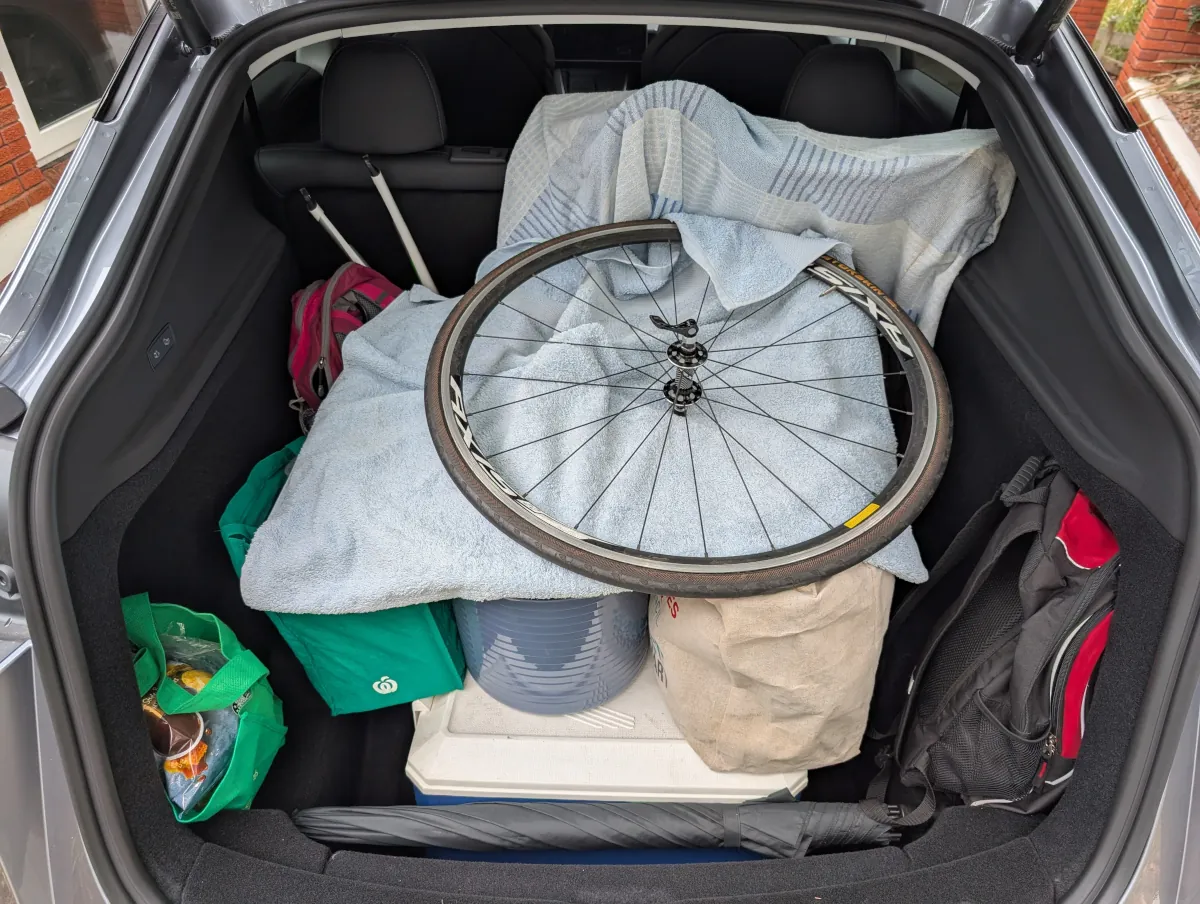
Apart from these minor changes which feel like nitpicking, you still get everything that makes other versions of the new Model Y such a well rounded package overall. To illustrate one aspect that I appreciated in particular, the practical boot easily swallowed everything for our weekend away including a bike, wheels off this time.
Conclusion
The new Model Y Performance is a substantial improvement over the previous generation vehicle, benefitting from the refreshed Model Y platform combined with a long list of performance upgrades unique to the Performance trim.
Well tuned adaptive suspension and the new performance motors make it a very fun and capable car to drive when the opportunity arises, without losing the ability to double as a practical and efficient family vehicle whenever you need it to.
Model Y Performance will probably remain the least popular vehicle in Tesla’s lineup simply due to the pricetag, but it should hopefully prove more popular than it has been this year in its new and improved form.
Table of key specifications for Tesla Model Y Performance
Note that some of these figures are estimated from available data, as Tesla does not publish official numbers for battery size, power and torque.
| Starting price | $89,400, plus on-road costs | ||
| Paint colours and options | 6 exterior colours, all included:
|
||
| Battery size | 82 kWh gross, 79 kWh usable (estimated) | ||
| Range | 580 km WLTP | ||
| Driven wheels | All-wheel drive | ||
| Power / Torque | 343 kW / 741 Nm (estimated) | ||
| Maximum charging speed | 11 kW AC, 250 kW DC | ||
| Charging time | 7 kW AC (0 – 100 %) – 12 hours 45 minutes 11 kW AC (0 – 100 %) – 8 hours 30 minutes 50 kW DC (10 – 80 %) – 78 minutes 250 kW DC (10 – 80 %) – 29 minutes |
||
| Bidirectional charging | V2L offered in the US, not here yet | ||
| Exterior dimensions | Length: 4,796 mm Width, mirrors folded: 1,982 mmWidth, mirrors extended: 2,129 mm Height: 1,611 mm Wheelbase: 2,890 mm Ground clearance: 151 mm |
||
| Kerb mass | 2,033 kg | ||
| Storage space | Frunk: 116 L Boot, rear seats up: 822 L Boot rear seats folded: 2,022 L |
||
| Service interval | As needed, see Tesla recommendations | ||