One of the most exciting things I saw at EVS in Gothenburg this year was the We Drive Solar project to make V2G technology available to all through V2G enable car share vehicles.
As someone who uses car-sharing services, I was excited by the prospect of being able to and benefit from V2G without owning an EV.
Now, this technology is a step closer to launch in Australia. Portia Rooney, founder of Net Zero Engineering Solutions (NZES), has received an iMove Cooperative Research Centre grant for ‘Utrecht to Australia: Unlocking Scalable, Low-Cost V2G’, a project that aims to adapt Europe’s leading vehicle-to-grid model for Australian conditions.
AC V2X promises to be significantly cheaper than DC as it leverages the inverters already present in vehicles. There are however a number of technical and regulatory challenges to be resolved.
The current Australian inverter standards, AS4777, do not envisage an inverter that can be moved around and be enabled by connecting to a suitable wallbox. NZES has set out to solve these challenges, unlocking the cost advantages that will lead to large scale uptake of the technology.
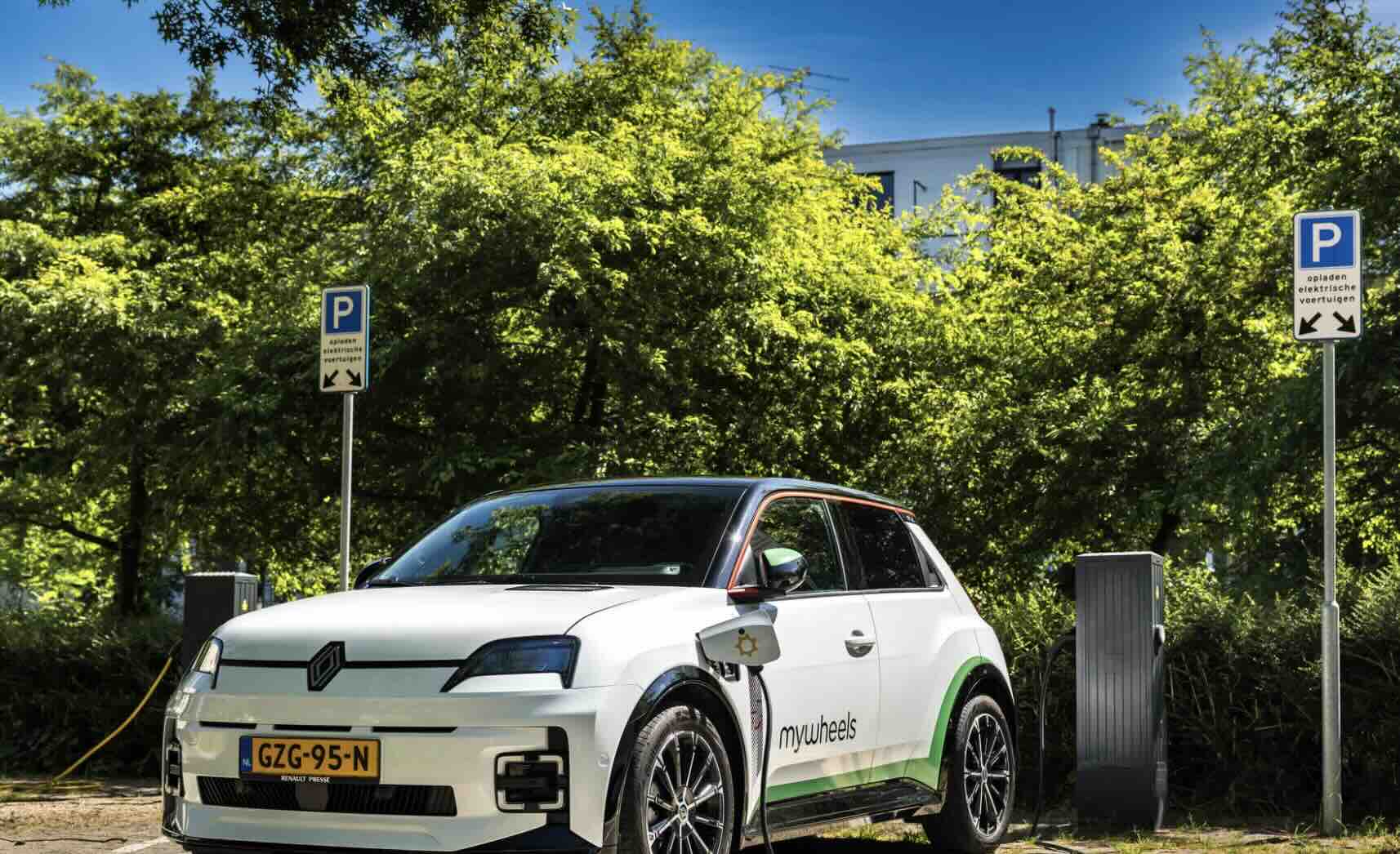
In April 2025, Utrecht became Europe’s first city to launch a large-scale V2G car-sharing service with 500 Renault 5 electric vehicles operated by MyWheels and charged through We Drive Solar’s AC bidirectional chargers. The fleet can provide 10% of the flexibility needed to balance solar and wind energy in a region where 35% of rooftops have solar panels.
We Drive Solar has solved a number of the key technical barriers to the mass adoption of AC V2G, not just in homes but in the public realm. NZES seeks to accelerate access to AC V2G by learning from what has been achieved in Utrecht and adapting these learnings to the Australian technical and regulatory environment.
NZES has been working to bring We Drive Solar’s AC V2G charger and Renault 5 combination to Australia. This new funding from iMove provides support to accelerate and de-risk the process, to rapidly unlock this key technology for drivers, OEMs and energy companies.
The Renault 5 needs homologation for Australian grid codes, and AS4777.2 may require amendments to properly support AC V2G technology.
The iMove-funded project will:
- Attract EV manufacturers to offer AC V2G solutions in Australia
- Identify gaps between AS4777.2 and EV manufacturers’ capability to comply for AC V2G
- Leverage Australia’s potential hosting of COP31 to accelerate V2G deployment nationally and internationally
NZES founder Portia Rooney has received letters of support from Origin, AGL, EnergyAustralia, Amber Electric, Essential Energy, EVX, ChargePost, and the RAA for related work on making V2G accessible to the more than 50% of Australians who commute or lack off-street parking.
By learning from Utrecht’s collaborative approach—where Dutch grid operators redefined grid codes to support AC V2G—Australia can unlock affordable, scalable bidirectional charging for both private vehicle owners and car-sharing services.