A few days before Christmas, the federal government quietly announced the process for introducing fuel quality and emissions standards to the equivalent of Euro 6d. As I noted back in 2022, this is the first two of the three steps required for Australia to get a meaningful Fuel Efficiency Standard (FES).
Adopting Euro 6d is welcome move, especially as the previous federal government had suggested it should not happen until 2027 in order to “provide refineries with certainty for major investment decisions and allows them to plan workplace arrangements.”
(This is by the way in spite of those same oil companies fully understanding how to plan and implement the necessary changes, given they did so in overseas markets nearly a decade ago).
That ‘reasoning’ by the way was submitted in response to the draft regulatory impact statement ‘Light Vehicle Emission Standards for Cleaner Air’. Sadly, once the public consultation period for that document ended in Feb 2021, not a lot happened … unless you count a change in government in May that year.
Now, after a hiatus of almost three years since the closure of public submissions, the current federal government has finally released their response.
From December 2025, a new set of Australian Design Rules (ADRs) for light vehicle noxious emissions will come into place. On one hand, it means we will move from the old Euro 5 (ADR 79/04) to a best-practice standard, based on the European ‘Euro 6d’ ones for fuel quality and tailpipe pollution. (Tables 1 and 2).

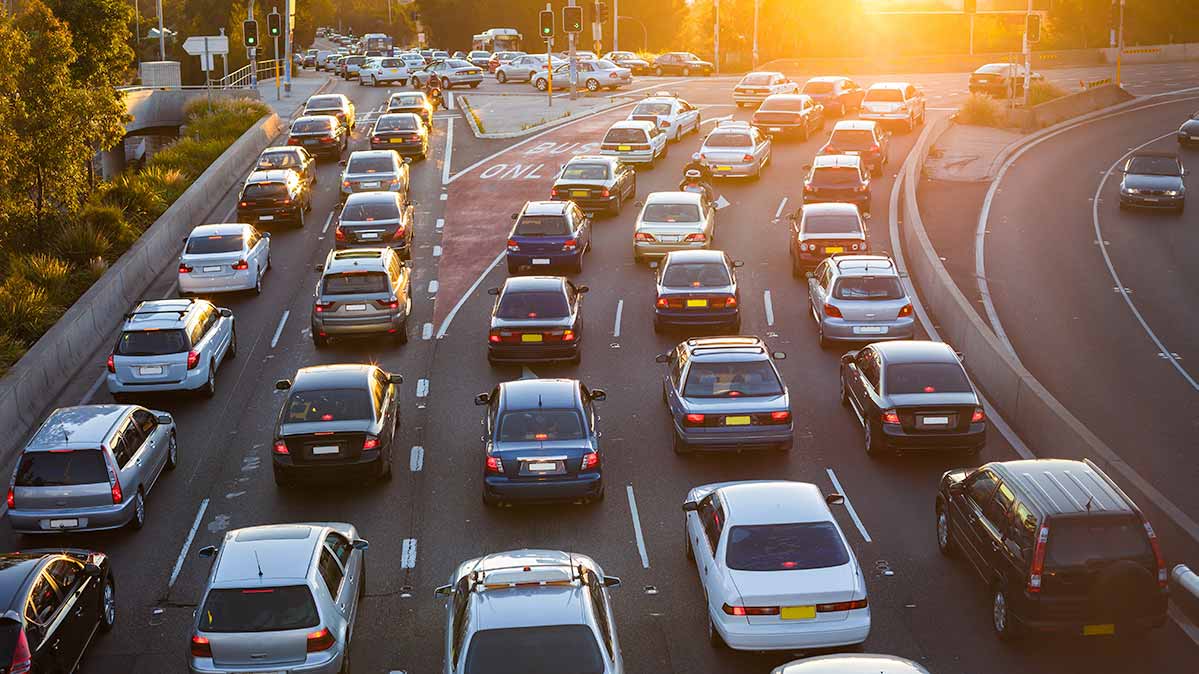
As such, we will be making a giant leap forward in enabling the importation of the less polluting and more fuel-efficient internal combustion engine (ICE) passenger and light commercial vehicles already available elsewhere.
On the other hand, the move will be a somewhat drawn-out affair. The fuel quality and emissions standards won’t begin to apply until December 1st, 2025, with the emissions standards only applying to new models brought in after that date.
Existing models from before that date will have until July 1st 2028 before their emissions must also comply. This means the supply of more polluting vehicles will only begin reducing at the end of 2025, and we won’t see the last sales of new vehicles with higher emissions until July 2028.
Also, the government’s webpage is explicit that the new ADRs do not cover greenhouse gas emissions or fuel consumption:
“The new ADRs do not set a limit on CO2 emissions and the emission control technologies required to meet the new ADRs (such as catalysts and particle filters) will not directly improve fuel efficiency or reduce CO2 emissions. A separate process is currently underway to design an Australian fuel efficiency standard to reduce the average CO2 emissions from new light vehicles supplied to the Australian market.”
That part is what comprises the third stage that I mentioned earlier: setting a limit on greenhouse gas emissions. What the limits are – and in particular, how they are enforced – are key to creating an effective FES.
As I wrote in that 2022 article: there are several ways that CO2 emissions can be limited. It can be directly by setting CO2 emissions limits, indirectly through fuel economy/consumption (L/100km) limits, or a combination of these.
Whichever mechanism/s are chosen to enforce greenhouse gas reductions, the key point for these standards (commonly lumped under the term ‘fuel efficiency standards, or FES) is they are mandated and come with ‘teeth’. In Europe, these teeth are based on deriving credits by doing better than the standards, as well as fines for doing worse.
Part of an effective FES also includes defining a mechanism for continually lowering the defined greenhouse gas limits to reach ‘net zero’ by a target date. By doing so, it becomes increasingly difficult for ICE vehicles to meet them – meaning EVs (PHEVs and eventually BEVs) become increasing favoured as the best way to meet the targets.
Setting lower CO2 emissions at the start that are coupled to a faster reduction schedule will favour a faster BEV based transition. Higher starting levels for CO2 and a slower reductions path will allow a longer period for PHEVs to be included in the reduction process before BEVs predominate.
As I and others have written previously, there are multiple issues around whether PHEVs are the interim stage they are touted to be, or a misleading dead-end in the path to net zero. A properly constructed FES is therefore vital to ensure Australia does not go down an extended PHEV dead-end.
So this brings us to the big questions:
- “When will Australia finally get a Fuel Efficiency Standard?” and
- “Will it be strong enough?”
Now we have a pathway to world-standard fuel quality and pollution controls, it would seem we are getting closer to a Fuel Efficiency Standard. On the other hand, with the recent announcement of yet another enquiry into how to plan for the EV Transition, it would appear the political difficulties involved in coming up with a suitably strong FES are, yet again, causing it to be punted down the road.