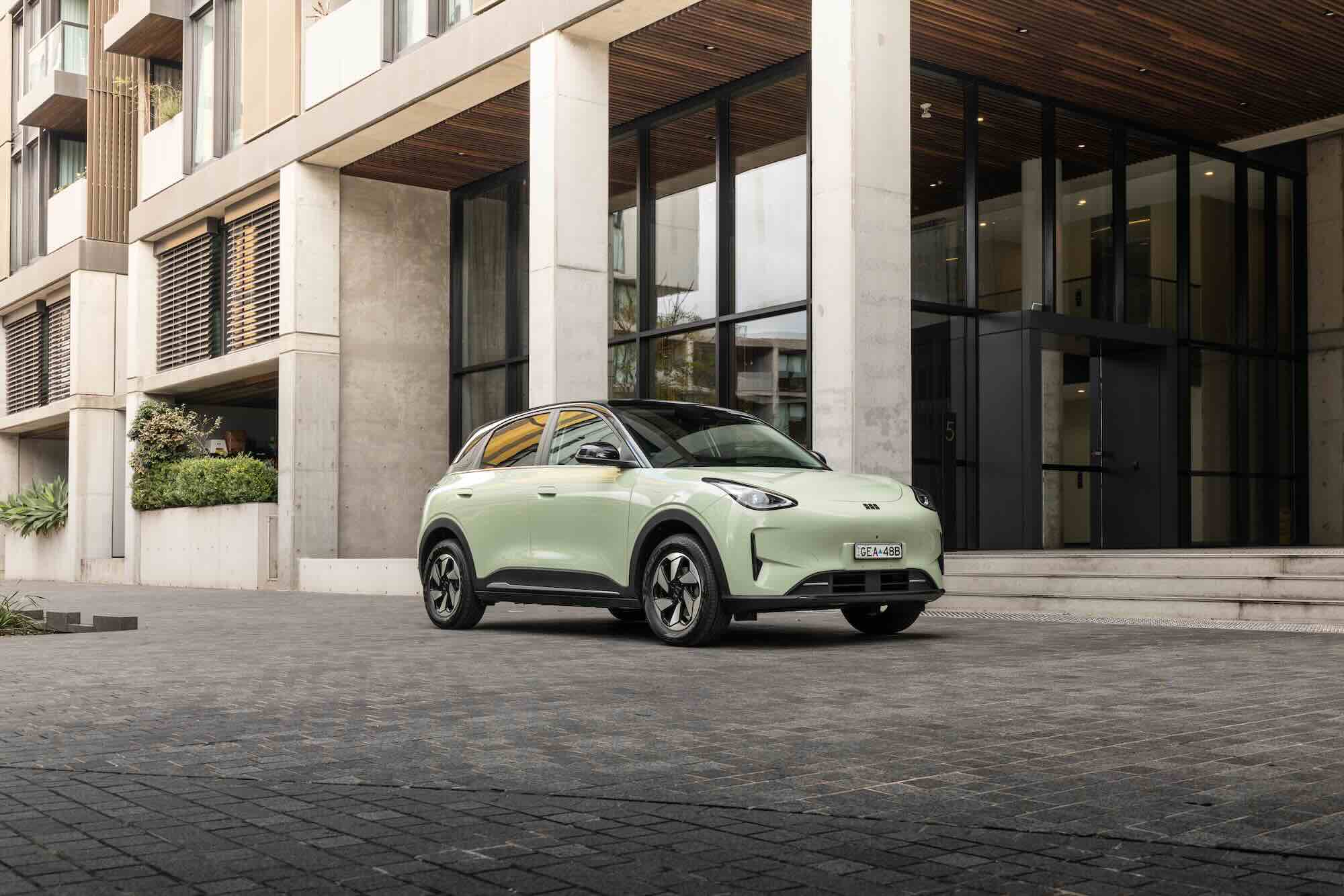
Australia’s electric car market has spent years waiting for genuinely affordable EVs. Now they’re beginning to arrive quickly enough that simply being cheap is no longer sufficient. The Geely EX2 is the latest example.
Starting at $26,490 before on-road costs, it is among the cheapest new electric cars in Australia. The longer-range EX2 Inspire that we tested at the Australian launch last week is $30,990 before on-roads.
On paper, there is plenty to attract attention. It has a rear-wheel drive, independent rear suspension, a large boot, a 70-litre frunk and a long list of standard technology.
But there are also some compromises behind that price. The cheapest EX2 travels just 252km on the WLTP cycle, neither version is particularly powerful, DC fast charging tops out at 80kW and the more desirable Inspire pushes the price beyond $30,000 before on-road costs.
So is the EX2 actually a breakthrough affordable EV? The answer is complicated.
Geely offers the EX2 in two variants. The $26,490 Complete gets a 35.35kWh lithium iron phosphate battery and rear-mounted electric motor producing just 60kW and 150Nm. Its WLTP driving range is 252km. Spend another $4,500 on the Inspire and battery capacity increases to 47.14kWh, power rises to 85kW and range improves considerably to 345km WLTP. Torque remains unchanged at 150Nm.
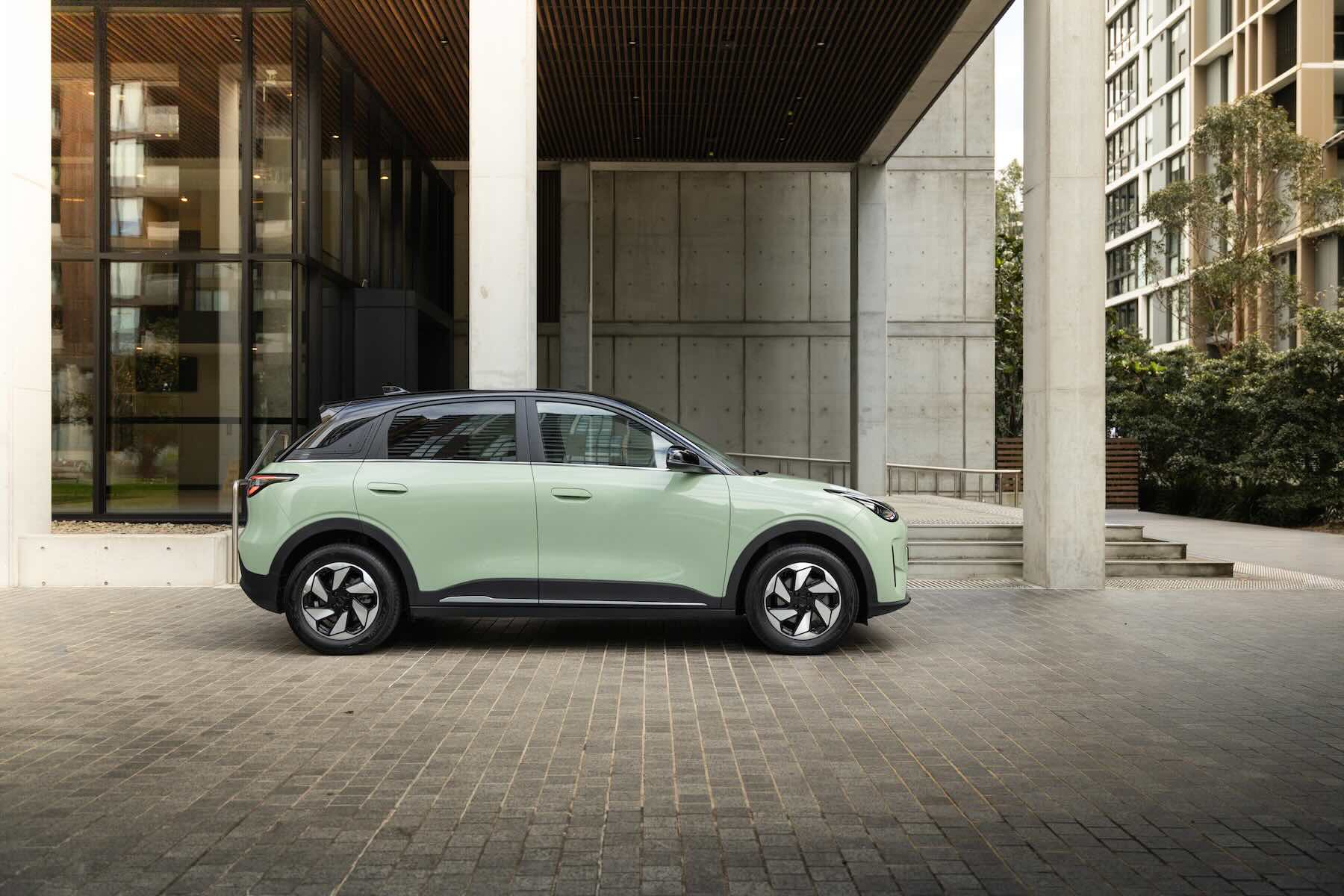
The price of the Complete is obviously the headline grabber, but its specifications also raise the question of how many Australians will actually choose it.
A 252km WLTP range is adequate for an urban commuter or second car, particularly if it can be charged at home. But it places obvious limitations on longer trips, and real-world range will inevitably be lower under some conditions.
The Inspire’s extra 93km makes it a considerably more versatile proposition, although at $30,990 before on-roads it also finds itself competing – rather than standing out – against a growing number of affordable EV hatchbacks like GAC’s Aion UT, BYD’s Atto 1, MG4, GWM Ora, and Hyundai’s Inster. That’s indicative of how quickly this part of the market is changing.
For a full rundown of all available EV models in Australia, please go to our Compare EVs page here.
One of the more interesting engineering choices is the rear-wheel-drive layout. While not unprecedented among electric hatchbacks, most of the EX2’s small-EV rivals are front-wheel drive. Geely says moving the drive unit to the rear frees up space at the front for greater steering rack travel, allowing a 41-degree steering angle and contributing to the EX2’s very tight 9.9-metre turning circle.
Personally, I’m also partial to the rear-wheel-drive layout. It doesn’t turn the EX2 into a sports car (85kW makes sure of that), but there’s something pleasantly natural about the way it drives, with the rear wheels doing the propulsion and the fronts left to concentrate on steering.
Performance expectations should be kept under control. The Inspire produces only 85kW and takes 11.5 seconds to reach 100km/h. The 60kW Complete needs a leisurely 14.2 seconds. Around town however, the modest numbers matter less. The immediate response of the electric motor makes the Inspire feel sufficiently eager away from intersections, and power delivery is predictable rather than unnecessarily aggressive.
The EX2 also feels small from behind the wheel. Steering is light, possibly too light for my liking, but the 9.9-metre turning circle makes U-turns and tight car parks remarkably easy. I spent much of the launch drive in Sport mode, which sharpens the accelerator and steering response and gave the EX2 a bit more weight and immediacy. It was my preferred setup, particularly once we left the city and headed onto motorways and winding rural roads.
Geely has also fitted independent multi-link rear suspension rather than the cheaper torsion-beam arrangement common in this segment. Australian cars have received a local-market ride and handling tune developed with Geely Technology Europe, formerly the Lotus Tech Innovation Centre. As a result, the suspension is reasonably well resolved, and deals with typical suburban roads without the brittle low-speed ride that can affect some inexpensive EVs carrying a heavy battery underneath them.
But neither the rear-wheel-drive layout nor the Lotus-adjacent development story transforms the EX2 into something overtly sporting. This remains very much an urban hatchback, and arguably benefits more from being comfortable and manoeuvrable than it would from pretending otherwise.
The EX2 measures 4,135mm long, 1,805mm wide and 1,580mm tall, making it genuinely compact by contemporary standards. Yet it has a surprisingly large and class-leading 375-litre boot, expanding to 1,320 litres with the rear seats folded. There’s another 70 litres beneath the bonnet, giving it a frunk considerably more useful than the charging-cable compartments offered by some EVs.
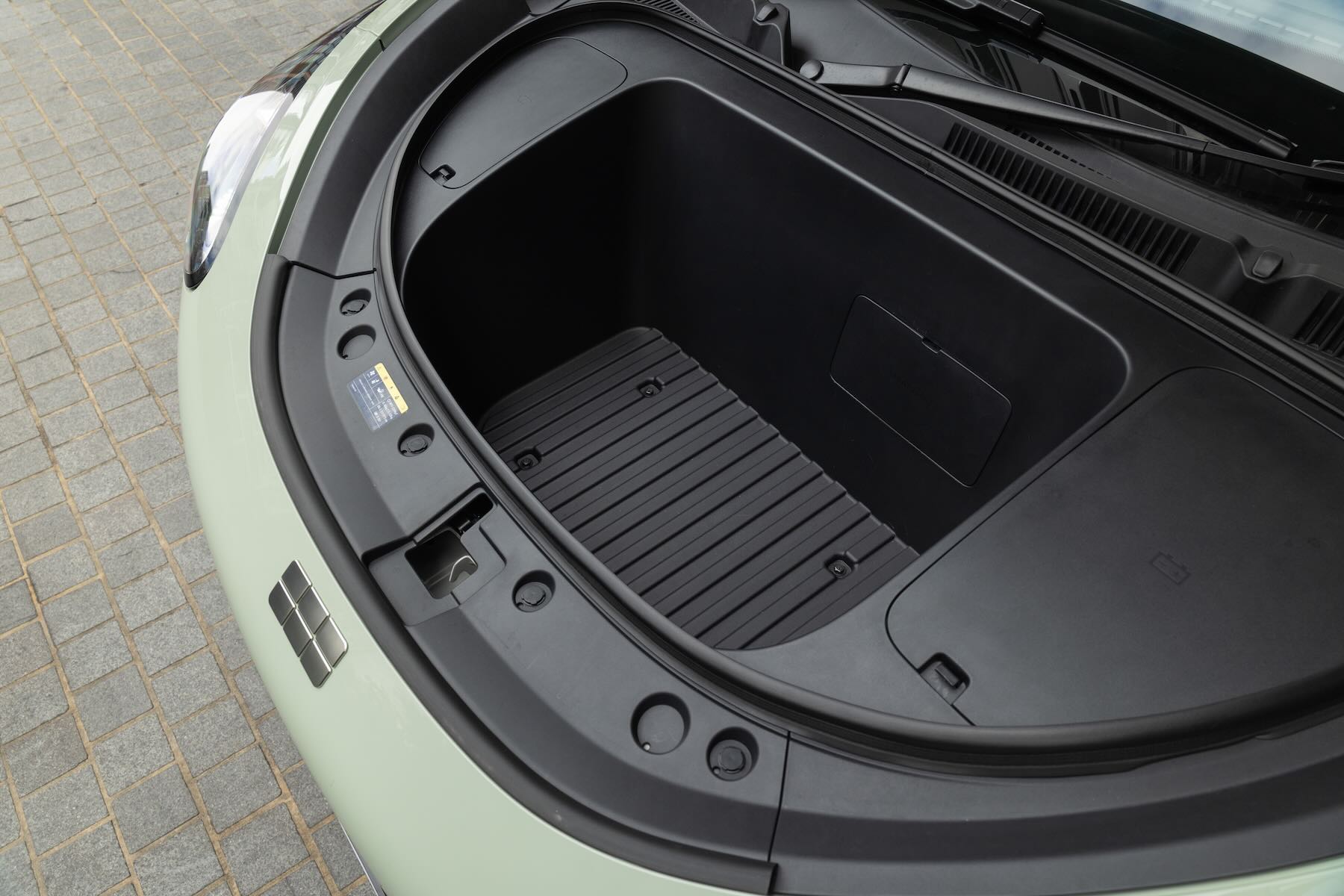
This is arguably one of the EX2’s strongest attributes, but space hasn’t appeared through magic. The rear seat isn’t as generous as the long wheelbase and tall body might initially suggest. Geely appears to have prioritised cargo capacity, and compared with something like the larger Aion UT, you notice that some of the available footprint has been devoted to the boot rather than maximising rear passenger room.
It’s not cramped, and there’s enough space for children or adults on shorter journeys, along with rear air vents and the expected ISOFIX and top-tether mounting points. But buyers deciding between these new small EVs should actually sit in the back rather than relying on exterior dimensions or claims about clever EV packaging.
There are some genuinely clever storage solutions. Geely claims more than 30 storage areas, including a drawer-style glovebox and 28 litres beneath the rear bench. Up front, the EX2 follows the increasingly familiar Chinese EV formula of putting a very large screen in a relatively inexpensive car. There’s a 14.6-inch central display alongside an 8.8-inch digital instrument cluster, with wireless Apple CarPlay and Android Auto, and in-built satellite navigation.
Both versions also get powered front seats, automatic climate control and rear air vents. The Inspire adds heated seats and steering wheel, wireless phone charging, ambient lighting, a six-speaker stereo and power tailgate.
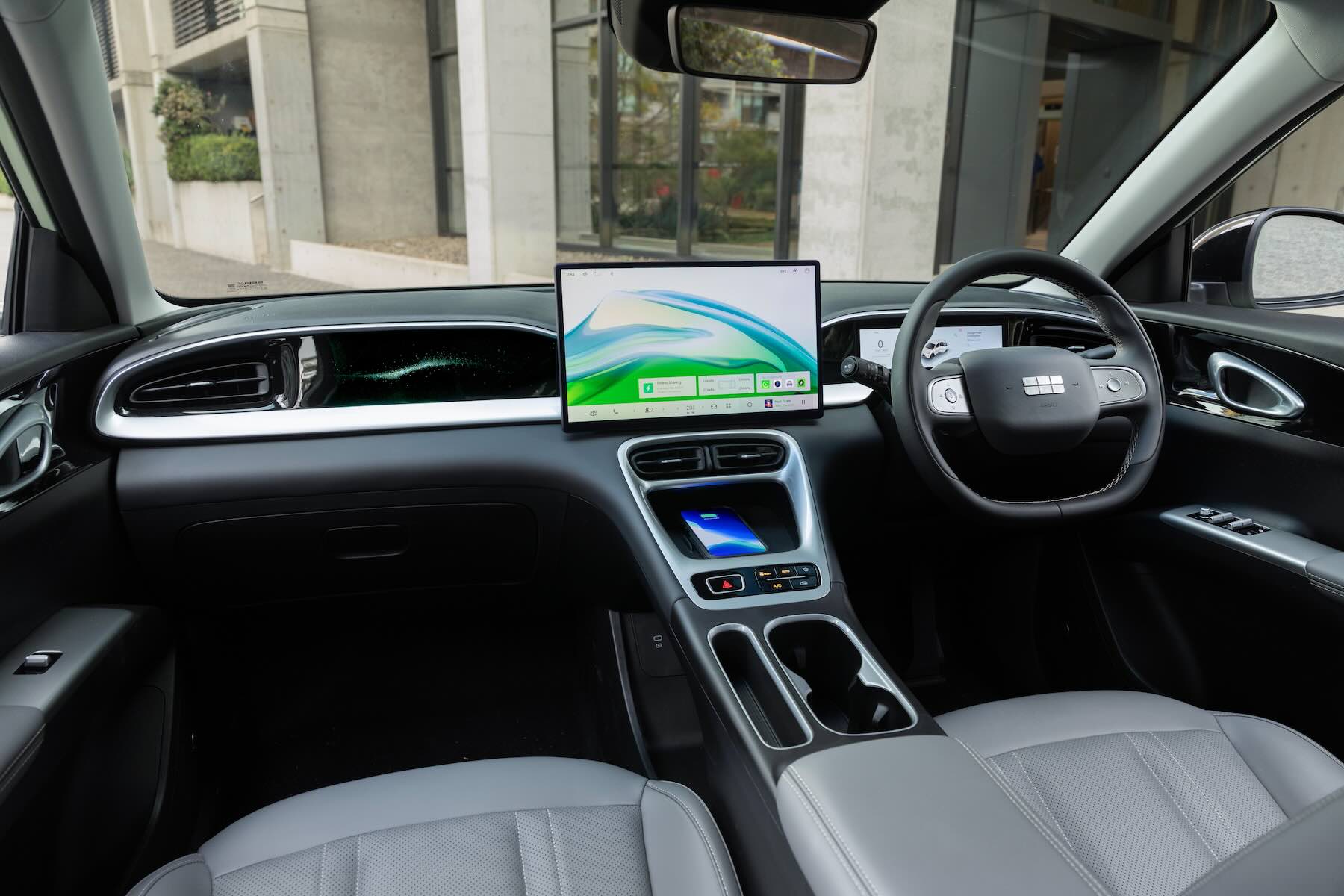
The 14.6-inch screen is reasonably straight forward to use. There are a few physical buttons for basic climate controls, which is good, but the majority of the settings will be accessed via that central touch screen.
Charging speeds is one of the EX2’s weaker points. The Complete peaks at 60kW DC, while the Inspire reaches 80kW. Both are limited to 6kW AC charging.
The small batteries mean modest peak charging rates don’t necessarily translate into painfully long stops, but 80kW is nevertheless unremarkable by 2026 standards.
Again, it comes back to intended use. Charge an EX2 overnight at home and use it primarily around town and this is unlikely to matter much. Try to regularly cover long distances in one and the combination of modest range and charging speed becomes considerably harder to ignore.
Both models at least get liquid-cooled LFP batteries and 3.3kW vehicle-to-load capability, the latter being a useful feature that still isn’t universal among EVs.
The safety list is long, and Geely has also thrown an enormous number of driver-assistance acronyms at the EX2.
Seven airbags are standard, along with autonomous emergency braking, adaptive cruise control, blind-spot detection, rear cross-traffic alert and braking, lane-keeping assistance, driver-fatigue monitoring, evasive manoeuvre assistance and auto lane-change assistance. The Inspire adds a surround-view camera with a transparent vehicle view.
The EX2’s Advanced Driver Assistance Systems (ADAS) also felt noticeably better calibrated than those in the original EX5. That’s admittedly a low bar – some of the EX5’s interventions could be frustratingly intrusive – but it suggests Geely has listened to feedback. You can also save a preferred ADAS configuration in the EX2. It still resets each time the car is put into Park, but rather than digging through multiple menus every time you drive, the saved settings can be restored with a couple of swipes on the infotainment screen.
So, is the world’s best-selling EV actually good value? That’s ultimately the more interesting question than whether $26,490 sounds cheap. The EX2 Complete undoubtedly lowers the advertised entry price to a new EV, but 252km of WLTP range and 60kW of power make its intended role fairly narrow.
For someone wanting a second car, city runabout or inexpensive commuter that can be charged at home, that may be entirely adequate. For a household expecting one vehicle to do everything, it requires considerably more compromise.
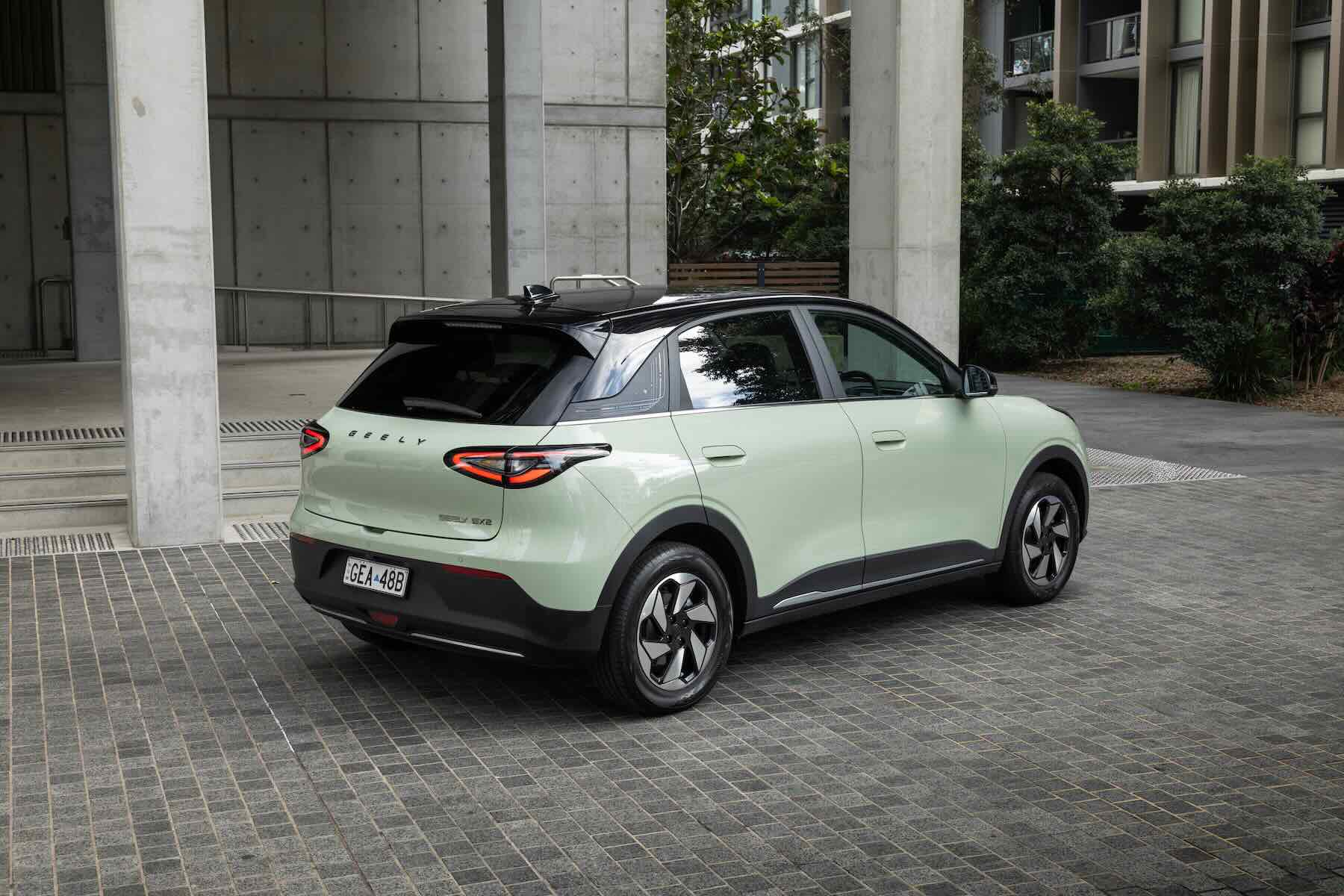
The Inspire is easier to recommend. Its 345km range makes it more useful, 85kW is adequate for everyday driving and the extra equipment is worthwhile.
But at $30,990 before on-roads, the argument also changes. Buyers can start looking at other electric hatchbacks and even discounted or entry-level electric SUVs, and the EX2 has to compete on more than its sticker price.
What it does particularly well is packaging. A 375-litre boot and 70-litre frunk in a car only 4.14 metres long is impressive, while the rear-wheel-drive architecture, tight turning circle and decent ride make it well suited to its intended urban environment.
It does have its compromises, with modest range, merely adequate charging speeds and leisurely performance. Some buyers may also prefer more rear-seat space at the expense of the EX2’s generous boot.
It’s worth remembering however, that while the EX2 may be a new kid on the block in Australia, globally it is anything but. Almost half a million were sold in 2025, making it the world’s best-selling small EV. Clearly, this is a formula that has already resonated with plenty of buyers.
And that perhaps gets to the more interesting point. With the EX2 joining a growing list of others pushing into the affordable end of Australia’s EV market, the question is becoming a much more conventional one: what matters most to you when choosing your next car?
The fact Australian EV buyers can finally ask that question, and choose between multiple affordable options rather than simply wondering when they will arrive, is just another sign of how quickly Australia’s electric vehicle market has grown.
Sign up for The Driven’s free daily newsletter and get the latest EV news and analysis delivered straight to your inbox.