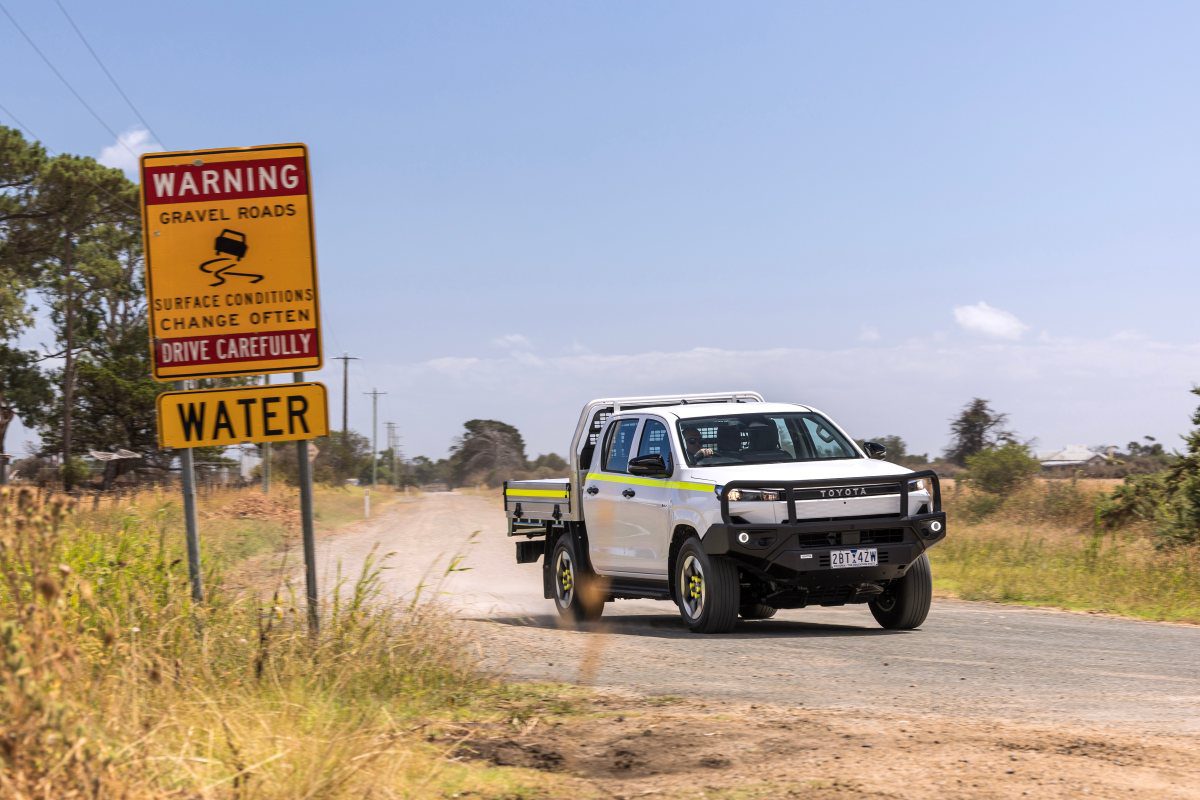
Toyota, the world’s biggest car maker and still the biggest seller of cars in the Australia market, says it has been surprised by a better-than-expected response to its first electric ute, the HiLux BEV, but has revealed no plans to fast-track its rollout of EVs in Australia.
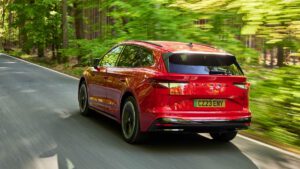
Along with other Japanese car makers, Toyota has been slow to commit to full battery electric cars, and in Australia has rolled out only the the bZ4x, an electric SUV made in conjunction with Subaru, with moderate success to date. A bigger version of that car, the bZ4x Touring, is about to hit the market, again in partnership with Subaru.
The release of the Hilux BEV, however, is a major initiative for Toyota, as the diesel HiLux often ranks as the best-selling car in Australia, along with the Ford Ranger ute.
The Hilux BEV, however, is not expected to be a best-seller like its diesel counterpart, because of its relatively small battery (59 kWh) and low range (315 km NEDC). It is being pitched at a narrow market – miners, farmers, and companies that have “back-to-base” fleets that do not travel big distances.
Toyota says it expected to sell 500 of the HiLux BEVs in 2026, but has already taken orders for 300 and delivered its first batches. Initial buyers included BHP, where the electric ute has been tested at its Pilbara iron ore mines for the last year in up to 50°C heat, Newcastle Coal, network company Essential Energy and Spanish energy and infrastructure giant Acciona.
John Pappas, the vice-president of national sales, marketing and franchise operations at Toyota Australia, says about 90 per cent of the Hilux BEVs sold so far have gone to company fleets, with about 10 per cent to private buyers, including a farmer in Tasmania, who took two.
“It’s definitely for a certain type of customer requirement, and it’s a low volume model,” Pappas told The Driven in an interview. “So, we anticipated this year that we’ll do about 500 of those vehicles and we’e already taken 300 orders in the first couple of months, so it ahead of what we thought and better than expected.
“We believe we’ll do well over 500 this year. It’s ahead of our plan.” Depending on the supply coming from its Japanese parent company, total sales this year could be over 600. He refused to be drawn on a forecast for 2027.
Pappas was speaking during a week of media test drives for its new arrivals to the local market, including the HiLux BEV, the bZ4x Touring, a plug in hybrid version (PHEV) of the popular RAV4 SUV, and a performance hybrid version of the LandCruiser 300, where he reiterated the company’s “multi-pathway” strategy that includes full battery electrics, plug in hybrids, mild hybrids and even hydrogen vehicles.
Toyota’s sales in Australia currently feature 39 per cent “efficiency hybrid”, 5 per cent PHEV and just 4 per cent pure EV, and Pappas says that by 2030 the company is aiming for 30 per cent “plug ins”.
But that is likely to put the company behind the rest of the market, which in the month of June was already at 23.5 per cent fully electric and 12 per cent plug in hybrid. Even the main car lobby, the Federal Chamber of Automotive Industries is talking of a “structural” shift in the market towards EVs.
The data and the FCAI comments came out on Friday, after our talks with Pappas, including data that showed China’s BYD falling just 243 car sales short of beating Toyota as the biggest seller in the month. BYD’s total included more than 10,000 EVs. Toyota has blamed supply constraints for its low performance this year.
Do you worry that you’re behind the rest of the market. Any plans to accelerate the rollout of more EVs? we asked.
“We’re not announcing anything today on the rest of the lineup for 2030, but it is all under review,” Pappas said.
“We’re always focused on trying to keep up with the customer demand, so for us at the moment, obviously, we can see that diesel Hilux is our number one selling vehicle.
“And right now it’s going very strong. Our new HiLux is actually doing better than we expected … so our (products) will be dictated by the pace of the change through the customer, and then our job is to make sure that we can support that with supply.”
What is known is that Toyota will release the CH-R electric SUV – already doing well in some European markets – in 2027, and the company is promising a hydrogen fuel cell version of the HiLux ute in 2028.
Toyota’s senior manager, product planning and pricing, Ray Munday explained that the limited range of the HiLux BEV is dictated by the need to offer 4WD capability, to fully protect the battery, and to make sure the ute can still carry large loads (up to 850 kg) and have a decent towing capacity (2 tonnes).
H says most HiLux customers require that, and need to travel long distances. Which is why it is hoping that hydrogen fuel cells, despite their incredibly low take-up in Australia and around the world, and the re-fuelling infrastructure challenges, can solve that problem. There is no talk yet of a single-cab 2WD city-focused ute that could be fully electric.
Why not just build an electric version of the popular small cars, such as the Yaris and the Corolla? Wouldn’t they be no brainers for the Australian market, we asked.
“That area is very price sensitive,” Munday says. “Right now the Yaris hybrids are a very. very good product at a good price. So we don’t have anything to discuss at the moment. We’re looking at the full lineup and how we can make sure we are offering the right product as we go towards 2030.
“I think to achieve the 30 per cent (plug ins by 2030) it van’t be just with the range now, so … we’re not in a position to announce the specifics.”
However, Pappas did flag that Toyota will have a lot to say when the review of the federal government’s flagship New Vehicle Emissions Standard policy is reviewed at the end of the year.
Many advocates want the policy to be tightened, but Toyota and others are likely to push back, and Pappas pointed to the diluted policies in the US and Europe as an example. And he said that Toyota will find it “very difficult” to meet its targets in 2027 without having to buy credits.
“Our team is very keen to contribute to that review,” Pappas said. “In 2027 it’s becoming very challenging, particularly in commercial vehicles, for us, and we can see that – and I use diesel Hilux as an example, because it is our number 1 selling vehicles – and based on the usage requirement in regional Australia for that power train – we don’t want to leave anyone behind.
“We support a challenging and ambitious fuel efficiency standard, but we’ve got to make sure it’s pragmatic as well as realistic, based on the customer usage requirements.”
See The Driven’s detailed EV sales data here: Australian electric vehicle sales by month in 2026; by model and by brand.
Sign up for The Driven’s free daily newsletter and get the latest EV news and analysis delivered straight to your inbox.