Geely has used the Auto China 2026 show in Beijing to unveil a new generation Galaxy Light concept car and a dedicated new-energy off-road vehicle architecture, pointing to the Chinese car maker’s next wave of electric and electrified vehicles.
The Beijing show has increasingly become the place where Chinese car makers arrive not with one new model, but with an entire theory of the electric future.
Geely’s version involves a luxury-leaning EV concept, a 1,000 horsepower electric off-road platform, a heavy dose of AI, and just enough hybrid technology to remind everyone that the combustion engine has not yet been escorted from the building.
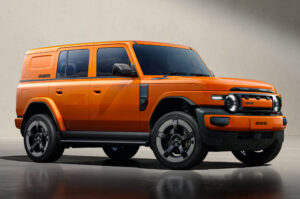
A particularly interesting announcement was not the latest hybrid claim, but Geely’s new dedicated new energy off-road architecture. The platform is designed from the outset for electrified drivetrains.
Geely describes the architecture as the world’s first native new-energy off-road vehicle platform. It has been designed to package batteries, motors and control systems more efficiently, while preserving cabin and cargo space, and often one of the central challenges when building serious off-road vehicles on electrified platforms.
The company says the architecture uses a recessed battery design and a six-layer protective structure at the base of the battery pack, aimed at protecting the pack from the sort of punishment off-road vehicles are meant to endure, at least before most owners park them permanently outside a private school.
The platform is also designed around a 50:50 front-to-rear axle load distribution, which Geely says helps deliver more balanced traction across all four wheels. The architecture also physically separates fuel, electrical and cooling systems, suggesting it may support more than one type of electrified powertrain, including range-extender or hybrid applications.
But the most eye-catching version is clearly the high-powered electric layout. Geely says vehicles based on the architecture can use a high-power P3 motor at the front and dual independent P4 motors at the rear, delivering a combined output of more than 1,000 horsepower and a 0–100 km/h time in the four-second range.
That is an absurd amount of grunt for something intended to climb over rocks. I would also question the idea that the average suburban SUV needs to be prepared for both the school run and a minor geological event.
The three-motor setup works with vehicle sensing systems to enable AI-driven torque distribution to each wheel. Geely says the dual rear motors can also operate like an intelligent rear differential lock, helping the vehicle recover from difficult off-road situations by rapidly shifting torque where it is needed.
This matters because electric off-roaders are starting to become one of the more interesting corners of the EV market. Electric motors offer instant torque, precise wheel control and flexible packaging, all of which should theoretically make them well suited to off-road driving.
Geely says the platform also uses an integrated body-on-frame chassis, double-wishbone suspension at the front and rear, and a dedicated off-road thermal management system.
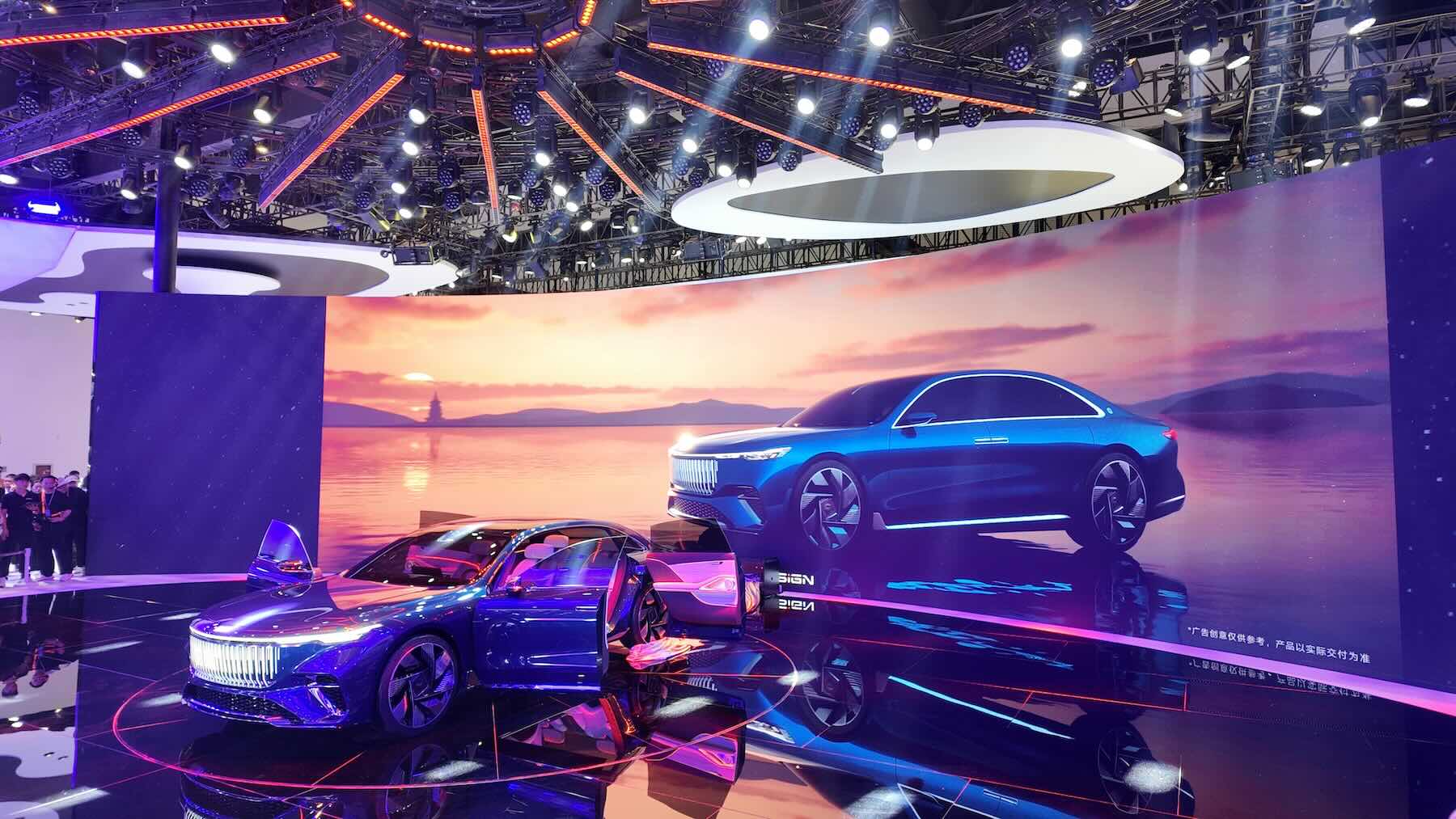
The other major EV reveal was the Galaxy Light second-generation concept, which made its global debut in Beijing.
The concept is less about a confirmed production vehicle and more about where Geely sees its Galaxy design language heading. The company says the car advances its “Ripple Aesthetics” philosophy, with a more premium and flagship-like presence. The exterior includes what Geely very poetically calls a “Galaxy Starfall Grille”, “Flying Eaves” headlights and “Dawning Sun” taillights.
Still, beneath the motor show prose, the concept points to a more confident design identity for Geely’s new-energy vehicles. The cabin blends wood, crystal-like materials, intelligent lighting, multi-zone climate control and what Geely calls “Oxygen Cabin” technology, with several design references drawn from traditional Chinese culture.
That cultural confidence is worth noting. Chinese EV makers appear to be no longer simply trying to imitate European premium design cues. Increasingly, they are building their own design languages around Chinese references, software-heavy cabins and a very different idea of luxury which places as much emphasis on lighting, screens, cabin atmosphere and in-car intelligence as it does on leather and badge heritage.
Geely also had several production models on display at the show, including the Galaxy M9, Galaxy V900, Galaxy M7, and StarWish, known in some export markets as the EX5. The EX5 is the most familiar name for Australian readers, given Geely has already been laying the groundwork for its local expansion.
The company also previewed the Galaxy M7 long-range hybrid, which is due to launch in China on April 28. Built on Geely’s GEA Evo new-energy architecture, the M7 is claimed to offer up to 225 km of pure-electric range and a total driving range of 1,730 km.
Geely also highlighted its i-HEV intelligent hybrid system, which it says will be rolled out across more of its model range. The company claims the system’s engine achieves 48.41 per cent thermal efficiency, while the Emgrand i-HEV recorded fuel consumption of 2.22 litres per 100 km in real-world testing, a result Geely says set a Guinness World Record.
Geely says its Galaxy new energy vehicle series has passed 2 million cumulative sales in just 37 months, making it one of the fastest-growing new energy vehicle brands in China. The company also says it sold 709,358 vehicles in the first quarter of 2026, making it the leading Chinese automotive brand by sales.
For Australia, the immediate question is what Geely chooses to prioritise. Affordable electric SUVs? More premium Galaxy EVs? Long-range plug-in hybrids?
Or perhaps, somewhere further down the track, a 1,000 horsepower electric off-roader with AI torque distribution. For now what we do know is the incoming arrival of the Geely EX2, their all-electric hatch which is tipped to start under the $30k mark.
Note: The author travelled to China and the Beijing auto show as a guest of Geely.
See The Driven’s detailed EV sales data here: Australian electric vehicle sales by month in 2026; by model and by brand.
Sign up for The Driven’s free daily newsletter by going to the button on the bottom right of the website’s home page at www.thedriven.io