There is a massive disconnect in the eMobility space, not just in Australia, but around the world.
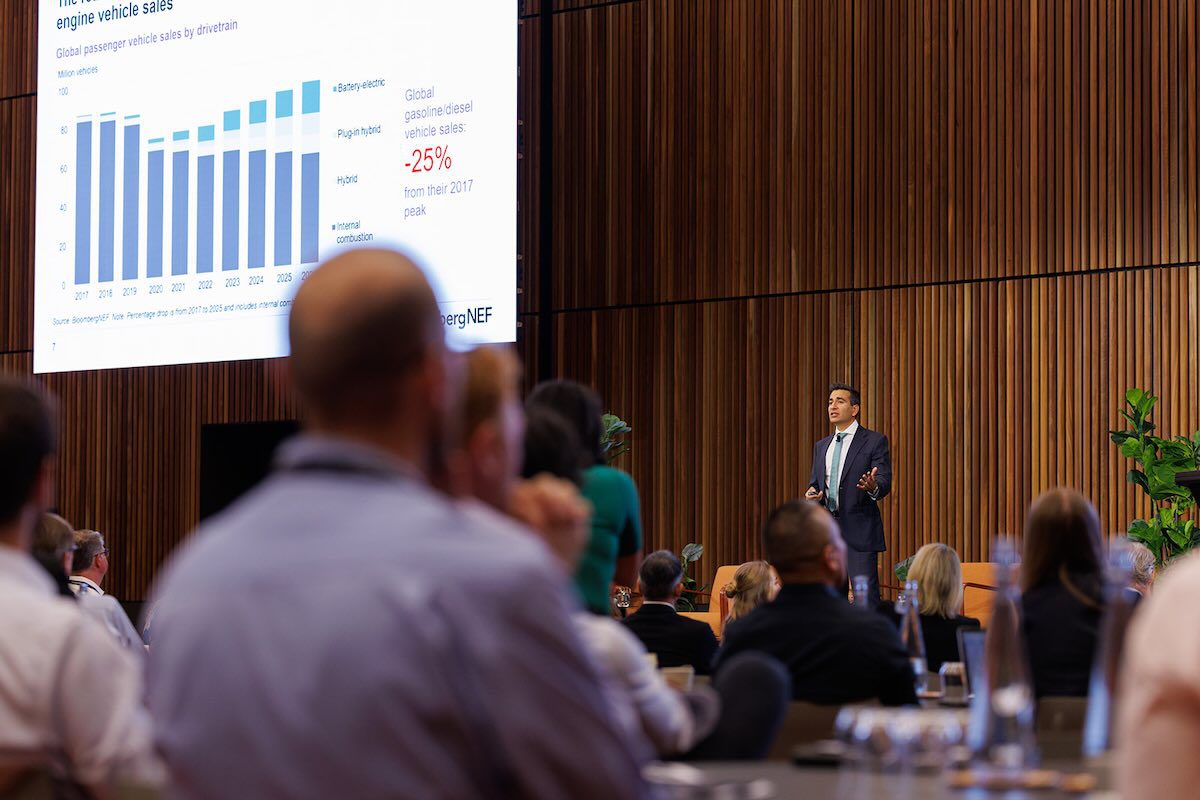
At the Climate Investor Forum in Melbourne last week, Kobad Bhavnagri, Global Head of Strategy at BloombergNEF, presented a bright future and an exciting present day.
Kobad proclaimed that green hydrogen is economically dead, not just for mobility but for almost every single application. The transition will be achieved through electrification and biological molecules.
EVs have reached price parity with ICE vehicles in many markets – China first, then Europe, and the US will reach parity by 2027. Economics is driving the new energy transition: the clean solutions are cheaper for consumers, cheaper to buy, and cheaper to run.
Australia is no exception. Australia benefits from our close trading relationship with China. Rapid growth in the Chinese solar and battery industries has powered the clean energy revolution in Australia.
Chinese EVs dominate the sales charts and have delivered price parity with ICE and hybrid vehicles in many categories. And yet, in contrast to the massive growth in the uptake of home batteries powered by government subsidies, EV uptake remains flat.
There are successful investment stories in Australian eMobility.
Tim Washington, founder of JetCharge, came to speak about their success at raising $72 million from the Mirova Clean Energy Transition Fund and existing investors RACV, Kilara Capital, and the Clean Energy Finance Corporation last year.
JetCharge is a business putting this to work through Charging as a Service deployments behind the fence and beefing up its already impressive software stack to improve reliability.
Despite this, in the halls of the Climate Investor Forum, there wasn’t a lot of talk about investing in EV charging infrastructure for cars. There is talk about investing in infrastructure for trucks, but this talk is conditional.
For investors to put money behind infrastructure, they have to see growth, and EV sales have not grown in 2024. The Climate Change Authority reports that carbon emissions from transport have declined for the first time since Covid, but the contribution is small and nowhere close to where it needs to be.
Australian homeowners and small businesses have been driving the renewable energy revolution, providing the capital investment, building the renewable energy superpower on the roofs of their homes and businesses.
Investment supported and encouraged by state governments, leveraging the hard-earned money of the Australian people, is building our clean, low-cost, and renewable future.
Australians know a good deal when they see it and will invest, especially when the benefits – the return on investment – are real, tangible, and immediate.
Growth takes work, and it needs people to know about the benefits of owning an EV, about the fact that we genuinely do have price parity across a number of vehicle categories, and we have a very valuable incentive in the Fringe Benefits Tax (FBT) exemption for novated lease EVs.
But the FBT is more limited than the home battery subsidy. It only matters if you have a salary to sacrifice, if you use your car a lot for work, if you are willing to lease, and if you know about it.
For many people, the FBT doesn’t work. Many small business owners would be better served by applying the Instant Asset Write-Off to an EV.
The Instant Asset Write-Off has been hugely successful in filling the streets with tricked-out “business utes.” If Chris Bowen and Jim Chalmers want to do something more for EV owners in the upcoming budget, then this is the lever to pull.
The Instant Asset Write-Off pulls forward the investment returns of owning a new vehicle by giving the business an accelerated depreciation, lowering their tax bills. This allows businesses that otherwise would not have invested in an asset the opportunity to invest.
In the case of an EV, the total cost of ownership (TCO) benefits of the vehicle persist long term, giving the small business not just the first-year sugar hit but a long-term improvement to the bottom line.
The Instant Asset Write-Off is up for renewal in the budget, so my call to Jim Chalmers and Chris Bowen is to target it squarely at electric vehicles. Increase the value of this, give small businesses some relief from cost pressures this year and into the future by incentivising them to invest in an EV.
Target the Instant Asset Write-Off at pure battery electric vehicles of all types, raise the threshold of the vehicle value, the amount a business can write off, the number of vehicles a business can buy, and the revenue threshold to claim it to $50 million, and just watch how fast the investment will flow and transport decarbonisation will accelerate.
Incentives are only any good if people know about them. Time and time again I run into well-informed, climate-focused people –people who have invested in home solar and batteries – who are unaware of the novated lease opportunity.
Ann Liao of Asian Australians for Climate Solutions, who spoke at the recent Melbourne EV Meetup, has highlighted the issue in her target community. Many of the people she is talking to, who are in the market for a new car, simply do not know that the FBT incentive is available, and that it is valuable and accessible to them.
Australians have shown time and time again that they are more than willing to invest in the transition, that they can see the benefits, and those benefits flow straight into their wallets.
EVs are the next easiest decarbonisation tool – they are fun, exciting, and practical. They deliver real cost savings to Australian homes and businesses. Let Australians access those benefits and they will invest.