Mining giant Fortescue has revealed some key details of the 6 megawatt (MW) electric truck chargers that it is building itself in order to boost its chances of eliminating fossil fuels from its massive iron ore operations in the Pilbara.
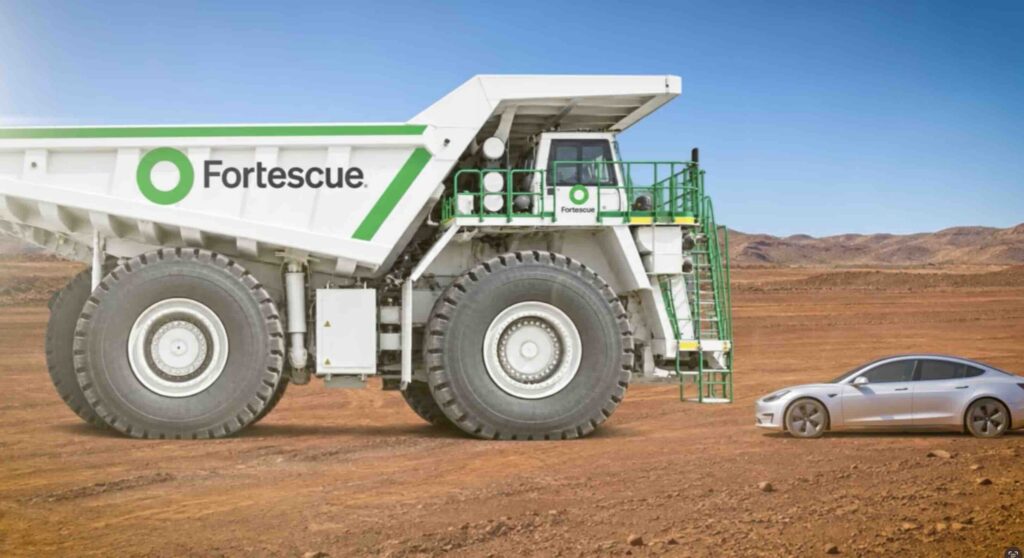
The company is spending more than $6 billion on creating a new grid powered only by renewables, and is electrifying all its mining equipment, including hundreds of giant 240-tonne electric haul trucks.
Fortescue has developed its own charging technology that it has been testing in a facility in Perth and is now rolling at Eliwana, one of its mines. The 6 MW chargers, equivalent to 24 Tesla 250 kW superchargers, are the biggest in the world, and because of their sheer size and scale are not simple to deploy.
In one of a number of new videos designed to promote its transition to “real zero” – the target it wants to achieve by 2030 – Fortescue says it had no other option but to build its own when looking at how to electrify its massive haul trucks.
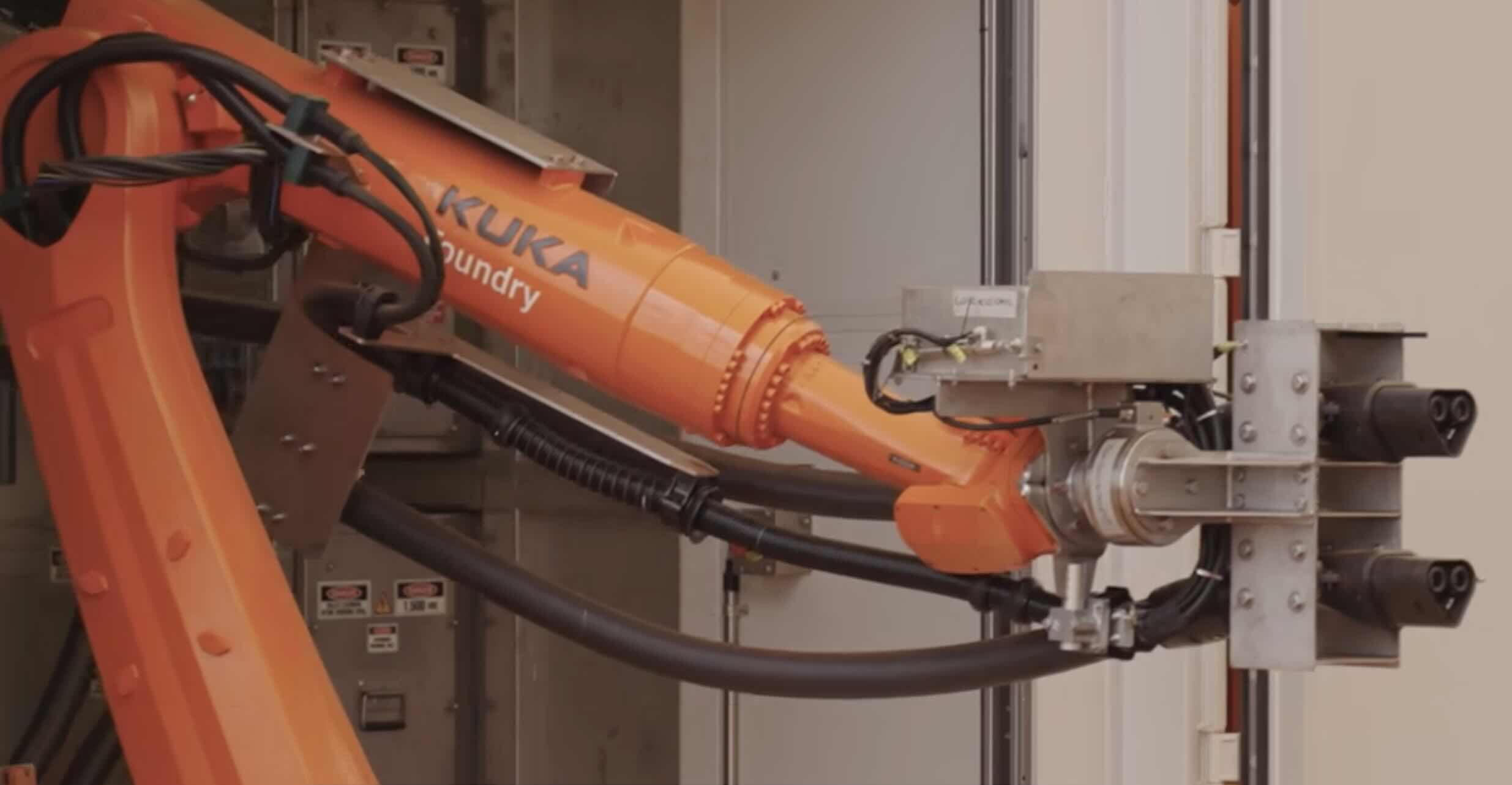
“The challenge with a six megawatt charger is that nobody makes these, and therefore nobody makes a lot of the components either,” it says in the video. “So we’ve had to take systems and subsystems from different industries were using industrial robots that would normally be used for welding in a car factory.”
The robots are needed because a plug of that size is too big, and too dangerous, for any human to handle. So the whole process has to be automated.
“Your truck will come into the charger bay. It’ll then be handed over to the charger. The charger robot will come out. It’ll take the images of the connection box. Then the robot will connect to the truck, where a handshake will be done with the truck, and the two systems will sync up, and then the charge process will commence.”
That also requires some co-ordination with the grid. Fortescue is effectively building its own to support more than 2 gigawatts of new and solar capacity, backed by more than four gigawatt hours of battery storage, to ensure that the electricity charging the batteries are zero emissions.
“This isn’t just a charger throwing millions of watts at a battery. It’s constantly working out what that battery can safely handle and what the system can too,” the video says.
“They impact the stability of the power distribution grid. So our technology has a communication system that integrates with the green power system that we actually have to tell the green power system we’re about to charge a truck now and introduce a six megawatt load onto the grid.”
Fortescue is still working out how and when it will charge the giant electric haul trucks. Downtime is costly, but the company has already said extra time for charging will be offset by less downtime because electric trucks require reduced maintenance.
The company is aiming for 20-30minute charging sessions, and doing this as often as it can – while waiting for excavators or other recurring downtime moments. A full charge can last up to 4 to 5 hours, depending on what the truck is doing.
Fortescue hopes to be able to connect its first Liebherr 240-tonne electric haul trucks when they arrive on site later this year, and then adapt them to the models being built by XCMG next year. There is the added complexity of the surroundings.
“(It’s) dusty, it’s windy, and it’s hot. We’re in the middle of the desert. Temperatures regularly get over 40 degrees Celsius in summer, and during winter the nights can drop below freezing.
“So we needed to think about heat management, including liquid-cooled DC cables, and around the charger, earthing systems, lightning protection, impact barriers, and safety fencing.”
Sign up for The Driven’s free daily newsletter and get the latest EV news and analysis delivered straight to your inbox.