Over the last decade, most of the segments of light passenger and commercial vehicles have opened up to full or partial electrification.
From small hatchbacks such as the Nissan Leaf and Mitsubishi iMiev and then larger passenger vehicles like the Tesla Model S and X, Australia is now at a point where almost all traditional segments have battery electric vehicles (BEVs) or plug in hybrid vehicles (PHEVs) available.
Many of the PHEVs are what I like to describe as “Chinese-style PHEVs” which tend to have relatively large (20-50 kWh) batteries which support 60-150km of battery-only range. This is distinct from traditional (mild) hybrid vehicles which have very small batteries with little to no EV-only range.
The recreational off-road vehicle segment has been slow to embrace electrification, with almost total dominance by traditional ICE vehicles such as the Toyota Landcruiser, Nissan Patrol Jeep Wrangler and Isuzu MU-X, as well as light-commercial vehicles like the Ford Ranger, Toyota Hilux and Isuzu D-Max.
So what exactly is recreational four-wheel driving? Essentially it is a set of practices, including camping, touring and sight-seeing, that rely on driving road-registered vehicles to places of great natural beauty and serenity across tracks that are impossible to navigate without specifically equipped vehicles.
This might involve a simple day trip into the local state forest, or an epic 6-month tour through some of the most rugged parts of Australia.
At the easier end, we see vehicles navigating tracks which have loose or slippery surfaces, as well as ruts or features which require increased ground clearance. Most SUVs with all-wheel drive can handle this sort of terrain without difficulty or damage.
At the opposite end of the spectrum, we have vehicles driving on tracks which are heavily affected by erosion containing large rocks, steps, ruts over a metre deep where even the best vehicles can be expected to receive some damage.
This end of the market is currently dominated by large body-on-frame vehicles with extensive modifications to suspension, tyres, drivetrain and body, as well as self-recovery equipment such as electric winches. In some countries, such as the US, there are vehicles that exceed this level that are dominated by custom-built buggies, however this is not really a common thing in Australia.
In this article we will discuss some of the advantages of partial and fully electrified vehicles for recreational off-roading, as well as providing a summary of the market. We will also discuss some unique features that are starting to find their ways into production vehicles that are only possible with electrification.
Driving Experience
Off-road focussed vehicles are designed to deliver long-term performance and enjoyment in rugged and remote terrain. Until recently, this segment has been entirely unserved by any electrified vehicles, particularly in Australia.
After reading this article you should have a reasonable understanding of what recreational 4WD driving is about, and what new features electrification can offer.
Let’s start with a brief review of how ICE 4WDs work, as well as how BEVs and PHEVs approach the same challenges. A traditional ICE 4WD has an engine at the front attached to a gearbox which allows the narrow power band of the petrol or diesel engine to cover the expected range of speeds of the vehicle.
In all serious 4WDs, this gearbox is attached to a transfer case which allows selection of high range (on-road and higher speed tracks) and low-range (increased torque at lower speeds for serious off-road tracks).
The transfer case also sends drive to the front and rear axles through drive shafts. In many cases there is a differential in the transfer case to allow 4WD to be used on high-traction surfaces.
In a 4WD BEV, between 2 and 4 electric motors are employed. The simplest setups use a single motor with a single speed gearbox at each of the front and rear. More complicated systems use two motors per end. While electric motors have significant torque over a very wide speed range, their torque is not infinite.
This has led to issues with vehicles such as the Rivian R1T Quad Motor and the BYD Shark 6 lacking sufficient torque to climb large steps. To mitigate this problem, many of the newer vehicles like the Mercedes G580, Denza B5 and JETOUR G700 add two speed gearboxes to their electric motors to provide a genuine low range.
Four-wheel drive PHEVs can be found in several configurations, ranging from a simple pancake motor sandwiched between the engine and gearbox of an otherwise conventional ICE layout found in GWM Tank 300, 500 and Cannon vehicles, through to series/hybrid parallel systems that drive the front wheels with a conventional electric motor in the rear of the vehicle as found in the BYD Shark 6, Denza B5 and B8 and the soon-to-be-released JETOUR T2i-DM and G700.
Ground clearance is critically important on many tracks, where deep ruts can cause parts of the vehicle to “hang up”, preventing wheels from properly contacting the ground. For most 4WDs, the “diff pumpkin” in the middle of the rear solid axle is the lowest point in the vehicle. Most PHEVs and BEVs have fully independent suspension, which can increase minimum ground clearance.
Wheel articulation is an area where older style ICE 4WDs tend to beat newer independent suspensions as found in BEVs and PHEVs.
It is not unusual for a well setup solid axle to have 600-800mm of articulation, allowing vehicles to keep all wheels on the ground. This is not possible with independent suspension, so expect to lift wheels off the ground more often, increasing dependence on traction aids.

Figure 1 Flexed out traditional 4WD. Image Credit Superior Engineering.
There are several traction aids which are commonly used by 4WDs to improve driving ability and safety. These include locking differentials, advanced traction control and speed control (e.g. crawl mode and hill descent control). Each of these work better with the instantly variable power delivery of an electric motor.
BEVs and PHEVs have unique advantages over ICE vehicles in off-road applications. The first is the ability to travel in near silence, providing occupants with improved opportunities to see wildlife. The lack of air intakes and open frame alternators mean that the typical wading depth of many EVs are significantly greater than their ICE counterparts.
Vehicles like the Yangwang U8 even can float for significant periods while providing slow speed motion with their tyres, and the JETOUR G700 has an optional “ARK” package that adds electric propellors to the rear bar, allowing significant speed and manoeuvrability while floating.
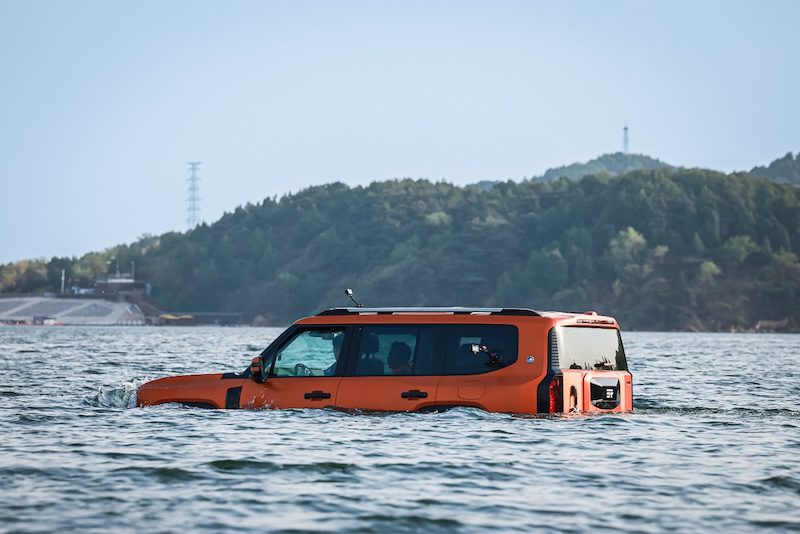
Figure 2 JETOUR G700 on Yanqi Lake near Beijing, China.
Electrified drivetrains also offer options for unusual modifications that either impossible or very difficult with pure ICE versions. The JETOUR T700 ute below was converted to 6WD just by adding an additional rear subframe and wiring!
This is significantly less trouble that the usual 6×6 conversion process where special pass-through differentials or additional transfer cases are required to get driveshafts to the additional axle.
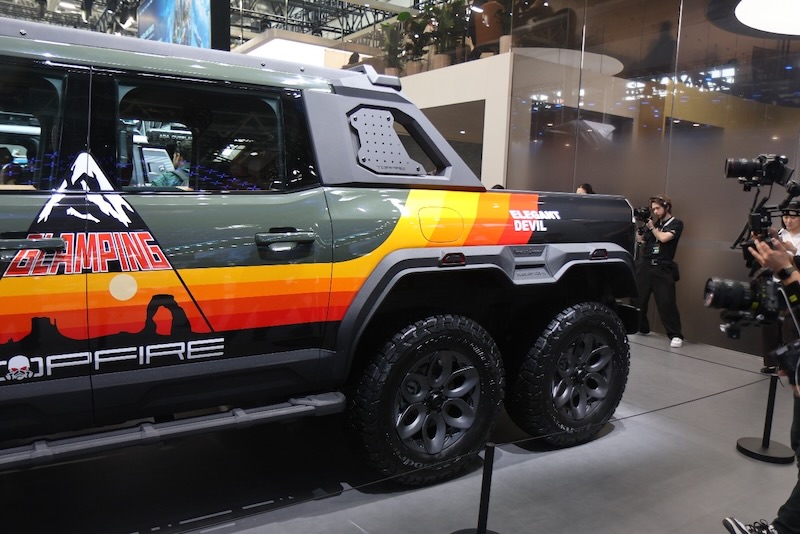
Figure 3 JETOUR F700 ute at the Beijing Autoshow 2026 converted to 6WD
Recreational 4WD driving is usually done with friends, and this often results in significant waiting as members of the convoy overcome obstacles on the track ahead. At times, vehicles are left idling for up to an hour to maintain climate control.
In at least one case, this has resulted in the death of an occupant who chose to wait in their vehicle, unaware that there was exhaust leaking into the cabin. BEVs and PHEVs can safely run their climate control without any exhaust fumes and with very little energy consumption.
Recovery Winching
Sometimes, no matter how capable the 4WD, there comes a time when an obstacle can not be conquered. At this point, the driver will often employ a vehicle-mounted electric recovery winch. These are typically 12V to match the low-voltage electrical system on the vehicle, and can draw as much as 500A of current.
This presents a problem for most PHEVs and BEVs which do not have a high-current starting battery to support this load, requiring installation of additional batteries and enhanced charging systems.
There is a significant opportunity for manufacturers to enable winches to run at the voltages of the main traction battery, generally between 360V and 900V, enabling winches of far greater speed and power than those currently found in 12V winch systems.
Unfortunately, there are no vehicles currently using this capability.
Towing
Recreational 4WD users often tow trailers including box trailers for firewood, camper trailers for remote area camping, and even large caravans.
High power with excellent torque across a wide range of speeds make BEVs and PHEVs outstanding at towing, but for BEVs, the reduction of range can be as much as 50%, reducing their utility. At this time, serious long-distance towing is mostly limited to PHEVs and ICE vehicles.
Camping
On longer trips, recreational 4WD users will generally camp in simple clearings without much in the way of facilities. While many start with a simple light tent or swag, most eventually evolve to have camp lighting driven from their vehicle, with multiple portable electrical devices charged from the vehicle and accessories such as portable refrigerators.
After the first time that their vehicle does not start in the morning because the fridge and the lights drained it overnight, most people fit a secondary 12-volt battery and supporting electronics to isolate it from the starting battery. These auxiliary batteries are typically no more than 1 kWh, with most being around 600 Wh.
BEVs and PHEVs typically have high-voltage batteries between 30 kWh and 120 kWh, completely removing the need for any sort of auxiliary battery for support loads.
Many also have 240V AC sockets or V2L adapters that deliver from 2 kW to 7kW which is enough to easily power inductive cooktops for cooking. Not only does this remove the need for gas or firewood for cooking, it also enables cooking during times of total fire ban.
Aftermarket enhancements
Very few vehicles used for recreational 4WD travel remain “stock”. Typical modifications include more aggressive and heavy-duty wheels and tyres, suspension changes such as lifts and heavy-duty shock absorbers, under-body armour to protect from rocks and other potential damage and ‘bull bars’ to mitigate damage from animal strikes.
Many vehicle OEMs are either bringing their own accessories; or partnering with local specialists such as ARB and Ironman 4×4.
Current and upcoming BEVs and PHEVs on the Australian Market
The table below attempts to summarise the BEVs and PHEVs with potential for use as a recreational off-road vehicle.
| Manufacturer | Model | Status | Notes |
| BYD | Shark 6 | Released | PHEV ute with electric-only rear axle. Hampered by lack of low range and differential locks. |
| Denza | B5 | Released | Mid-sized PHEV SUV with diff locks and low range rear axle. |
| Denza | B8 | Released | Large PHEV SUV with diff locks and low range rear axle. |
| GWM | Tank 300 Hi-4T | Released | Mid-sized PHEV SUV with front and rear diff locks and low range front and rear. Excellent aftermarket support. |
| GWM | Tank 500 PHEV | Released | Large PHEV SUV with front and rear diff locks and low range. |
| GWM | Cannon Alpha | Released | Large ute with front and rear diff locks and low range. |
| KGM | Musso EV | Released | Mid-sized BEV Ute. No low range or diff locks. |
| Kia | EV9 | Released | Large SUV, no low range or diff locks. |
| Land Rover | Defender 110 PHEV | Released | Large PHEV SUV with low range and rear diff locks. |
| Mercedes-Benz | G580 | Released | Large BEV SUV with 4 motors and low range on all wheels. |
| MG | Up EV | Late 2026 | Large BEV Ute. Final specification is not known. |
| JETOUR | T2i-DM | Early 2027 | Mid-sized PHEV SUV, with diff-locks but lacks low range. |
| JETOUR | G700 | 2027 | Large PHEV SUV with diff locks and low range as well as outstanding fording capability. |
Conclusion
The potential benefits arising from the electrification of recreational 4WDs are unquestionable, however, the segment is currently dominated by PHEVs, and this remain the case for quite some time.
Fortunately, considering the domination of electrified transport by Chinese brands, there are many Chinese people who are enthusiastic off-roaders, and China has a diverse range of terrains to test vehicles locally.
This is providing a strong local market for the sorts of vehicles that will be desirable to Australian off-road drivers. This article will be updated as new and exciting vehicles are announced for Australian delivery.
Note: Richard Laxton is an EV consultant who specialises in public charging infrastructure. An EV owner since 2019 and recreational off-roader since 2005, he loves to explore the limits of what is possible.
Sign up for The Driven’s free daily newsletter and get the latest EV news and analysis delivered straight to your inbox.