
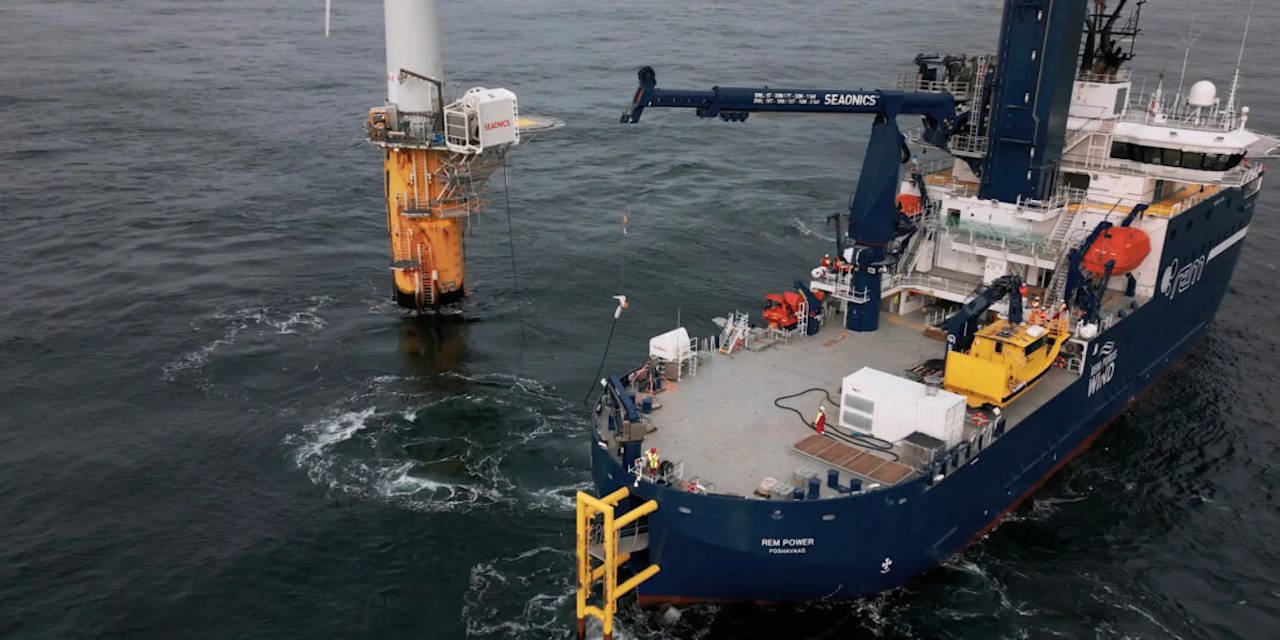
A consortium of Norwegian companies and research organisations have developed what they describe as a “plug and play” system for charging battery powered service vessels at sea.
The new magnetic inductive charging plug, described as easy to operate “as putting a cup in a cup holder”, has been spearheaded by Norwegian shipbuilder Vard and research institutes SINTEF and NORCE under the Ocean Charger project banner.
The Ocean Charger project aimed to develop and test a full-scale ship charging solution to enable emission-free service vessel operations, particularly for those servicing offshore wind farms, and the idea was to use the power generated by these wind farms to charge the vessels.
A heavy-duty traditional charging connection was tested through the early parts of Ocean Charger, but these chargers rely on exposed contact points that degrade after prolonged exposure to salty air.
“Movement and wear make charging at sea challenging when using a classic plug-based connection,” explained Håvard Vollset Lien, VP research and innovation at Vard, who also headed up the large Ocean Charger project. “Mechanical wear and tear, corrosion and demanding maintenance increase the risk and costs.”
But researchers from Vard, alongside scientists and engineers in the Ocean Charger project, were able to develop a new charging connection which uses a magnetic inductive charger encapsulated in materials that can withstand offshore conditions.
“We’ve looked at a lot of solutions here,” said Giuseppe Guidi, a senior research scientist at SINTEF.
“And we’ve tested a possible solution that works almost like a regular electrical contact. But we can avoid all the problems because we transfer the power inductively by encapsulating the plug itself in materials that can withstand just about anything.”
The inductive charging solution consists of two parts – a magnetic coil mounted on a cable stretches out from the charging station, which could be mounted on a wind turbine, and drops into a receptacle housing a second magnetic coil.
Electrical current is transferred without the need for physical contact, relying instead on a magnetic field generated when the two coils are properly aligned.
“It won’t be necessary to be precise when lowering the plug into the receiver hole,” said Guidi.
“It’s almost like putting a cup in a cup holder. It will fit no matter which way it is turned. Very plug and play.”

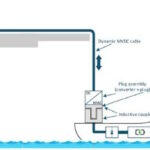
The physical components aren’t the only important parts of the process, however. Transferring power wirelessly from offshore charging infrastructure to a ship’s battery requires a range of technical solutions.
Power must be converted from alternating current to direct current, for example, sent at high voltage through a flexible cable, and then converted to high-frequency current that can be transmitted via the magnetic field. Onboard the vessel, that power must be captured, converted again, and transferred safely to the battery.
To accomplish all of this, and to withstand both high power and rough sea conditions, has been the focus of the Ocean Charger project.
In addition to powering those service vessels which operate at offshore wind farms, the Ocean Charge team also believe their new charging technology could also be used by platform supply vessels (PSVs) in use by the oil industry.
Sign up for The Driven’s free daily newsletter and get the latest EV news and analysis delivered straight to your inbox.