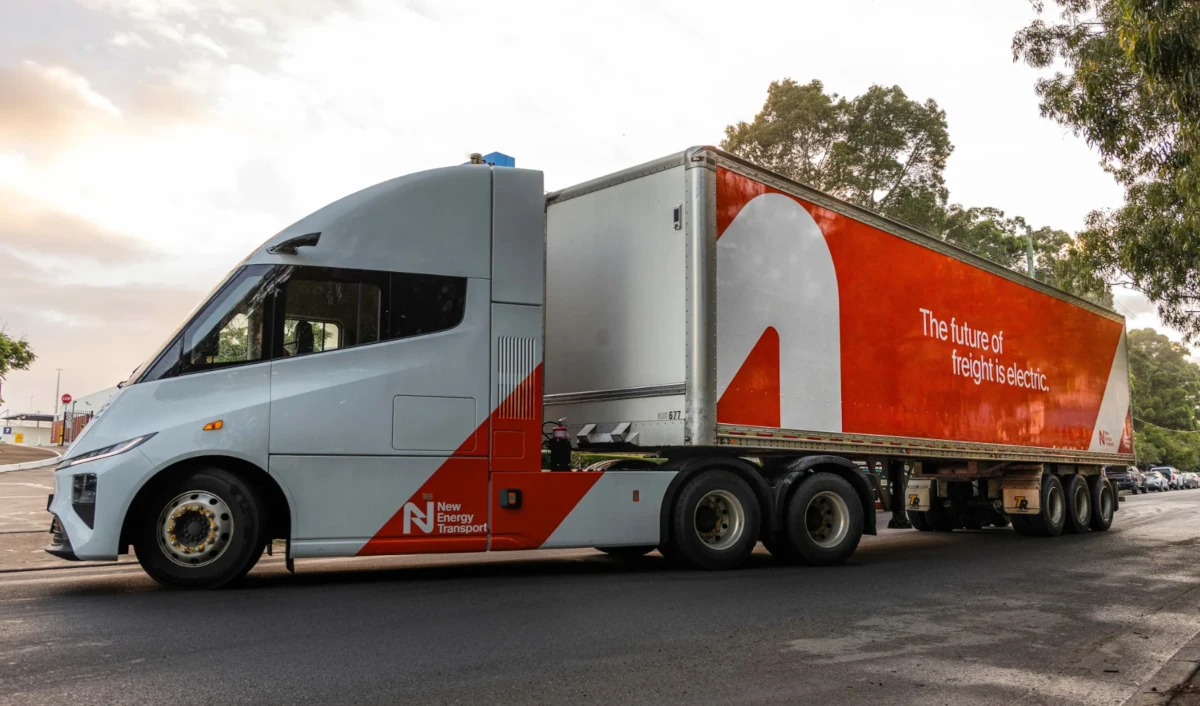
Electric trucking company New Energy Transport has shared initial details of a rapid deployment plan, which could enable them to begin commercial operations out of their proposed Wilton truck depot near Sydney as early as July 2026, much sooner than many expected.
The global fuel crisis has sparked a huge surge in consumer EV interest, and highlighted the need for Australia to drastically speed up heavy transport electrification to reduce our dependence on imported fuels and kerb the impact of fuel shortages that is expected to last for many months longer.
Australia is the second most road freight dependent country in the world, behind only the United States, although unlike the US we rely on importing 90 per cent of our liquid fuel. Some estimates put this figure even higher for our diesel trucks specifically, at up to 98 per cent imports.
New Energy Transport co-founder Daniel Bleakley spoke on day 1 the Smart Energy Conference in Sydney this week, laying out their expansion plans for the next 5 years, as well as a rapid deployment option that is in development, created in response to the Freight Forward Summit on commercial vehicle decarbonisation at the end of March.
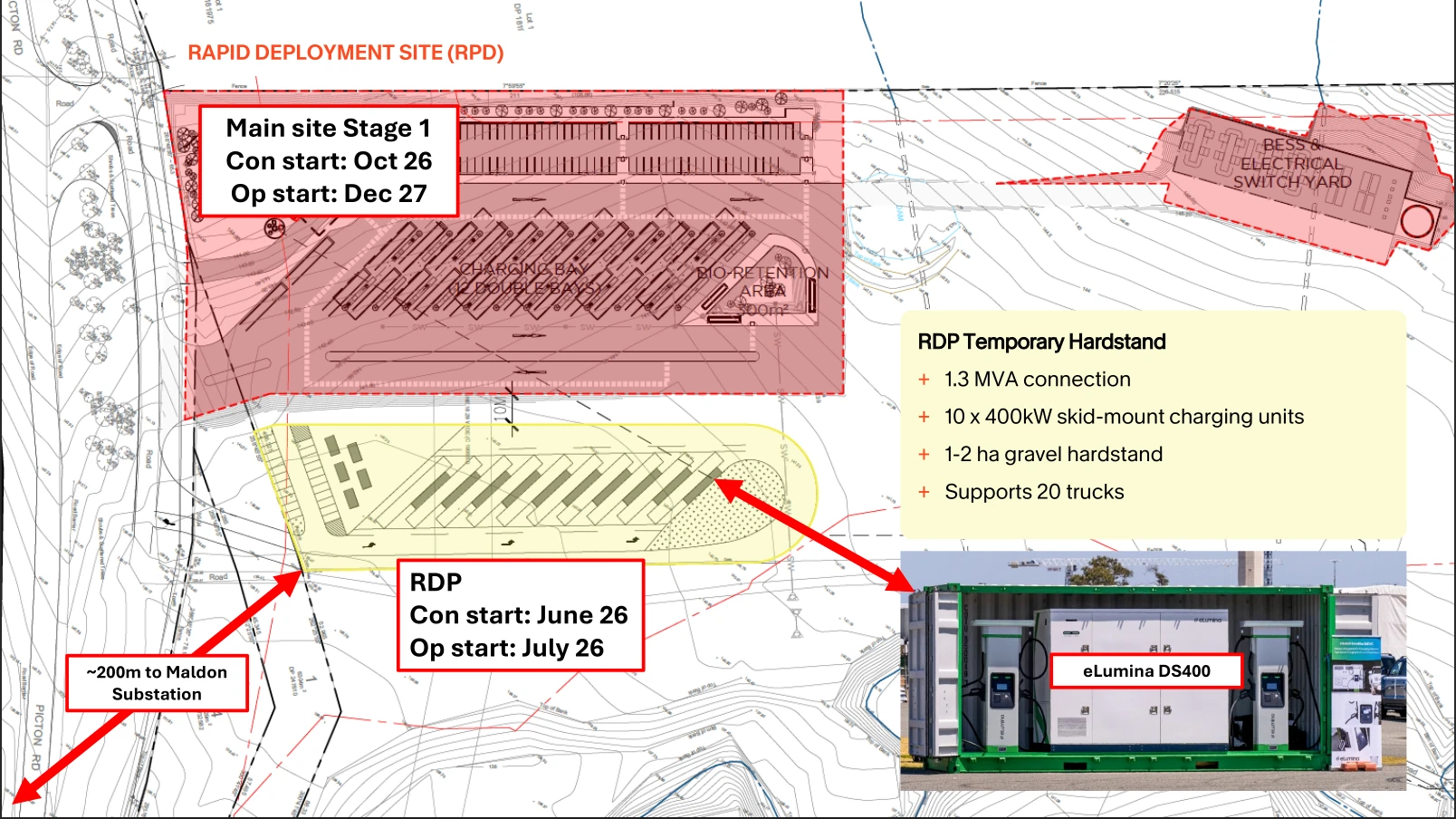
This rapid deployment site plan shown below consists of 1-2 hectares of temporary gravel hardstand, a 1.3 MVA grid connection to the nearby Maldon substation and 10 x 400 kW skid-mounted eLumina DS400 charging units that can support up to 20 trucks in total.
eLumina is a Gold Coast based battery and EV charging company that has built the world’s longest off-grid EV charging network in Western Australia that is soon to be commissioned. You can listen to an interview with eLumina CEO Lisa Marsh in this recent episode of The Driven podcast: The Driven Podcast: Chip fat and charge cables.
The July operating timeline depends on DA approval from Wollondilly Shire Council, to enable construction starting in June.
While New Energy Transport has been successfully conducting trials with a Windrose electric prime mover, the rapid deployment plan also includes the use of Volvo electric trucks which have a shorter range. The Volvo trucks will only be able to provide fully electric deliveries between Sydney and the Illawarra region.
To support longer deliveries all the way to Newcastle and Canberra or Yass requires the Windrose truck, which has a claimed range of up to 670km with 49 tonnes of combined mass.
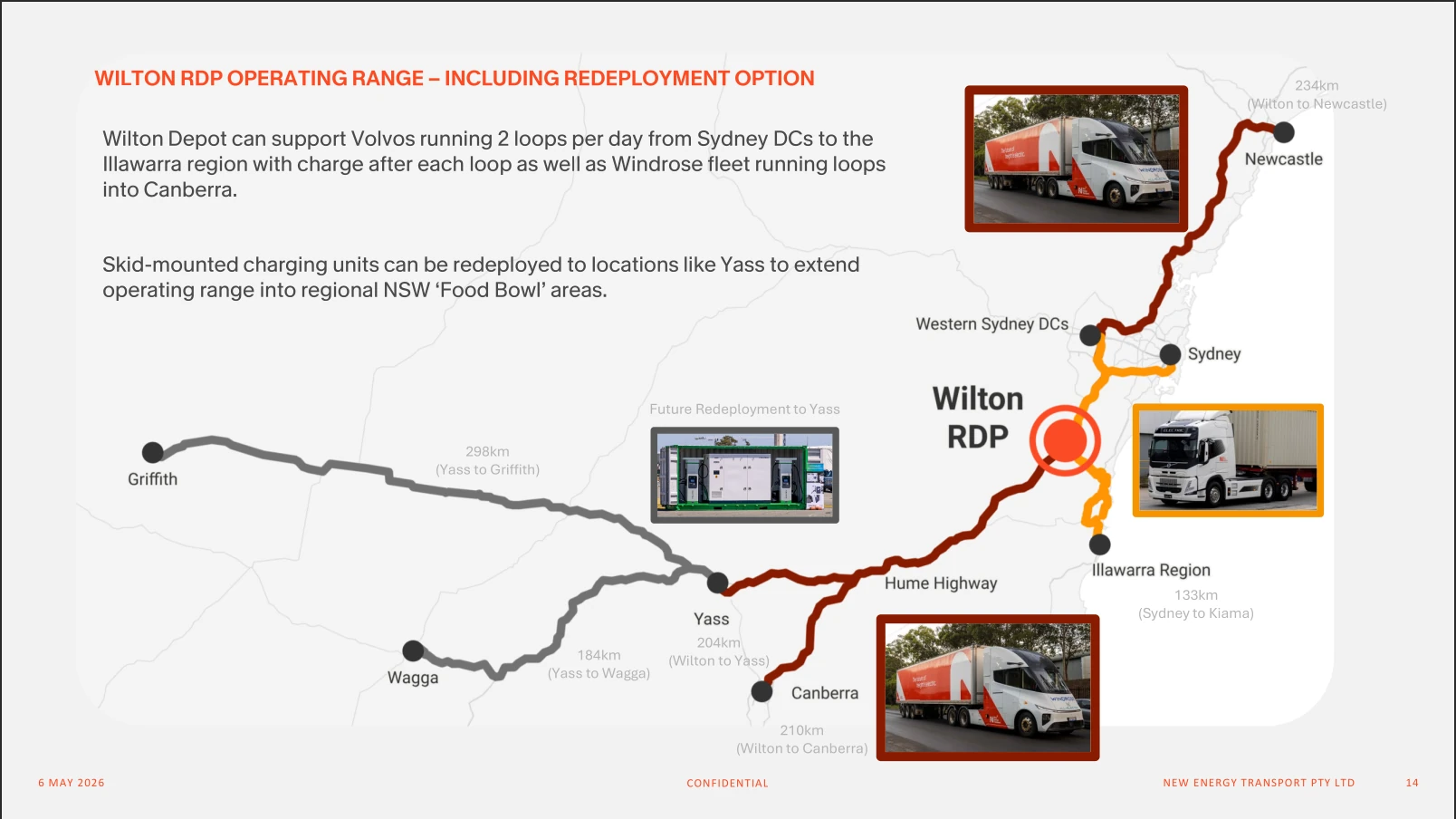
The colour coded map above shows the potential routes these trucks will be operating on, with Volvo coverage in yellow/orange and Windrose in brown. Once New Energy Transport has finished building their main site stage 1 to support 50 trucks by December 2027, the skid-mounted eLumina units could be redeployed to Yass.
Deployment of these charging units to Yass then unlocks further deliveries all the way into the regional food bowl areas of NSW surrounding Griffith and Wagga. These routes are shown in grey on the map above.
Bleakley also shared some details of New Energy Transport’s longer term growth plans, consisting of 3 phases that eventually stretches all the way between Adelaide and Brisbane via Sydney, Canberra and Melbourne. Phase 1 starts with the proposed depot in Wilton, near Picton, and supports between 20 and 50 trucks.
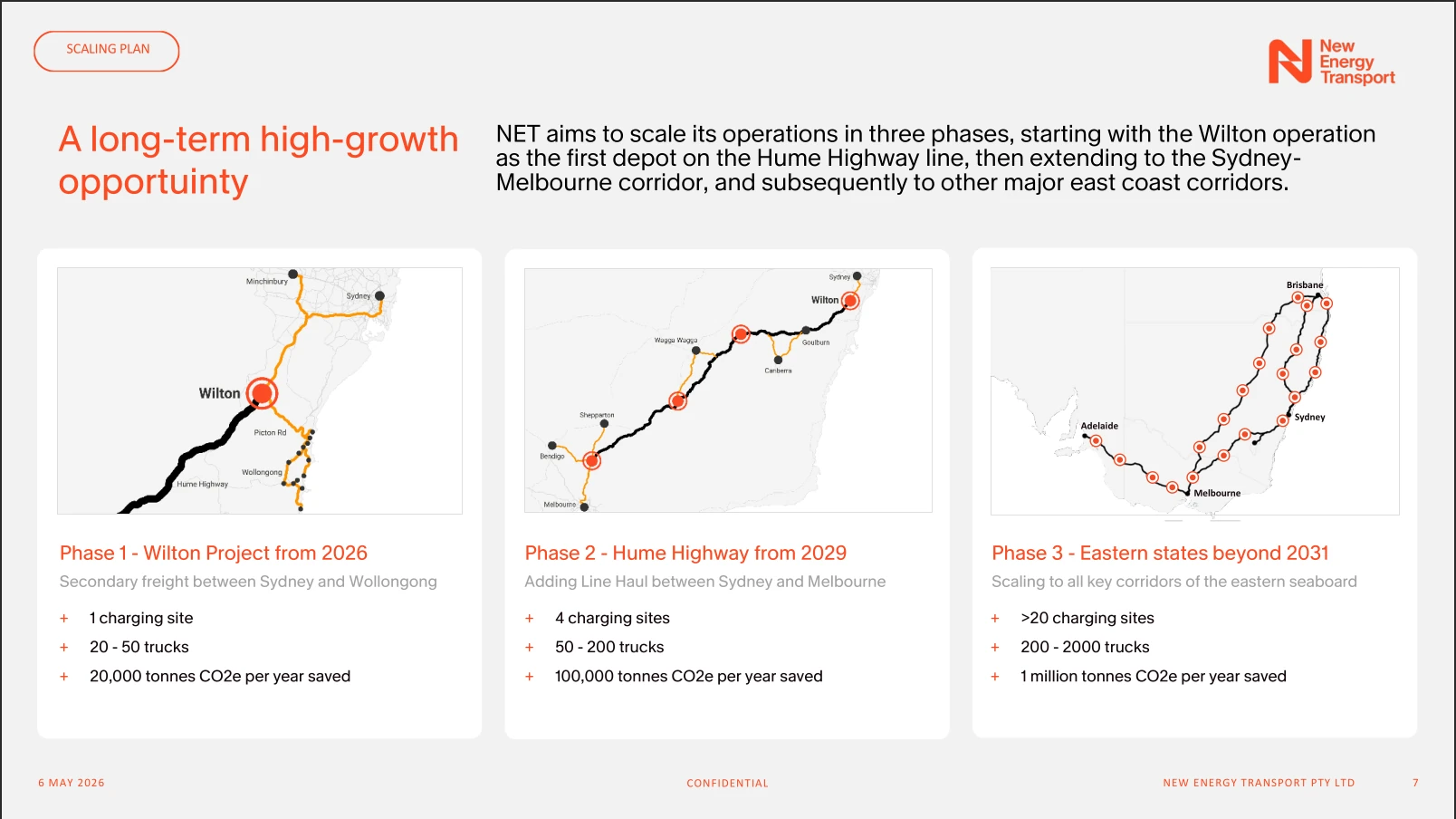
The next phase will enable line haul from Sydney to Melbourne from 2029, with 3 more charging sites strategically located along the Hume Highway in between Wilton and Melbourne. Electrifying road freight between Sydney and Melbourne is a no brainer according to David Leitch from Renew Economy, who estimates the economic payback is less than 4 years.
New Energy Transport’s third phase is a much bigger expansion targeted for 2031, to greater than 20 charging sites along the eastern seaboard, supporting up to 2000 trucks and saving 1 million tonnes of CO2e per year.
Looking beyond New Energy Transport, I attended another panel discussion on electrifying Australia’s trucks with representatives from Janus Electric, Solarh2e, NewVolt and Zenobe Energy who are also working hard on tackling the challenge of speeding up this transition for the heavy transport sector.
Other outcomes from the Freight Forward Summit include several “shovel-ready” policy recommendations for responding to the global fuel crisis. The Energy Futures Foundation resources page also has links to other related documents for more information on the topic of freight electrification.
Similar to tackling climate change in general, we need government support and many companies of all different shapes and sizes working together to provide various solutions for freight electrification. There is no silver bullet, it is more like silver buckshot, or everything everywhere all at once, as long as it’s electric.
Slides reproduced with permission of New Energy Transport.
See The Driven’s detailed EV sales data here: Australian electric vehicle sales by month in 2026; by model and by brand.
Sign up for The Driven’s free daily newsletter and get the latest EV news and analysis delivered straight to your inbox.