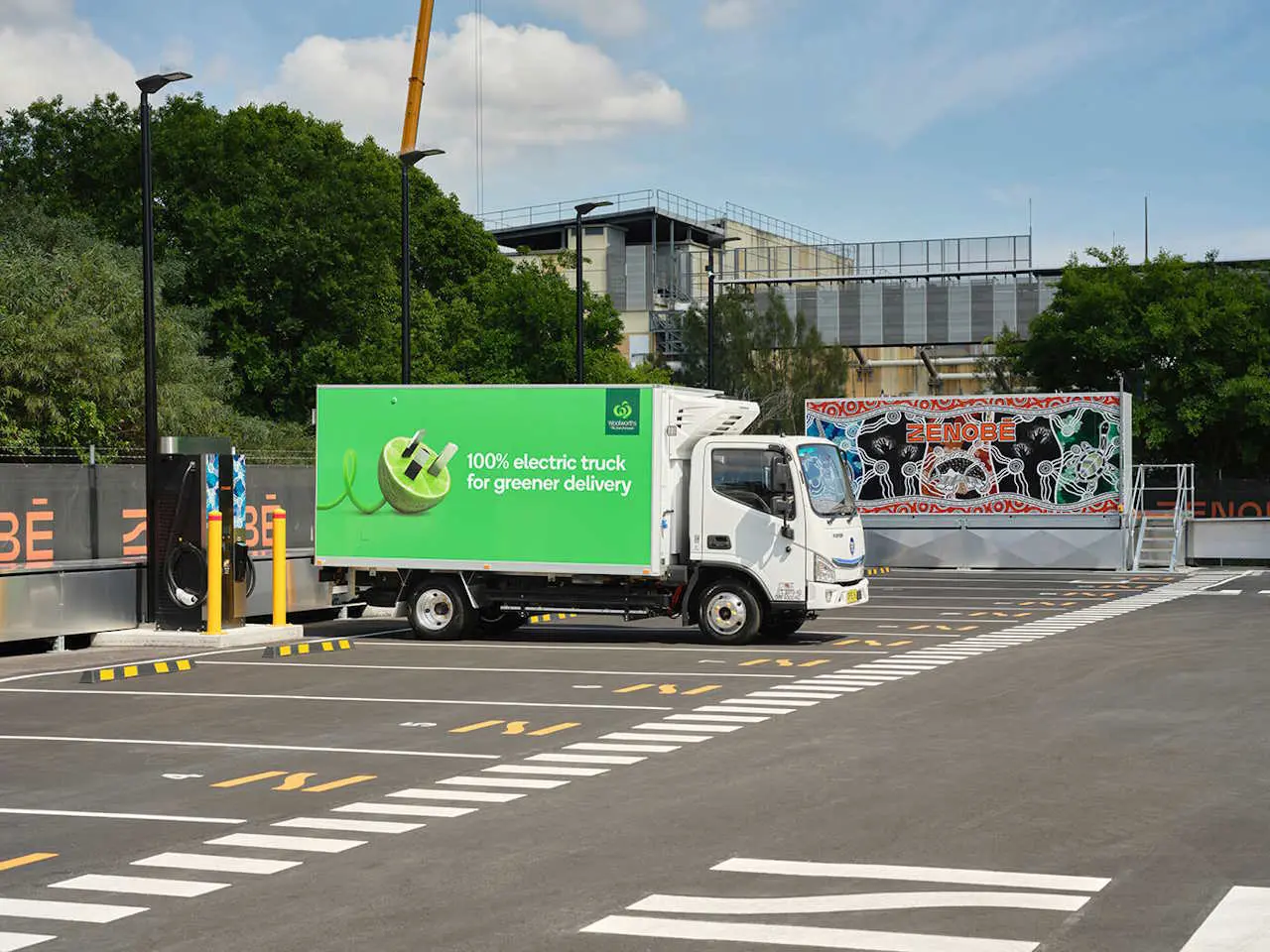
London based fleet electrification and battery storage specialist Zenobē is now accepting expressions of interest for its $100 million truck electrification funding initiative from heavy vehicle fleet operators across Australia.
Announced last month at the Freight Forward conference in Canberra, Zenobē committed to invest $100 million in an effort to accelerate the rollout of zero-emission freight across Australia.
The $100 million investment will fund not only the purchase of electric trucks, but the full ecosystem necessary to support their operation – including charging infrastructure, battery replacements, and deployment. Zenobē aims with its massive investment to match or beat the total cost of ownership (TCO) of diesel fleets.
“The direction we set in the next five years will define the trajectory for the next two decades,” said Gareth Ridge, country director for Australia and New Zealand at Zenobē.
“Our goal is simple: to make the transition total cost of ownership neutral so the sustainable choice is also the commercial one.”
Zenobē aims to double the number of heavy electric trucks operating on Australia’s roads by the end of this year, from the approximate 1,000 currently in operation.
Its fleet electrification program is open to organisations that operate medium to large heavy commercial vehicle fleets across Australia, have depot-based operations or predictable duty cycles – including end-to-end heavy haulage routes, and are planning to electrify their fleets within the next 12 to 36 months.
Funding will aim ensure there are zero upfront infrastructure costs and no upfront capital costs for vehicles or charging assets. The funding program also aims to reduce peak electricity demand and lower operating costs; provide end-to-end project accountability; and deliver no-cost feasibility studies, design, and commercial proposal development.
Zenobē expects key Australian industries to benefit from its new funding program will include logistics and freight, waste and municipal services, bus and passenger transport, and service and utility fleets such as energy, industrial, and construction sectors.
The funding initiative comes at an important time for Australia’s transport, as the global fuel crisis pushes operating costs higher and increases uncertainty, while over 50 per cent of Australia’s truck fleet is more than a decade old.
Heavy vehicle fleet operators are currently smack-bang in the middle of making decisions about replacement technologies as their vehicles near the end of their operating life.