Tesla has produced the first production model of its two-seater Robotaxi, the Cybercab, at its factory in Texas, marking the official start of its autonomous vehicle production.
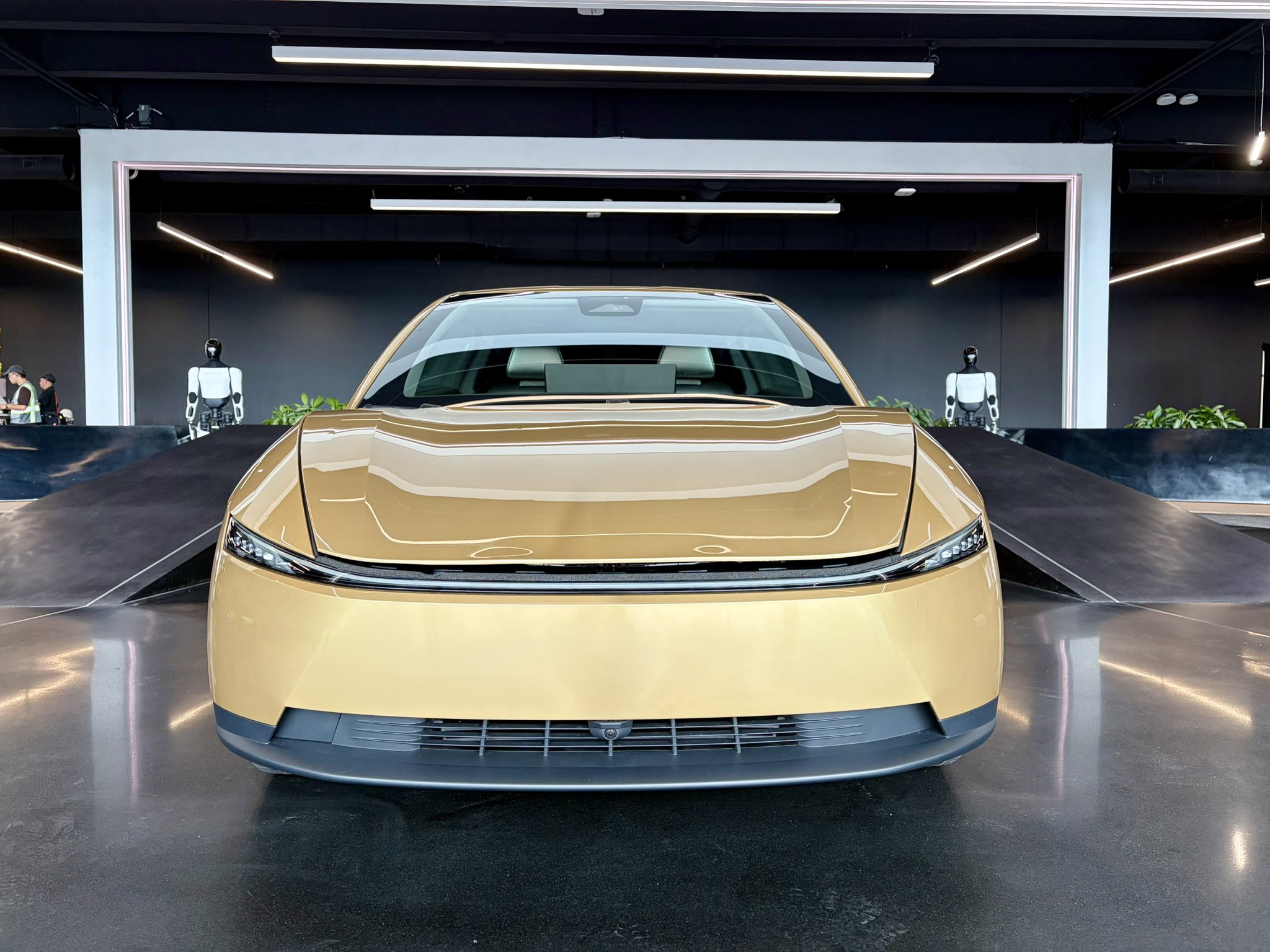
A glossy gold Cybercab at GigaTexas was seen in photos shared by TechOperator on X, with the caption: “Presenting VIN Zero — the very first production Cybercab built at Giga Texas”.
This production version appears to have a glossy finish to the gold paint, which was previously matte on all test vehicles spotted across the US.
Presenting VIN Zero — the very first production Cybercab built at Giga Texas. pic.twitter.com/8bXo4CJAlr
— TechOperator (@TechOperator) April 23, 2026
It also gives us a first look at what the mass production version’s finish would look like, including the black seats with the fold-down centre armrest.
Tesla first showed the Cybercab at the company’s “We, Robot” event in late 2024, which was an invitation-only event.
In the evening, hundreds of fully autonomous test rides with the Cybercab and Model Y Robotaxis were held on closed roads at Warner Bros. Studios in California.
Since then, plenty of sightings of the golden model have been made, with most either at Tesla’s test track near Fremont, California or on the roads in Texas.
The Cybercab is expected to cost around $A45,000 as a self-driving robotaxi, with reasonable boot space and fewer interior components than Tesla’s other passenger-car products.
A lead Tesla engineer previously said the company’s upcoming Cybercab is expected to have 50% fewer parts than the Model 3.
This will help the company scale much more quickly than the highly specialised vehicles used by its autonomous driving competitors, such as Waymo in the US.
Tesla is expected to have a slow ramp-up of the Cybercab production, given the manufacturing and assembly methods it’s deploying at scale, known as the unbox assembly method.