
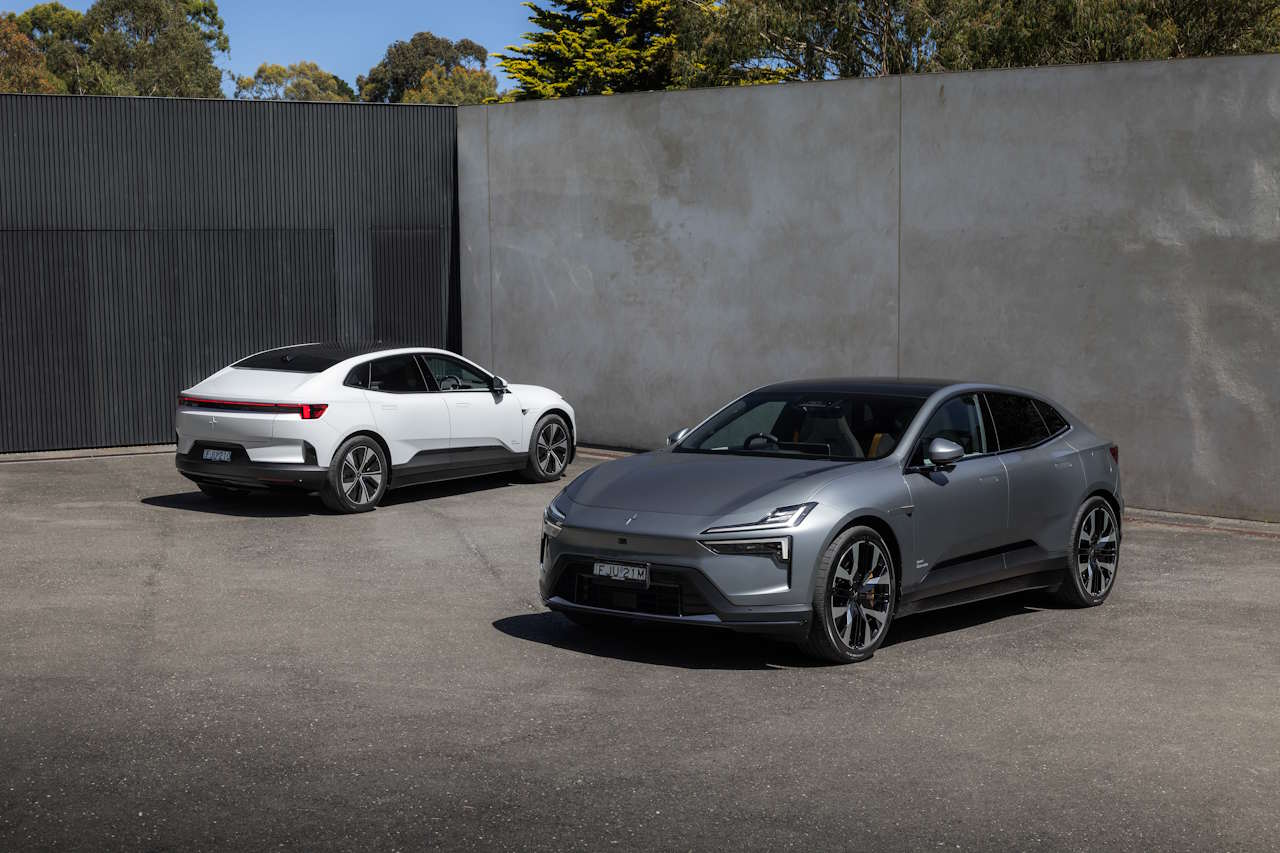
Swedish electric carmaker Polestar hopes that the release of four new EV models in the next year or two will help reverse its massive financial losses, which reached $US.236 billion in 2025 despite a one third lift in EV sales and a 50 per cent lift in revenue.
“2025 was a record year for Polestar, with retail sales of over 60,000 cars and revenue surpassing USD 3 billion,” according to Michael Lohscheller, Polestar CEO.
“Our strong commercial performance was driven by the expansion of our sales network and strength of our model line-up.”
Polestar – whose ultimate owner is China’s Geely – saw retail sales in 2025 increase by 34 per cent over 2024, reaching over 60,000. Revenue for the full-year 2025 was up 50 per cent to US$3.058 billion.
But its net loss widened to $US2.357 billion due to impairment charges, leading to non-cash write-downs on assets alone amounting to $US1.05 billion. The net loss in 2025 was 15 per cent greater than the $US2.05 billion recorded in 2024.
Polestar continues to have to raise significant capital, and this year has already raised $US700 million in new equity from external investors and extended the maturity of a $US726 million shareholder loan from parent company Volvo Cars.
But Polestar hope to make inroads into its profitability, unleashing its largest new model offensive with four new cars planned to be released in the next few years. The Polestar 5 is set to be released this year alongside a new Polestar 4 variant, ahead of the launch of the next-generation Polestar 2 in 2027 and Polestar 7 in 2028.
“In 2026, our operational focus will be on the continued expansion of our sales network, growing our sales points by a planned 20 per cent, to coincide with the largest model offensive in our history, with four new models planned during the next three years,” said Lohscheller.
“While we expect market conditions to become more challenging, amid ongoing geopolitical developments, we will continue to drive financial performance, building on our achievements in 2025, with an improved model mix, sustained cost reduction and financial discipline.”