
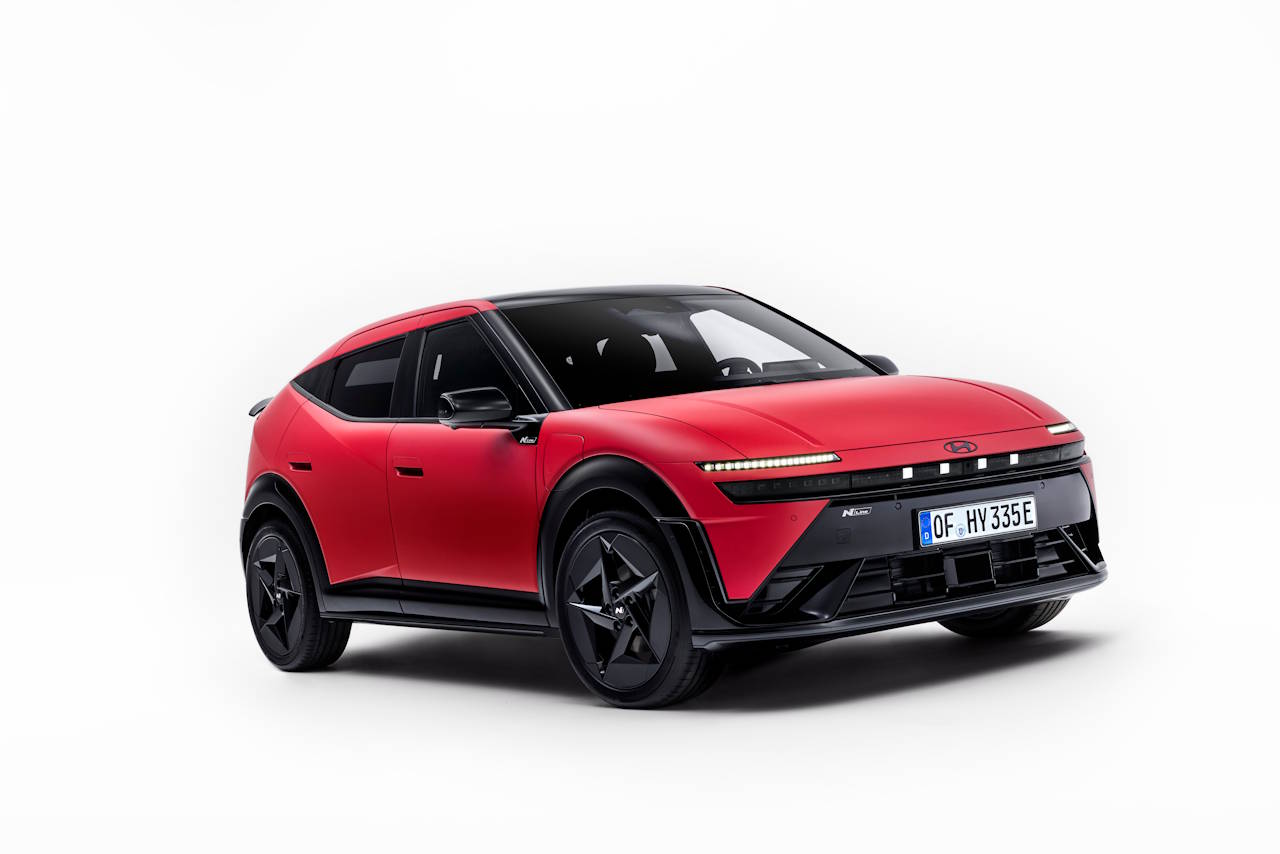
South Korean automaker Hyundai has unveiled its next electric vehicle (EV), the Ioniq 3 compact hatchback, which will debut first in Europe with two battery options before it arrives in Australia in early 2027.
The new Hyundai Ioniq 3 is designed around a so-called “Aero Hatch” typology, featuring a silhouette optimised for both aerodynamic efficiency and generous interior space, which is expected to deliver a class-leading drag coefficient of 0.263.
Built on the same electric platform and charging architecture that underpins sister company Kia’s EV2, EV3, EV4, and EV5 – the company says it is targeting a “balanced combination” of driving efficiency, range, and charging capability that supports “everyday comfort and ease of use”.

Two battery options will be available, the standard range 42.2 kWh and the long range 61 kWh, with a range of 344 kilometres (km) for the standard and 496 km for the long range version.
Both will feature DC fast charging that takes the car from 10 to 80 per cent in 29 or 30 minutes (depending on the battery), and a front-wheel drive powertrain delivers up to 107.8 kW (147 PS) of output and 250 Nm of torque and a top speed of 170 km/h.
Hyundai says it will release specifications and pricing for the Australian version of the Ioniq 3 closer to its launch window of early 2027.
“With Ioniq 3, we are bringing the bold design, driving enjoyment and advanced features of the Ioniq brand to a broader range of customers across Europe,” said Xavier Martinet, president and CEO of Hyundai Motor Europe
“Built for people’s real everyday needs, Ioniq 3 combines an expected segment-leading driving range and aerodynamics with extraordinary levels of space, comfort and practicality.”
He said the Ioniq 3 also marks the debut of the Pleos Connect infotainment system, which he says deliver sharp graphics, an intuitive user experience and broad customisation options.
The car also boasts luggage capacity of 441 litres and generous legroom and headroom thanks to its long wheelbase and flat-floor layout, while up front the Ioniq 3 also debuts the Pleos Connect infotainment system based on Android Automotive OS (AAOS) on a choice of either a 12.9-inch or 14.6-inch display.
Interior and exterior vehicle-to-load (V2L) functionality has also been added, while the Hyundai Digital Key 2 enable keyless access via smartphone or wearable devices.