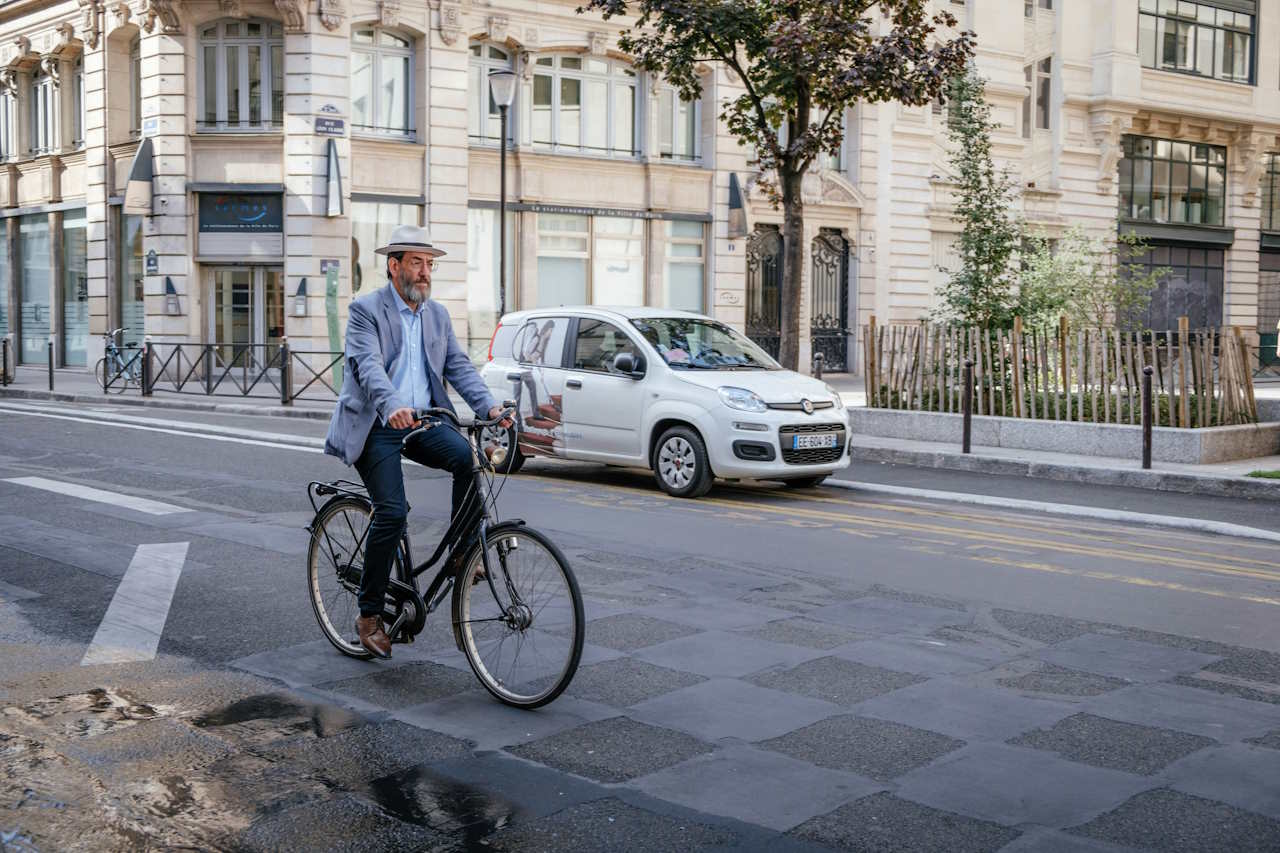
It was April 1 and there were some ‘funny’ things going around. One is a “press release” from the Department of Pedalling and Perspiration.
It suggests (you can read it in full below) that in response to the Iran crisis, cyclists should be paid $1 per kilometre up to $50 a day for their efforts in reducing fuel consumption. As someone who clocked up over 25km riding between childcare drop-offs and meetings around town, I feel quite the April fool for wishing it were true.
In Prime Minister Albanese’s address to the nation, those of us who bravely face roo-bar-armoured utes driven by careless, phone-wielding, texting drivers with nothing but a polystyrene helmet for protection got no mention.
Whilst Australians were urged to take public transport, active transport didn’t get a mention: no scooting, biking, or walking to solve the energy crisis, and certainly no urging to get that treadle out of the shed and onto the road.
As cyclists we need to fight quite hard for recognition, for space on the road. One example of this fight is what we did for Neighbours Day in my inner Melbourne neighbourhood.
Neighbours Day is an initiative by Relationships Australia to foster connection between people, and what we did was come together to fight for a better neighbourhood and a little more space for walkers, cyclists, scooters, and trees.
On the agenda was the fantastic initiative to heal the massive scar that runs through the heart of Collingwood by making Wellington Street a much better place for pedestrians, cyclists, and residents.
The plan is to install some much-needed new crossings at key points near schools, to slow traffic to 30km/h, and to add traffic-calming features. It also adds a number of new trees, greening and shading an inner-urban neighbourhood.
Despite this well-intentioned and well-engineered project, there is a lot of fear and suspicion. This revolves around the concern that the through traffic that uses Wellington Street will not get pushed onto Hoddle Street where it belongs, but will rat-run through the quieter streets of the neighbourhood.
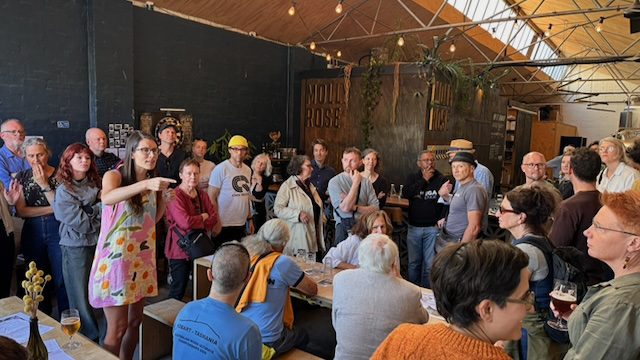
The event was organised by the campaign in favour of the change and hosted by local brewery Molly Rose, one of several businesses on the street that see traffic calming as a positive. Not everyone is in favour. There is a Metro-branded petrol station and a local repair shop on Wellington Street that fear a drop in trade.
Perhaps it was the lure of a drink in the warm autumn sunshine, but the event attracted a broad spectrum of the community, and four of the eight councillors who will have to vote on the decision were present: Mayor Steven Jolly, Cr Sophie Wade, Cr Sarah McKenzie, and Cr Ken Gomez.
Not all have made up their minds, but they were all keen to listen to the views of the community, not all of whom were in favour of the scheme, or the scheme in this form. Cr Sophie was keen to point out that the purpose of the consultation was to adapt the plans to the needs of the community.
Also in attendance was our state member and local cyclist, Gabrielle di Vietri. She was keen to point out that the Greens on the crossbench had secured long-term funding for active transport investments across five local councils, funding that comes from the Congestion Levy, which taxes off-street parking in central Melbourne.
City of Yarra has $3 million a year from the fund, but she was keen to stress that this funding was on a use-it-or-lose-it basis and that the Council was yet to propose projects to utilise this year’s funding.
This funding is a welcome boost to a country that spends less on active transport than any other OECD nation. At a time of rising fuel prices and possible shortages, the more people who walk, scoot, and cycle, the more fuel we have available for everything else. For people to make that change they have to feel safe, and they have to feel that their children and family members are safe.
Last week, Austroads, the peak body for Australian government transport departments, published planning guidance for roads around schools to promote more walking and cycling to schools. The fact that this is the first time this has been done just shows you how far we have to go.
$3 million each for five inner Melbourne councils, if they choose to take it, is not a lot. It doesn’t build a lot of infrastructure, it doesn’t help people feel safe enough and confident enough to cycle to work or take their kids to school and daycare on the bike.
It shouldn’t take a crisis to promote action, and even this crisis has not prompted much more than a gag floating from inbox to inbox, a gag that represents a reasonable idea: rewarding people for running their commute on the porridge they eat for breakfast rather than the petrol they put in the tank.