
Suzuki, a well-known Japanese car maker, has been selling cars in Australia since the 1970s, with smaller petrol-powered hatchbacks, like the popular Swift, and SUVs such as the Vitara.
It is now bringing in the new Suzuki e-Vitara, which is expected to arrive at our local shores in the coming months as the Japanese brand’s first EV in our market.
I recently experienced the model firsthand during a media preview at Sydney Motorsport Park and on surrounding suburban routes to get an idea of what this SUV would be like to drive.
Starting with the two variants on offer from the brand, the e-Vitara will be coming in Motion and Ultra.
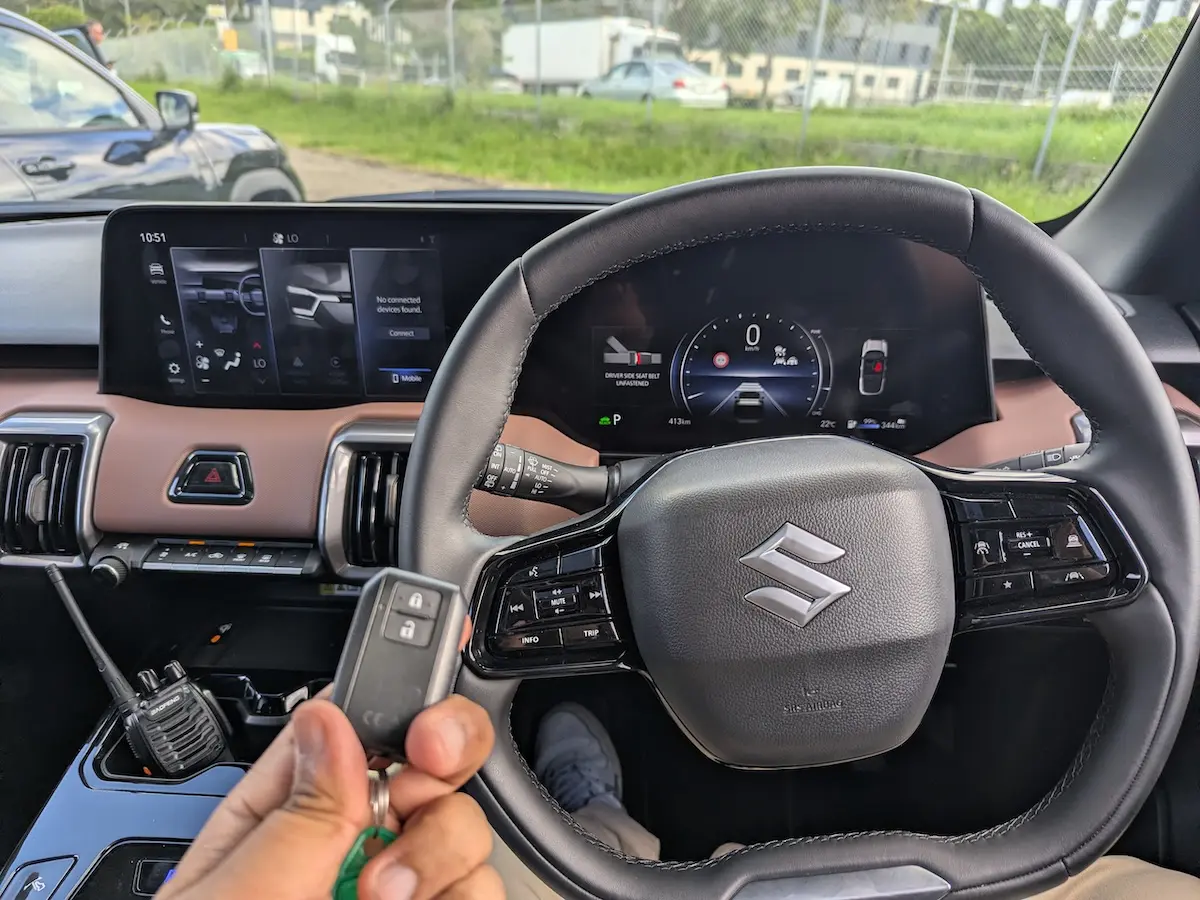
I got a chance to drive both, but found the flagship Ultra variant, equipped with the Allgrip-e all-wheel-drive system, more interesting, as most SUVs in its class only feature front or rear-wheel-drive powertrains.
This AWD Ultra variant has a combined power output of 135 kW and 307 Nm of torque, and can get from 0-100 km/h in 7.4 seconds, which on the road felt zippy enough.
It also comes with a bigger 61 kWh battery, delivering up to 395 km of range. In the real-world testing, I found it getting close to that range, but of course, a longer test is needed to see what it’d do in city traffic and on highways.
Although we didn’t get to test any charging speeds, the e Vitara can charge from 10-80% in about 45 minutes at up to 70 kW DC, coming in under some of its rivals. Having said that, an AC charging speed of 11 kW would be welcomed by buyers.
Regarding the driving dynamics, the more powerful motor responded well to accelerator input and was fairly linear on suburban roads.
On the track at Sydney Motorsport Park, the response was also fairly good off the line, where we did a few acceleration and braking tests, coming to a complete stop from 100 km/h.
Around the cones set up to showcase its agility, it went around them with little body roll, helped by the low centre of gravity from the Heartect-e platform it comes equipped with.
The Allgrip-e system also worked well in this and other tests, particularly when soft roading on the 4WD course around the motorsport park.
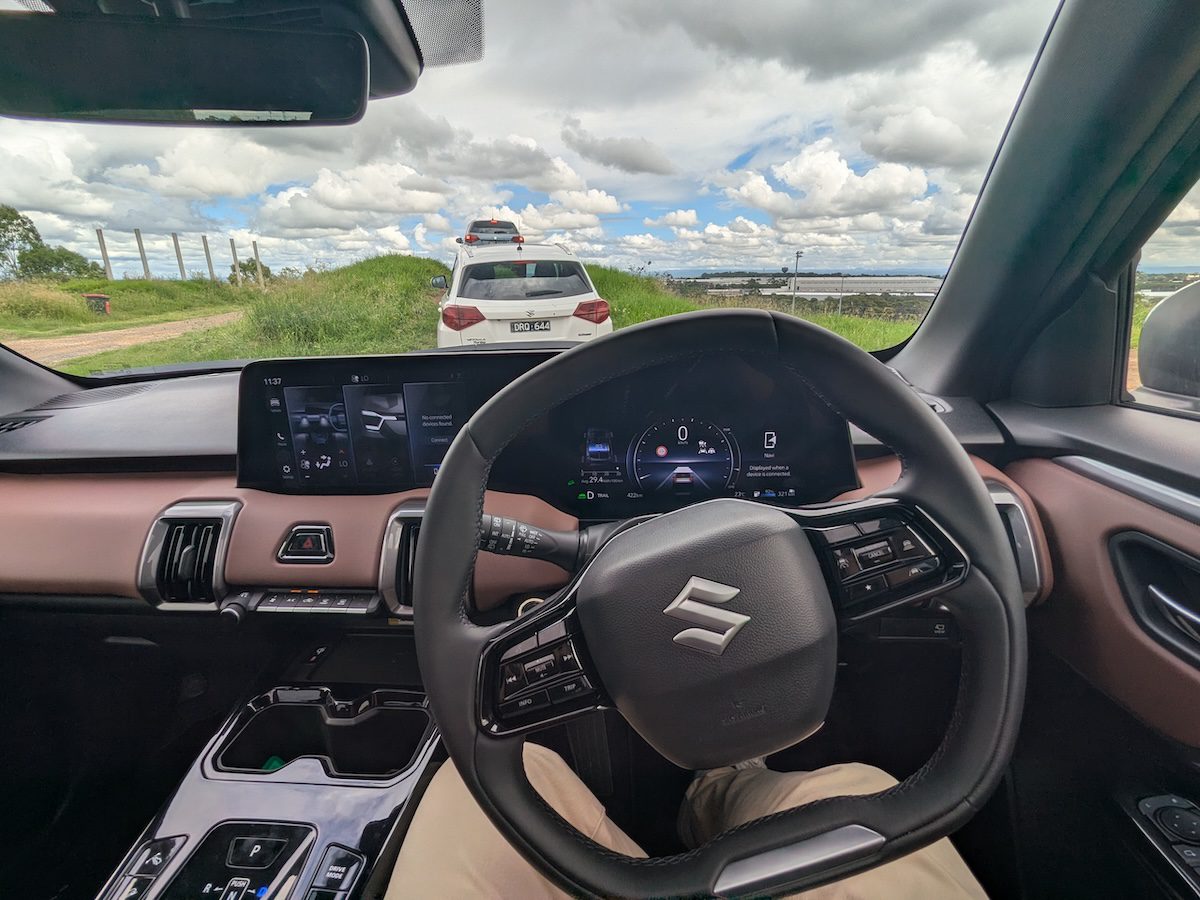
It distributed power quite well between the front and rear, providing extra grip on damp parts of the course from previous rain. Even on softer sections with loose dirt and mud, it wasn’t an issue in the off-road mode.
The steering in both on and off-road sections gave reasonable feedback, although it was not as direct as you’d find in a few other smaller AWD SUVs. It wasn’t completely vague either, and around suburbs and highways, it’d be similar to the Vitara hybrid and ICE models.
Inside, the cabin noise remained low, thanks to electric silence and solid insulation. This made highway cruising a lot better than the Vitara hybrid we also got behind the wheel of for comparison.
With no transmission lag and an overall improvement in tech, it’s quite a good option for Suzuki buyers who want something that is so much better on the road.
Another area that has seen upgrades over the standard Vitara is the tech inside. The 10.1-inch screen with wireless Apple CarPlay and Android Auto as standard was quite good as it made it easy to follow the driving route, using our mobile phone.
Materials inside feel durable, with soft-touch surfaces in key areas, but there were also more plastics than some of its rivals around the $45,000 mark.
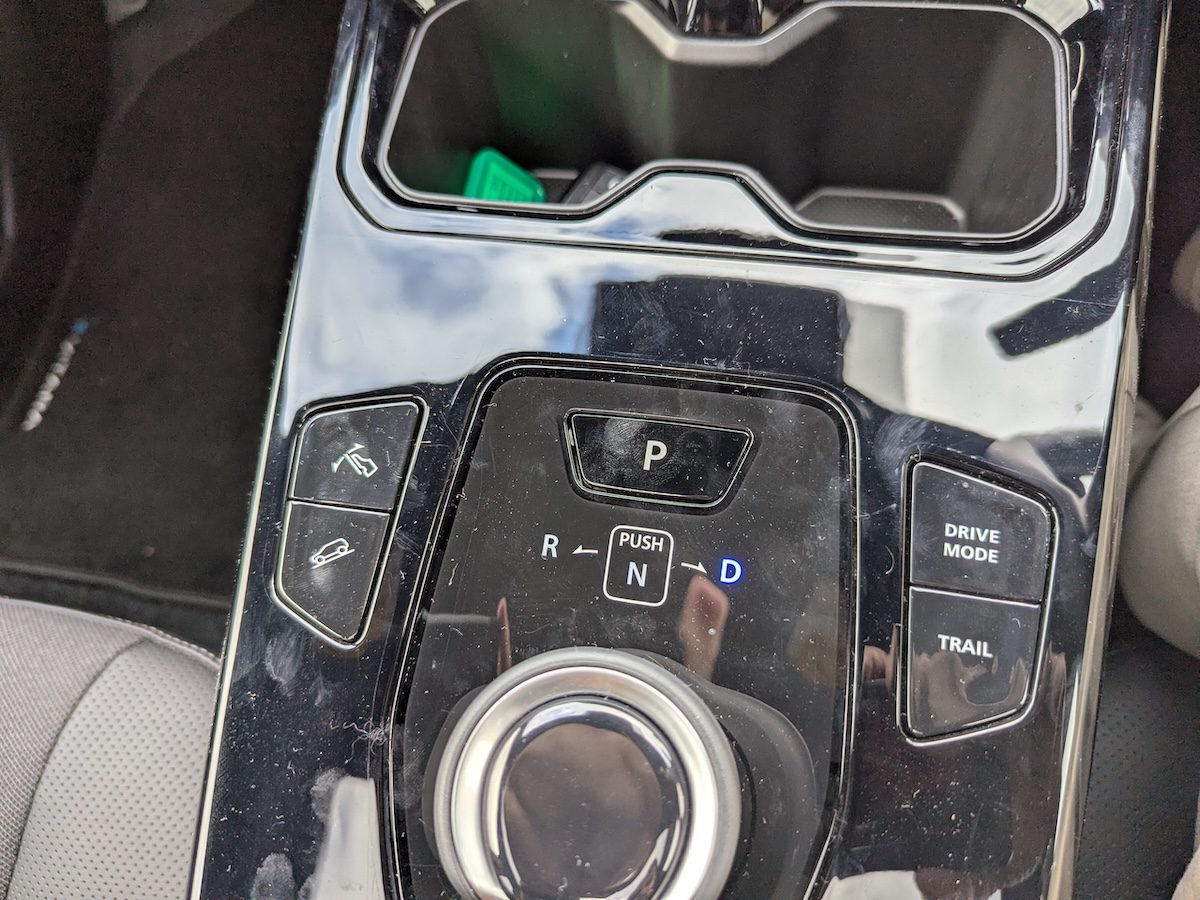
Ambient lighting was also a good modern feel, and many Suzuki buyers would value the upgrade over previous models.
Front seats also offered good support, while the back seats could fit adults comfortably, with decent legroom and headroom. Boot capacity was also reasonable for families looking for that space.
All in all, the e-Vitara avoids going all-in with tech as it keeps Suzuki’s straightforward, capable, practical, reliable car ethos in check.
On top of that, it’s ready for light off-roading thanks to that ground clearance and AWD option in the All-Grip variant.
In a segment crowded with BYD Atto models, MG options, and emerging Chinese EVs, the e Vitara shows an approach that is likely to gel well with existing Suzuki and Japanese brand owners.
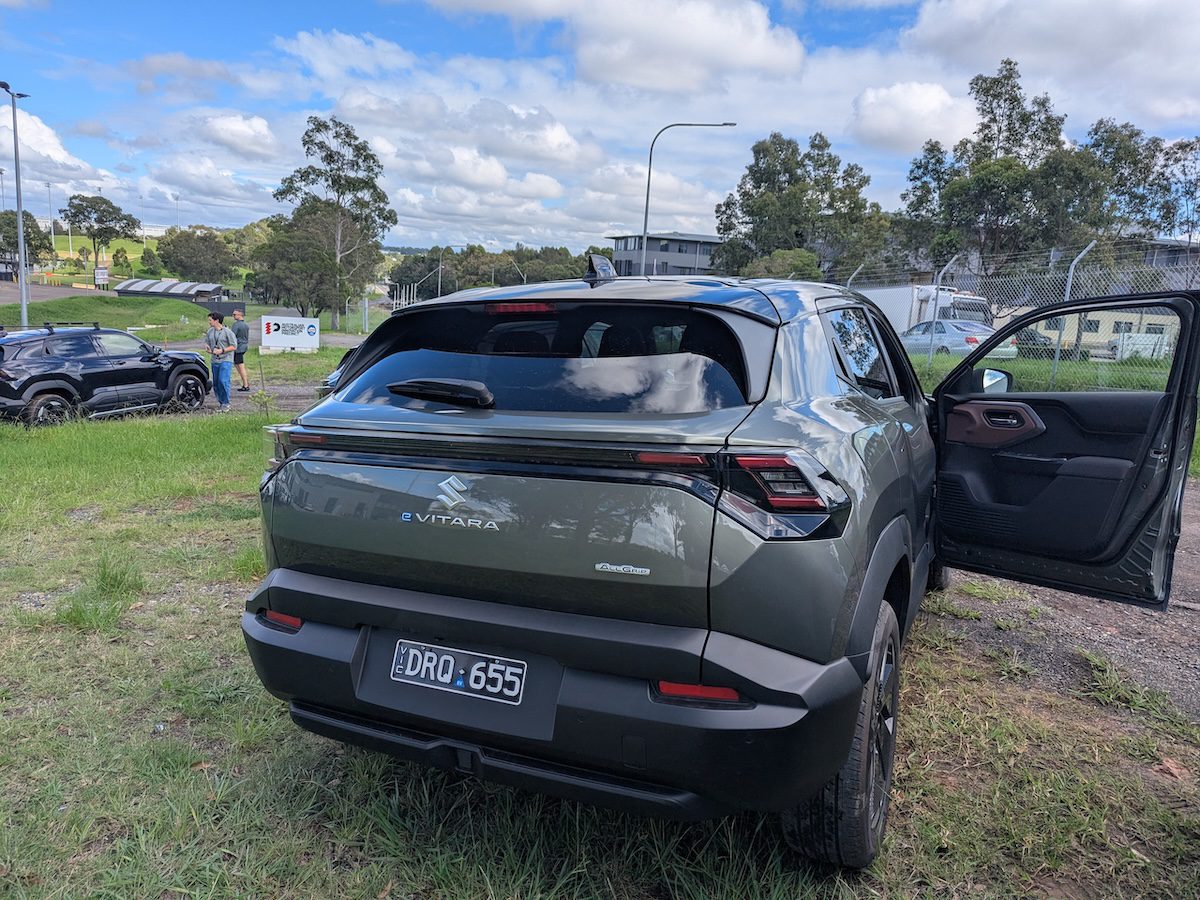
My drive at the Sydney Motorsport Park gave a good impression of where Suzuki as a brand is heading with the e-Vitara, feeling like a next-gen car under the Vitara name. From this early drive, it feels like it will be for those looking at an EV for the first-time from a trustworthy brand.
We look forward to seeing its price before it arrives on our shores in mid-2026 and of course, putting it through the paces on our roads.
e Vitara Motion Features:
- 49kWh
- FWD
- 344km driving range
- 18-inch alloys
- High Beam Assist
- RCTA
- 360 view camera
- Driving modes
- Auto headlight
- Rain-sensing wiper
- 10.25-inch digital IP
- 10.1-inch centre display with AA / CP / BT
- Leather-wrapped steering wheel
- Front & rear USB ports
- Single-zone climate control
- Interior ambient lighting (12 colours)
- Fabric seats
- 4-speaker audio
e Vitara Ultra Features (on top of Motion variant):
- 61 kWh
- 395km driving range
- AWD
- ALLGRIP-e
- Adaptive High Beam
- Front LED fog lamps
- Glass roof with shade
- Infinity sound system with subwoofer
- Wireless charger
- Fabric and synthetic leather seats
- Electrically adjustable driver seat
- Front heated seats
- Premium fabric and synthetic leather upholstery
Safety Suite:
- 7 Airbags
- Adaptive Cruise Control (ACC)
- Autonomous Emergency Braking (AEB)
- Lane Keeping Assist (LKA)
- Lane departure Prevention (LDP)
- Forward Collision Warning (FCW)
- High Beam Assist (HBA)
- Blind Spot Monitor
- Electronic Stability Control (ESC)
- Anti-Lock Braking System (ABS)
- Dual Sensor Brake Support II (DSBS II)
- Multi-Collision Braking (MCB)
- Front and rear parking sensors
Technical Specifications
| e VITARA Motion | e VITARA Ultra | |||||||
| Drive system | 2WD | 4WD | ||||||
| DIMENSIONS | ||||||||
| Overall length | 4,275 mm | |||||||
| Overall width | 1,800 mm | |||||||
| Overall height | 1,635 mm | |||||||
| Wheelbase | 2,700 mm | |||||||
| Tread | Front | 1,540 mm | ||||||
| Rear | 1,545 mm | |||||||
| Minimum turning radius | 5.2 mm | |||||||
| Minimum ground clearance | 180 mm | |||||||
| Seating capacity | 5 | |||||||
| MOTOR | ||||||||
| Maximum output | 106 kW | 135 kW | ||||||
| Maximum torque | 193Nm | 307 Nm | ||||||
| BATTERY | ||||||||
| Type | Lithium Iron | |||||||
| Total Capacity kWh | 49 kWh | 61kWh | ||||||
| CHARGING | ||||||||
| Estimated charging time | ||||||||
| AC charging, 7kW, 1 phase > hh:mm 10-100% | 6:30 | 9:00 | ||||||
| AC charging, 11kW, 3 phases > hh:mm 10-100% | 4:30 | 5:30 | ||||||
| DC rapid charging > hh:mm 10-80% | 0:45 | 0:45 | ||||||
| Charging inlet | AC charging inlet | Type2 (1phase) | ||||||
| DC charging inlet | CCS2 | |||||||
| TRANSMISSION | ||||||||
| Type | Single-speed electric drive | |||||||
| CHASSIS | ||||||||
| Steering | Rack & pinion | |||||||
| Front and rear brakes | Ventilated disc | |||||||
| Suspensions | Front | MacPherson strut with coil spring | ||||||
| Rear | Multi-link | |||||||
| WHEELS | ||||||||
| Tyres (width/profile) | 225/55/R18 | |||||||
| Wheel type | Machine- finished alloy wheel | |||||||
| WEIGHT | ||||||||
| Curb weight | 1,702 kg | 1,860-1,899 kg | ||||||