
Volkswagen Group has just reached a significant milestone in its (and the world’s) EV Transition, reaching four million of full battery electric vehicle sales little more than a decade after its first offering.
VW started its electric journey in 2013 with the the e-up! – an electric version of the VW up! – and followed it in 2014 with an electric version of their popular Golf model.
They have now delivered four million BEVs worldwide, including EVs offered under the Audi, Porsche, Cupra and Skoda brands. Most of these have been sold since 2019 when the group introduced the MEB electric-only platform, on which three million of that four million total have been built.
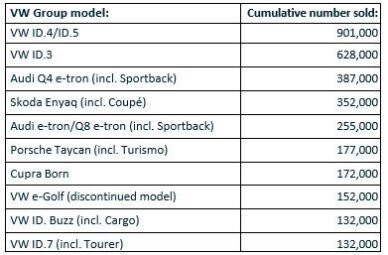
The following list gives an overview of the 10 most popular BEVs from the Volkswagen Group (to the nearest thousand), which together accounted for more than 80 per cent of deliveries to date:
In addition, there are all-electric trucks and buses from VW Group brands Scania, MAN, International, and Volkswagen Truck & Bus.
Of that four million BEVs, around half came from Volkswagen brand passenger cars. This was followed by Skoda with 480,000, Seat/Cupra with 230,000, and Volkswagen Commercial Vehicles with 140,000.
After that comes around 870,000 Audi models, followed by another 250,000 Porsche vehicles. VW truck brands finish off the total with around 0.3 per cent of that four million BEVs. (Equating to around 11,000 vehicles).
Currently, around one third of all VW Group models are full-electric – and this year will see around half of all new VW Group models introduced being so. As to where they are going: at 68% more than two out of three were delivered to customers in Europe. China accounted for 20% and 8% went to the USA. All other markets combined accounted for the remainder.
Overall, in 2025, BEVs accounted for almost one in five new car sales – with the UK reaching almost one in four. China (the world’s biggest car market) hit more than one in three in January this year.
So what will the rest of 2026 bring? Whilst VW are one of many manufacturers slowing their electrification push in some markets due to headwinds created by the current US administration – it would seem the trend is now settling into one of inevitability, with the only variable being the actual date of the last mass-manufactured internal combustion engine vehicle built.