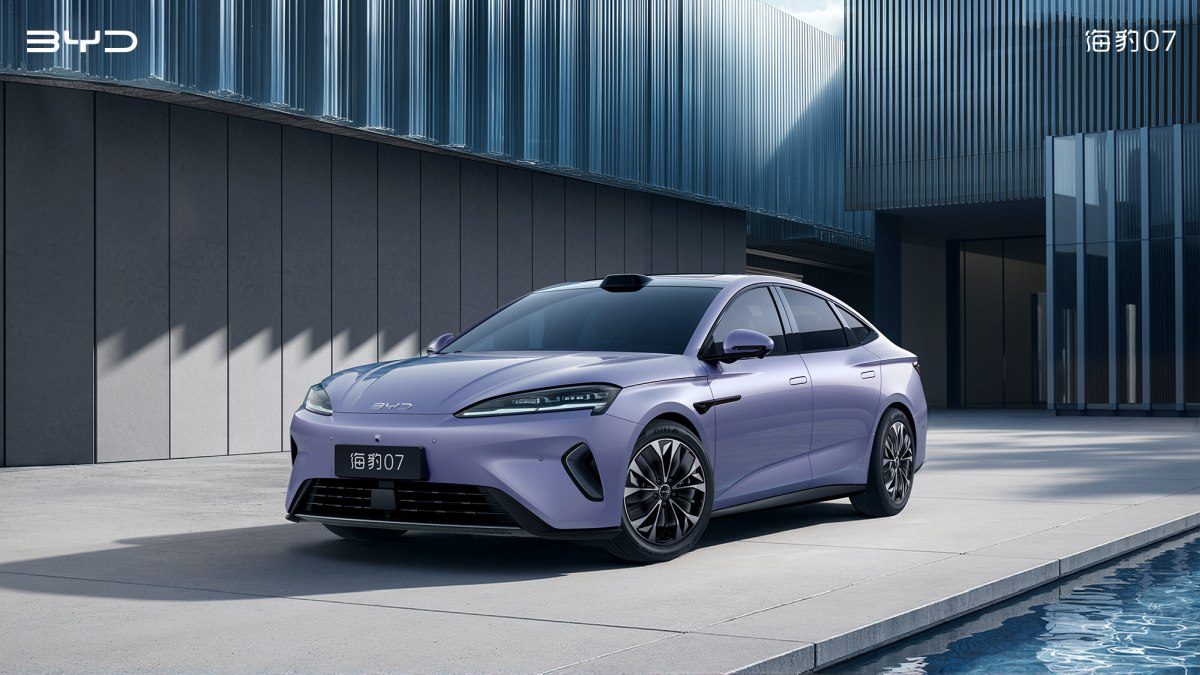
BYD, the world’s fastest-growing car company, appears to be on an onslaught of launching new models, with the latest event showcasing what could be the next Seal sedan, with Flash Charging tech, a new Blade Battery, and much more.
This car will be called the Seal 07 EV in China, with prices starting at the equivalent of under $A35,000.
The new model features charging times of 10-70% in just 5 minutes, using the company’s latest Flash Charging technology, unveiled last week.
That’s made possible thanks to the new Lithium Iron Phosphate (LFP) battery packs, which will keep their safety credentials of BYD’s Blade Battery tech but now incorporate charging speeds of up to 1,500 kW at the company’s upcoming Flash Charging sites.

BYD really wants its customers to use this Flash Charging tech in cars like this and is offering 1 year of free Flash Charging to initial customers of this sedan.
The Seal 07 EV will be slightly larger than the Seal sedan, which has seen thousands make their way to Australia, measuring 4,995 mm in length.
The new car features the same large 15.6-inch infotainment screen behind the steering wheel, which many BYD customers are quite familiar with.
A 50 W wireless phone charger is also seen in the centre console, and, like many of BYD’s latest cars, the inside now features the gear shifter relocated to the steering wheel.
Powering the new compact SUV is a single rear motor setup, delivering a powerful 240 kW.
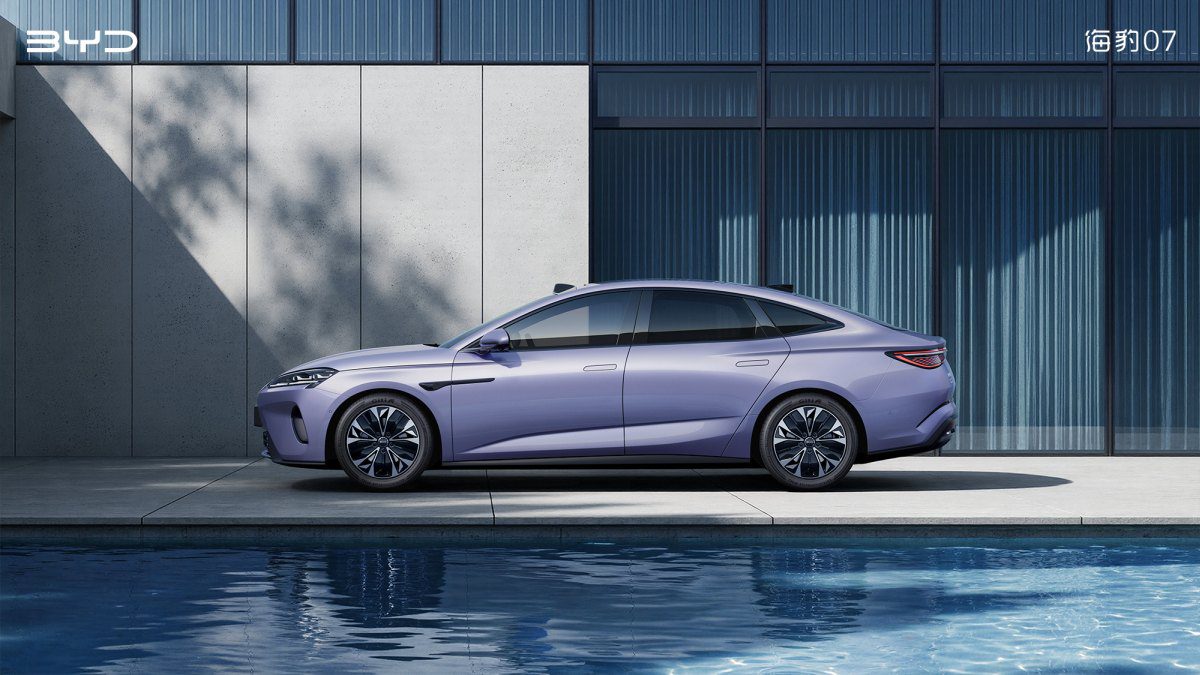
The single motor powertrain is powered by BYD’s second-generation blade batteries, which come in as a 69 kWh pack that will feed the motor.
Range-wise, the Seal 07 EV will have an NEDC range of 705 km, likely over 550 km on the WLTP test cycle.
The latest-generation platform also allows for a 133 L frunk, which is quite a good size and much larger than the current BYD Seal frunk with 53 L of volume.
According to the brand, the new model includes over 100 standard features at a price point unheard of a few years ago.
Given the amount of tech featured in the car, which can also be equipped with LiDAR for an assisted driving system functionality, it really highlights the engineering and technology that’s gone into this model.
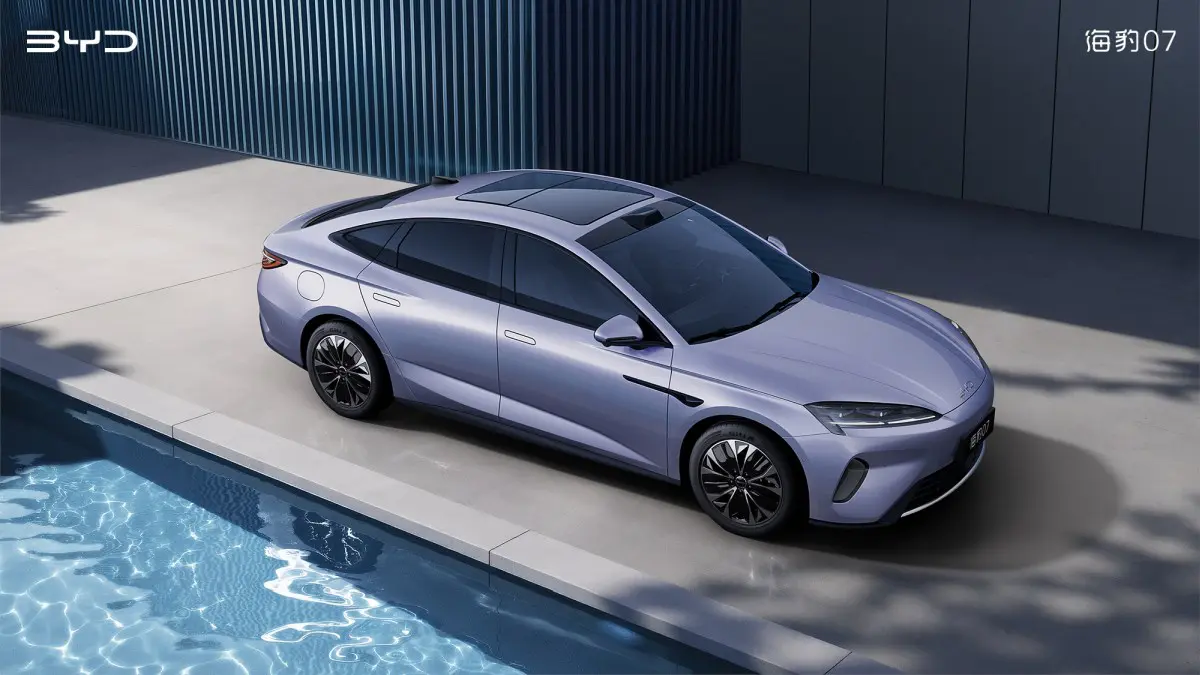
We look forward to seeing it in person in China in the coming months, as quite a bit of this tech is likely to be available in our local market in the near future.
For now, though, it’s a big step up over the current Seal, and with charging speeds that are quicker than filling up at a servo, it’s bound to grab headlines that ICE drivers today will pay attention to.