The year 201o. The year the first iPad was launched, the Best Picture Oscar went to The Hurt Locker, and both Kevin Rudd and Julia Gillard were Australia’s Prime Ministers.
I doubt that many original iPads are still in use (or working), The Hurt Locker has pretty much been consigned to the bin of forgettable films … and it’s been over a decade since either Julia or Kevin were in parliament.
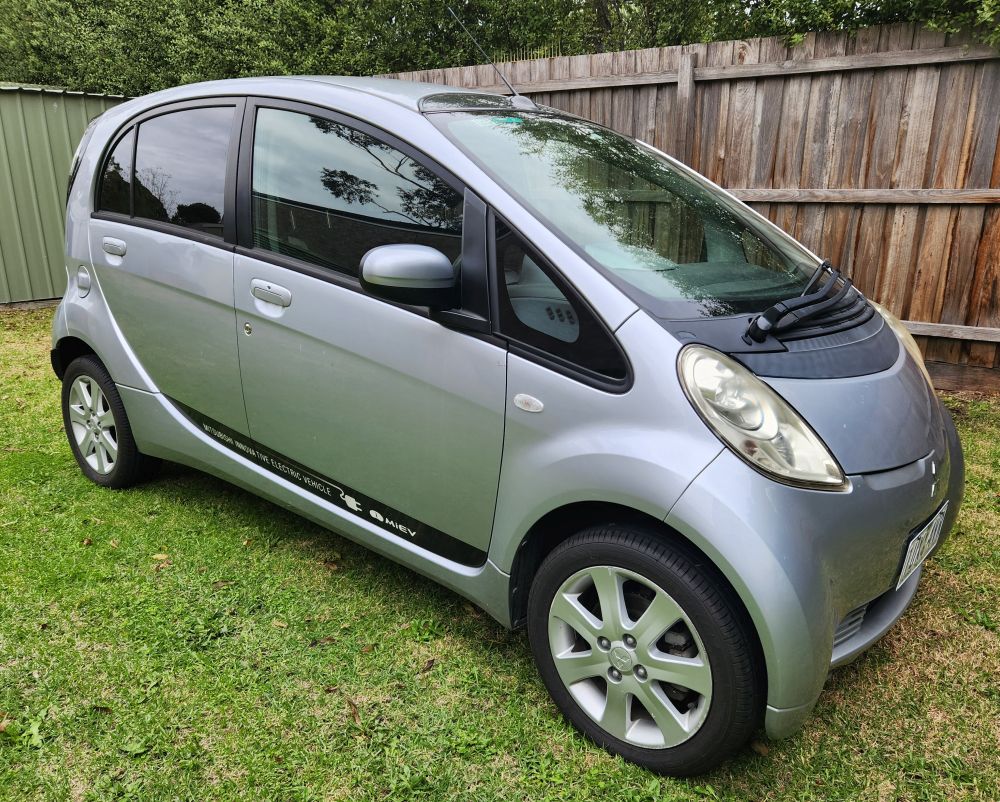
2010 was also the year the very first Mitsubishi iMiEVs arrived in Australia. Launched in mid-2009, the iMiEV back then was the world’s first modern-era mass production BEV. Powered via the rear wheels by a 47 kW motor, it had a 16 kWh battery, 40 kW DC fast-charging, 3 kW AC charging and a rather optimistically quoted driving range of 150 km (in reality, 100 to 110 km).
All that could be yours back then for a ‘mere’ $63,000 lease-only price. (Versus around $15,000 at the time for a Toyota Yaris). The price quickly dropped to around $50,000 on-the-road, but it didn’t help much and by 2014 Mitsubishi Australia stopped had selling them, with only around 250 hitting Australian roads.
It did remain popular in its Japanese home market though, where production continued until 2021. Overall, something in the vicinity of 50,000 units were sold worldwide.
Also, unlike original iPads (or Julia and Kevin’s political careers) my 2010 iMiEV is still going. So what has changed in the EV world since 2010? And why is it still going (on its original battery I might add), long after the naysayers suggest an EV battery should live?
Today, the currently cheapest new EV (the BYD Atto 1) is $26,500 on-the-road. For that you get 220 km of real-world city range plus a whole lot more tech.
My iMiEV has AM/FM radio, CD player, sat nav, ABS, a couple of airbags (one of which was replaced for free under the Takata air-bag recall), rear drum brakes, no stability control and a manual handbrake. In Japan it also included vehicle to load (V2L) and vehicle to grid (V2G) functionality, but this was never enabled in those brought here.
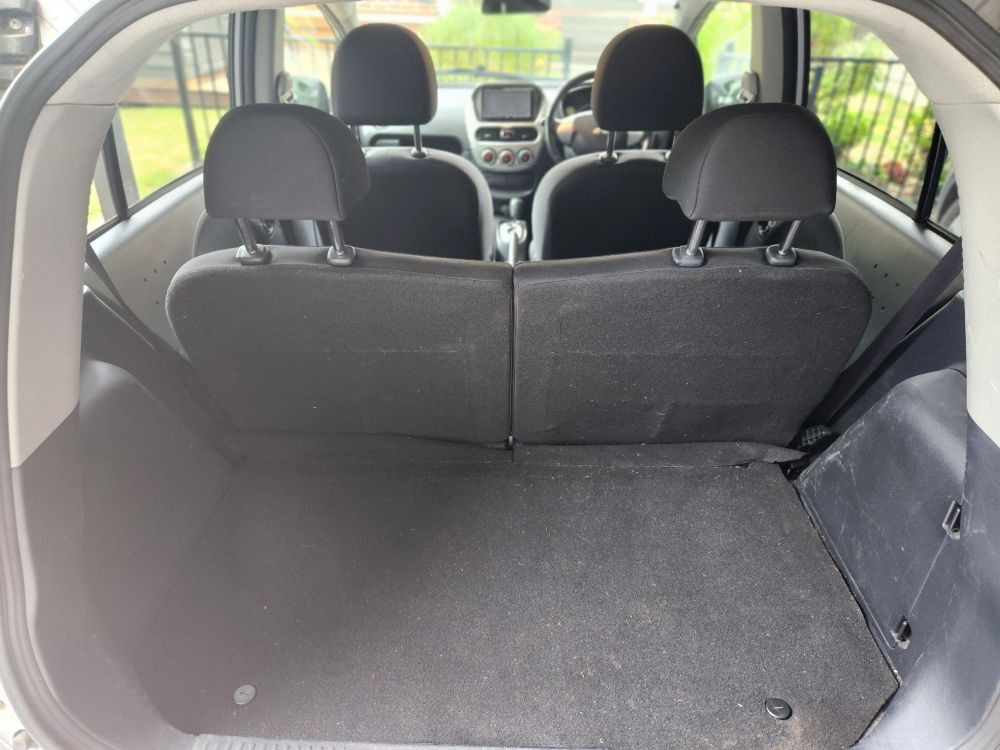
For comparison, that $26k base model Atto 1 has a 30 kWh battery with 220 km of WLTP range, V2L via a simple adaptor, FM and DAB radio, an automatic handbrake and a list of ADAS (Advanced Driving Assistance Systems) that’s too long to mention!
The iMiEV does show its age in one major respect though as it has the superseded charge socket combination of Type 1 AC and CHAdeMO DC. The AC issue is easy to solve with a readily available adaptor. The DC one is trickier as the CHAdeMO plug has all but disappeared from DC fast-chargers.
However, it is a city car and provided you keep that in mind and use it strictly for local driving, I for one have never had a need to DC charge it.
Mind-you, I still remember some intrepid travellers in 2017 driving two iMiEVs from Adelaide to Devonport (Tasmania) for a major EV conference, supported by carrying a portable DC fast-charger in the boot. (Back then, EV drivers were made from sterner stuff).


Battery life:
The iMiEV had a 5-year battery warranty (versus the industry standard of 8 years now), but even then Mitsubishi expected the battery in the iMiEV to retain at least 80% capacity after 10 years.
So how has my iMiEV fared in that time?
If Mitsubishi expected a minimum 80% by 10 years, extrapolating that to 16 years means around 2% a year capacity loss, or 32% loss (68% remaining) after 16 years. With an original 100 km to 110 km of real-world range back then, I still have a reliable 70 km left. That is pretty much bang-on for what Mitsubishi expected.
Given the iMiEV battery is very much a first-generation design and battery technology has come-on in leaps and bounds since, that roughly 2% annual capacity loss in old tech batteries has been shown to have reduced to 0.5% to 1% in the next generations of batteries. That would suggest a BYD Atto 1 should still have 84% to 92% capacity left in 16 years.
Maintenance costs:
I’ve only had the iMiEV for around 5 years, but in my time it has had a few wiper blade changes, faded rear tail-light lenses replaced and a new set of tyres. (The tyres by the way were done due to age and cracking, not wear). Plus a brake part replaced for free under a safety recall.
I also replaced the front discs and pads when I bought the car – not by the way due to being worn out, but because they were severely rusted due to lack of use.
My iMiEV is due for a service, but that will only necessitate a coolant change for the controller and new brake fluid. An ICE car would by now probably had a couple of expensive timing belt changes, plus innumerable oil, filter and spark plugs done. Not to mention part or all of the exhaust system.
Summing up:
All-in-all, the Mitsubishi iMiEV has proved to be a reliable and extremely cheap town run-around – plus it is a living example of the fact that EV batteries don’t die the day after the warranty runs out. Even if I did want to change the battery, aftermarket ones are now available that effectively double the iMiEVs original range to around 220km.
So if you’re in the market for a potentially really cheap BEV (if they pop up, they start at around $6k) and not afraid of an older car – I can happily recommend an iMiEV. (Just don’t ask me to sell you mine: I like it too much to part with ‘iMi’ any time soon 😉 )