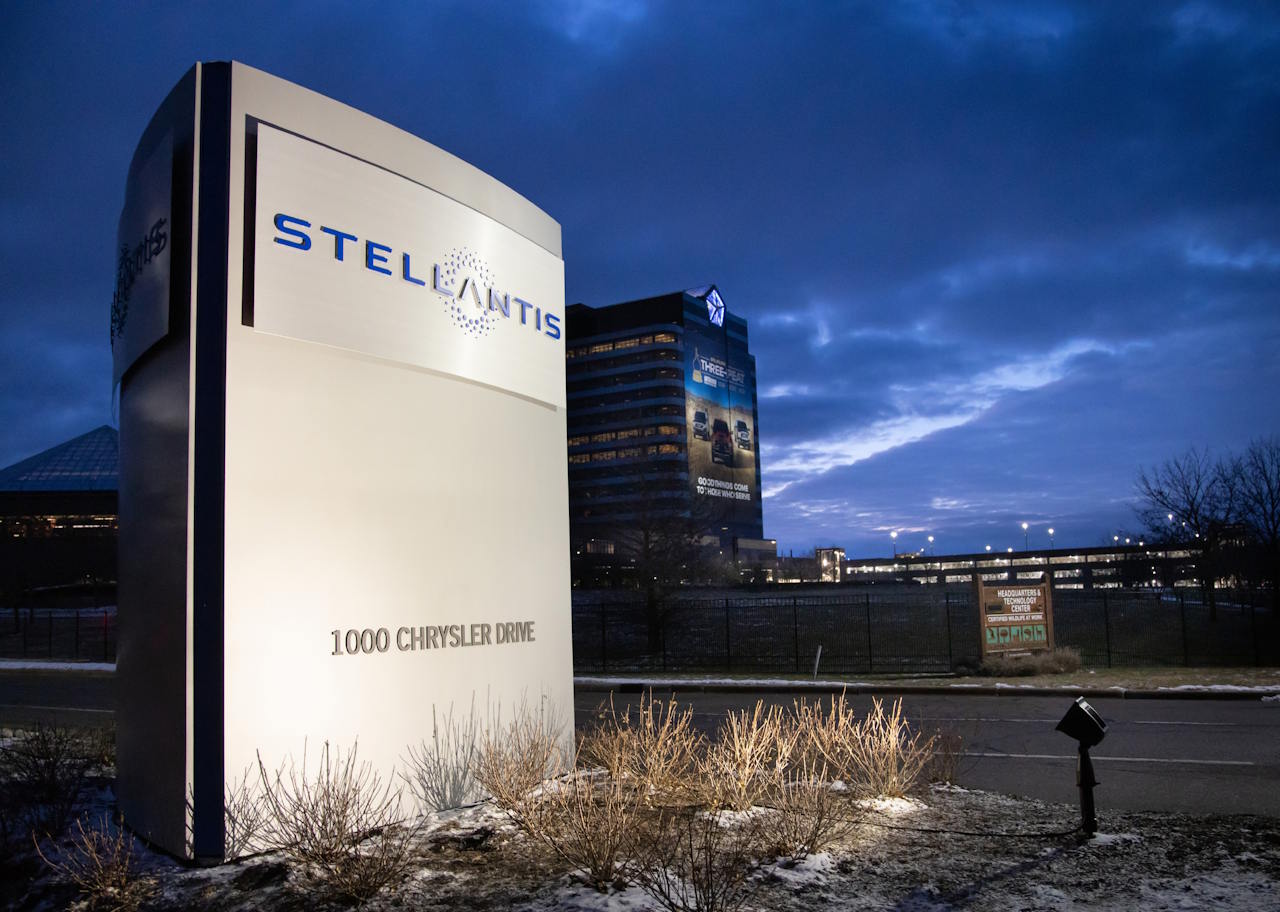
Franco-Italian carmaker Stellantis, one of the world’s largest car manufacturers, is taking a stunning €22 billion ($A37 billion) hit to its profits as part of a wide-ranging retreat from its electric vehicle (EV) ambitions, which also include selling off or abandoning several battery manufacturing ventures.
Stellantis described the charges for the second half of 2025 as a “reset … to meet customer preferences and to support profitable growth” and said it had completed “a thorough assessment of its strategy and related costs required to align the company with the real-world preferences of its customers”.
Stellantis believes that it will “continue to be at the forefront” of EV development but that it will “be governed by demand rather than command, but says it “over-estimated” the pace of the energy transition and that distanced the company from many car buyers’ real-world needs, means and desires.
The company is now promoting hybrids, particularly in the US with its Jeep and Chrysler brands, and has cancelled its proposed electric RAM 1500, and has sold its 49 per cent stake in the Ontario battery manufacturer NextStar Energy to joint venture partner LG Energy Solution.
As for what role EVs will play in Stellantis’ future plans, we’ll have to wait until the company unveils its new strategic plan in May of this year.
Stellantis’ wholesale retreat from electric vehicles mirrors a number of similar announcements made over the past year or so of carmakers with a significant reliance upon the North American market.
Most notably of these was the December announcement by iconic American automaker Ford which took its own $US19.5 billion hit to profits as it pivoted away from EVs back towards ICE and hybrid models – highlighted by its decision to scrap the F-150 Lightning. Ford has admitted it simply cannot compete with Chinese EVs.
Want the latest EV news, reviews and insights delivered straight to your inbox? Subscribe free.
The decisions made by these American reliant carmakers is nevertheless contrasted by EV sales in Europe and China, somewhat undermining the claim that their decisions are based on customer demand.
In China, for example, sales of BEVs increased steadily through 2025, finishing with 1,108,000 units sold in December and contributing to yearly NEV (new energy vehicles, which includes BEVs, PHEVs, and fuel cell vehicles) sales of 16.49 million, a 28.2 per cent year-on-year increase.
Similarly, in the European Union, BEVs accounted for 17.4 per cent of all new car registrations in 2025, up from 13.6 per cent in 2024, even as overall car registrations increased by only 1.8 per cent.