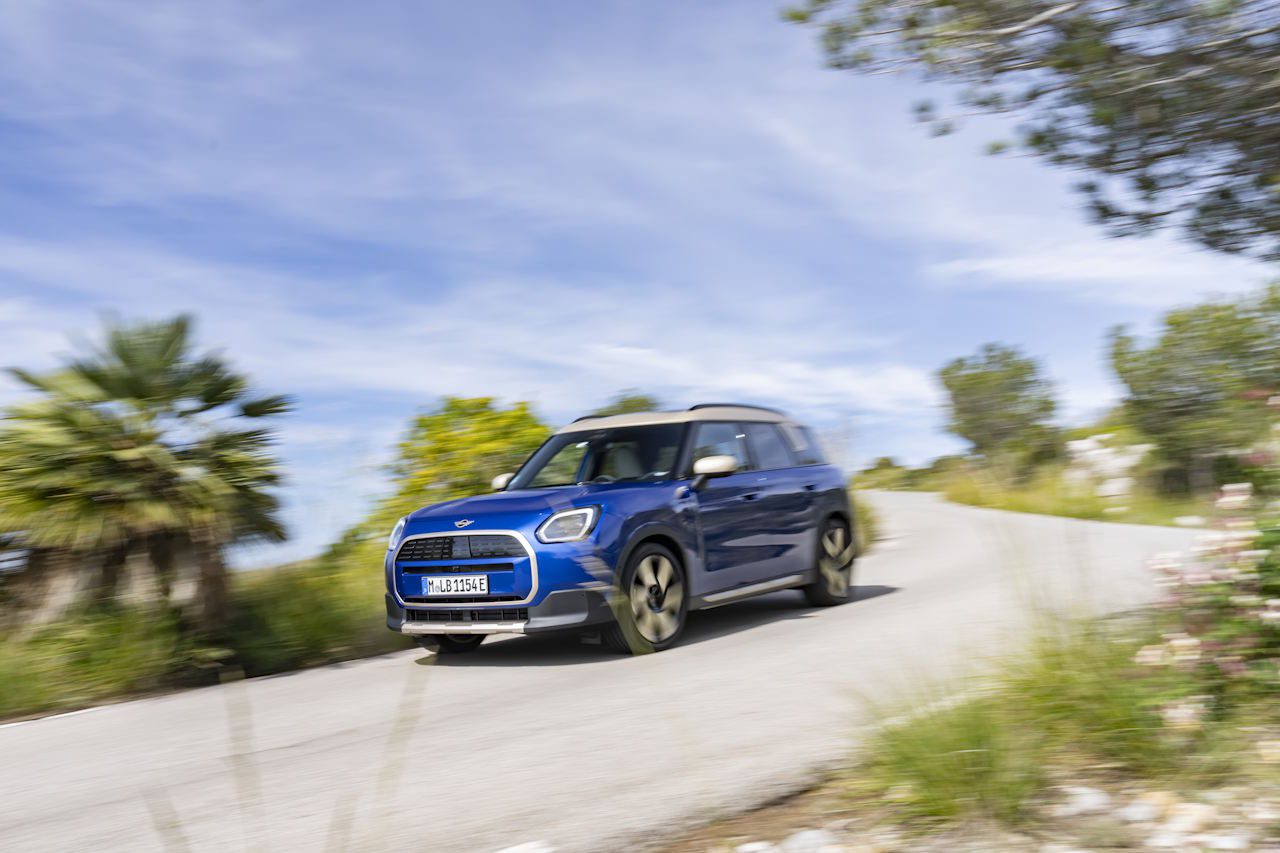
Mini has unveiled what it describes as an “extensive” technical update for its all-electric Countryman electric SUV which boosts the car’s range to 500 kilometres.
First unveiled in 2023 and entering series production in early 2024, Mini, which is owned and marketed by German carmaker BMW, has this week promised new Mini Countryman models that will launch in March with a range of new technical improvements.
A new silicon carbide (SiC) inverter will help to guarantee more efficient energy conversion and minimise power loss sits at the heart of the new update, and is complemented by an increase in the net capacity of the car’s high-voltage storage system.
While the battery will remain the same at 66.5kWh, the net capacity has been increased from 64.7kWh to 65.2kWh, allowing more usable energy.
All this has increased the range of the Countryman up to 501km (WLTP) for the Mini Countryman E, up from 462km at its debut, and up to 467km for the Mini Countryman SE All4, up from 433km.
There were no updates for the car’s power outputs, which therefore presumably remain at 150kW and 250Nm of torque for the Countryman E with its single front-axle electric motor, and 230kW and 494Nm for the all-wheel-drive Countryman SE All4.
DC fast charging technology also ensures that either Countryman can charge the battery from 10 to 80 per cent in less than 30 minutes.
Despite the car’s heritage, the Mini Countryman is an SUV boasting a generous interior and a variable trunk volume of up to 1,450-litres. A central 24 cm OLED display provides intuitive operation of all the car’s infotainment and driver assistance systems and also enables autonomous driving up to level 2.

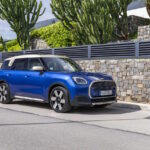
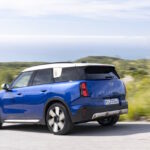
There doesn’t appear to have been much in the way of modifications to the Countryman’s exterior, with the company promising only “specific design elements and aerodynamic optimizations” including a new “Blazing Blue” body colour, silver roof and mirror caps, and 20-inch alloy wheels featuring a windmill spoke design.
The announcement was made from BMW’s home of Germany and the press images provided showed only a left-hand-drive model, so there’s no indication yet whether or when Australia will be getting the update.