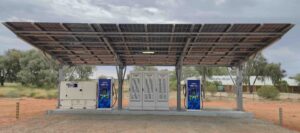
Three projects targeting three key planks of electric vehicle integration – kerb-side charging, ultra-fast charging and vehicle to grid charging – have won federal government backing through Arena.
Flow Power, Essential Energy and a cooperative research team out of the University of Technology Sydney (UTS) each received funding this week from Arena’s Driving the Nation Program, to support their EV-focused projects.
The biggest chunk of money goes to renewables focused retailer, Flow Power, with just over $18 million going towards its plans to build and operate a network of ultrafast EV charging stations across the east coast of Australia, in partnership with Gridserve Global.
Arena says the roughly $70 million Flow Power Highway project will deliver up to 84 dual-port BEV chargers (168 charging bays) across a minimum of 10 charging facilities, including at least eight standard stations, one “superstation” and one co-located station.
The project – a joint venture with Gigatons, an EV charging business set up by the founders of UK charge point operator Gridserve – will combine Flow Power’s electricity retailing and project development capabilities with Gridserve’s software, analytics and hardware expertise.
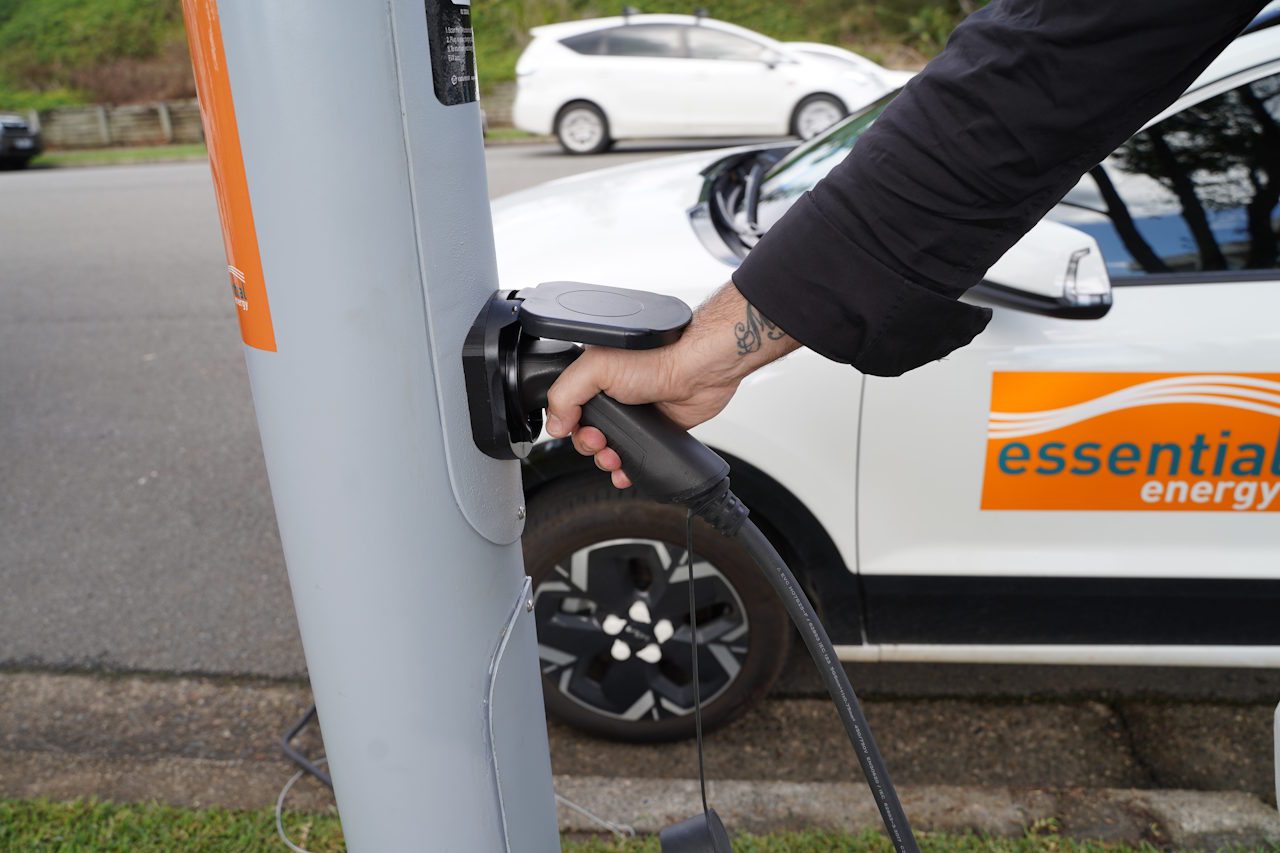
Another $2.3 million chunk of Arena funding has been awarded to New South Wales distribution network company, Essential Energy, to deploy public, kerbside EV chargers in the state’s regions, boosting charger access and equity for EV drivers outside big cities.
The Plug and Play project involves the third-party connection of 1,000 new EV chargers within existing wooden power poles across Essential Energy’s network – an approach designed to create a scalable model for distribution networks across Australia.
The program will also see the installation of 300 new composite streetlight poles which feature fully integrated 7-kilowatt (kW) white-labelled chargers that will be ready for operators to lease.
Together, the program will nearly double the number of currently available kerbside EV chargers across Essential Energy’s network.
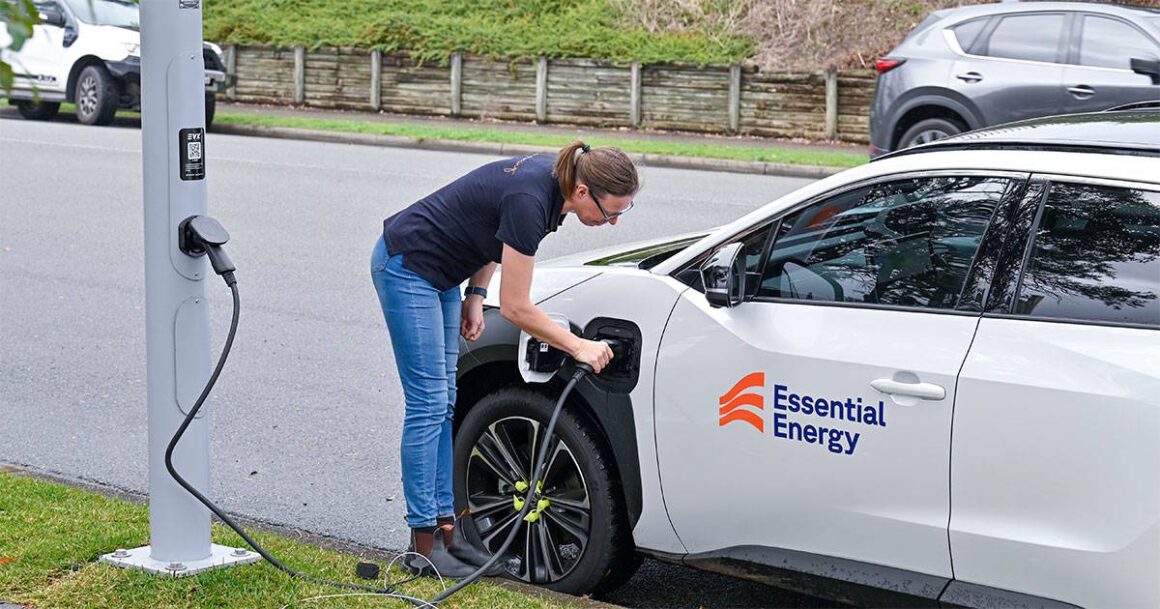
“We’re taking the complexity and some of the costs out of installing EV chargers across our network so charge point operators can simply come into our communities and plug in,” said Andrew Hillsdon, Essential Energy’s general manager for commercial development.
“By enabling charge points at scale, we can deliver faster, lower-cost and more optimal public charging infrastructure than if done individually; site-by-site. We are looking to create the playbook for future installations of charging infrastructure across our network.”
The final piece of Arena funding, just over $1 million, goes to UTS & Race for 2030 CRC, to establish Australia’s first national vehicle-to-grid (V2G) network, a three-year collaboration to accelerate EV grid integration taking in more than 20 industry partners.
“By backing innovative projects in EV charging infrastructure, we’re helping to break down barriers and make EVs accessible for more Australians, no matter where they live or drive,” Arena chief Darren Miller said on Wednesday.
“The transport sector is on track to become Australia’s largest source of emissions by 2030, and these projects demonstrate the rate of progress being made in driving down these emissions, as well as the breadth of solutions required to do the job.”