
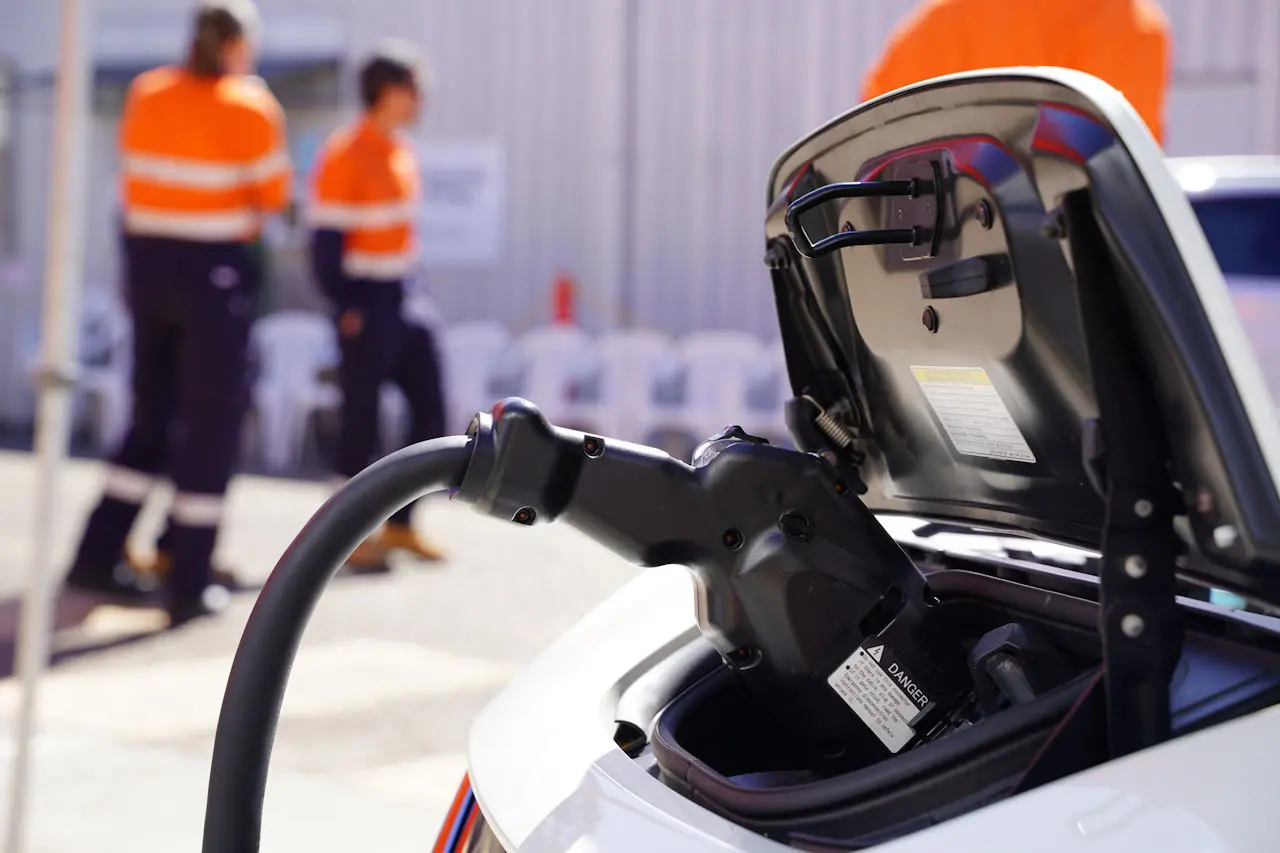
South Australia will treat vehicle-to-grid (V2G) charging in the same way it does a battery, and has launched a new website explaining what keen electric vehicle buyers need to do to hook their car into the grid.
But one engineer warns the method developed in South Australia is unlikely to be a one-size-fits-all solution for every state, as networks in those regions may have their own approach.
“It depends on how the (various state networks) networks are going to treat [it],” said SA Power Networks (SAPN) innovation development manager Michelle Howie during a panel discussion at the Smart Energy Conference last week.
“[Are they] going to allow this to be connected or not, or under what circumstances.
“I would love to be clear about our grid connection requirements, but I’m just not sure exactly what the standards are going to look like … There’s a lot of chicken and egg scenarios here.”
V2G is expected to be a major milestone in the transition to EVs as it will allow owners to use their vehicles as batteries on wheels, and provide valuable resources for grid management by helping to fill in supply gaps, respond to grid disruptions, smooth midday and evening demand peaks and troughs, and lower prices for all.
It was given a big push forward in November last year when federal energy minister Chris Bowen introduced new national standards, but the rollout will depend on approvals for cables, permission from car makers, and agreements with individual network operators.
South Australia was already most of the way there, thanks to the state’s early work on encouraging smart meters that can talk to a range of technologies and modern grid-managing software, and partly thanks to an exemption to an inverter standard because no chargers were able to comply with it.
SAPN has been letting owners of Nissan Leafs and Mitsubishi Outlander PHEVs, which use the old CHAdeMO charging protocol, connect bidirectional chargers since 2022.
It’s now being introduced for CCS2, the new charging protocol that is used by all modern EVs. And that is the major breakthrough.
Networks racing to prep for V2G
Energy distributors across the east coast are moving quickly to get set for the imminent arrival of V2G EVs. But one expert says there’s no need to overcomplicate the situation.
Ultimately, a V2G vehicle should be treated as SAPN is doing – as a battery, says enX director Jon Sibley.
“V2G should be treated exactly the same as any inverter-based generator and should meet the same requirements including CEC listing,” he told The Driven.
“All the networks are obligated to connect them. Flexible exports will apply exactly the same as if it were a battery.”
Many distributors and network operators are running trials with V2G charger makers.
Last week, Essential Energy said it will allow V2G technology on its network for most EVs models soon, after a successful trial involving a Ford Lightning electric ute and technology company Sigenergy.
And Powercor’s Daniel Bye says they are excited by the potential for EVs to help manage peak demand in local neighbourhood electricity circuits – and build less infrastructure – and are working on their own trial with a V2G charger manufacturer.
“Just like our existing non-network tenders open to the market now, a future where we have customers with V2G technology enabled could mean those customers are financially rewarded for helping shave the peak off local demand,” he told The Driven.
More to it than just a mobile battery
The unintended consequences of introducing thousands of batteries on wheels into the grid are what network operators are cautious about, and why they’re running trials first.
“We saw with rooftop solar that even with the relevant standards in place, there were unintended consequences for homes and businesses when different manufacturers had different interpretations of those standards,” Bye says.
Regulatory considerations for network operators include whether the connection process will need to be dynamic, such as South Australia is rolling out which allows export limits to be based on network capacity rather than fixed, and whether that system will it need to be on the EV itself or on an AC charger.
Other technical details involve access arrangements and regulatory frameworks in order to fairly value V2G services, incentivise participation, and ensure efficient integration, an AusNet spokesperson told The Driven.
“We’re participating in a V2G trial with industry partners, focused on understanding technical requirements, grid impacts, and customer value, ensuring we’re ready to support safe, scalable integration as uptake grows,” the spokesperson said.
“The project will trial how electric vehicles can support community resilience during natural disasters… this project will investigate how that capability could be harnessed to provide backup power to local community hubs and centres during major outages.”
Getting the incentives right
The big hope is that V2G EVs will flatten the midday solar duck and leaven out the rising peaks and troughs of demand.
But SAPN’s Howie admits it could all go wrong if they don’t get tariffs and incentives right.
“If they contribute to peak demand, so if they’re charging in the evening… we’re going to have to actually upgrade the network to be able to cater for that,” she says.
“Unless we have the right incentives, the right mechanisms in place to make sure that there is value for consumers to invest in technologies like vehicle-to-grid, so that they can be storing our solar in the middle of the day.”
South Australia has the highest penetration of wind and solar power of any state in Australia, meeting an average 72 per cent of demand over the last year and a whopping 112.9 per cent during a Spring afternoon last year.
An ARENA-sponsored report by enX last year found dynamic network tariffs were best as they specifically rewarded customers for reducing network peaks.
“Bidirectional ToU network tariffs are unlikely to support efficient outcomes from V2G… in order to offer sufficient incentives to support V2G battery discharge during critical peaks, they must overcompensate discharges throughout the year (or season), so they default to under-compensation.”
Electricity retailer Amber is already offering a V2G option, allowing customers to prioritise charging their car from rooftop solar before exporting to the grid.
The other option is to join a virtual power plant, an option favoured by bigger retailers but which Amber Co-CEO Chris Thompson described to The Driven last year as “bonkers”.
“It seems like bonkers to us to expect people to hand over keys to their car,” he said.