New figures from the International Energy Agency (IEA) reveal that sales of electric cars hit 6.6 million in 2021, more than tripling their market share from just two years ago and despite supply challenges caused during the global Covid-19 pandemic.
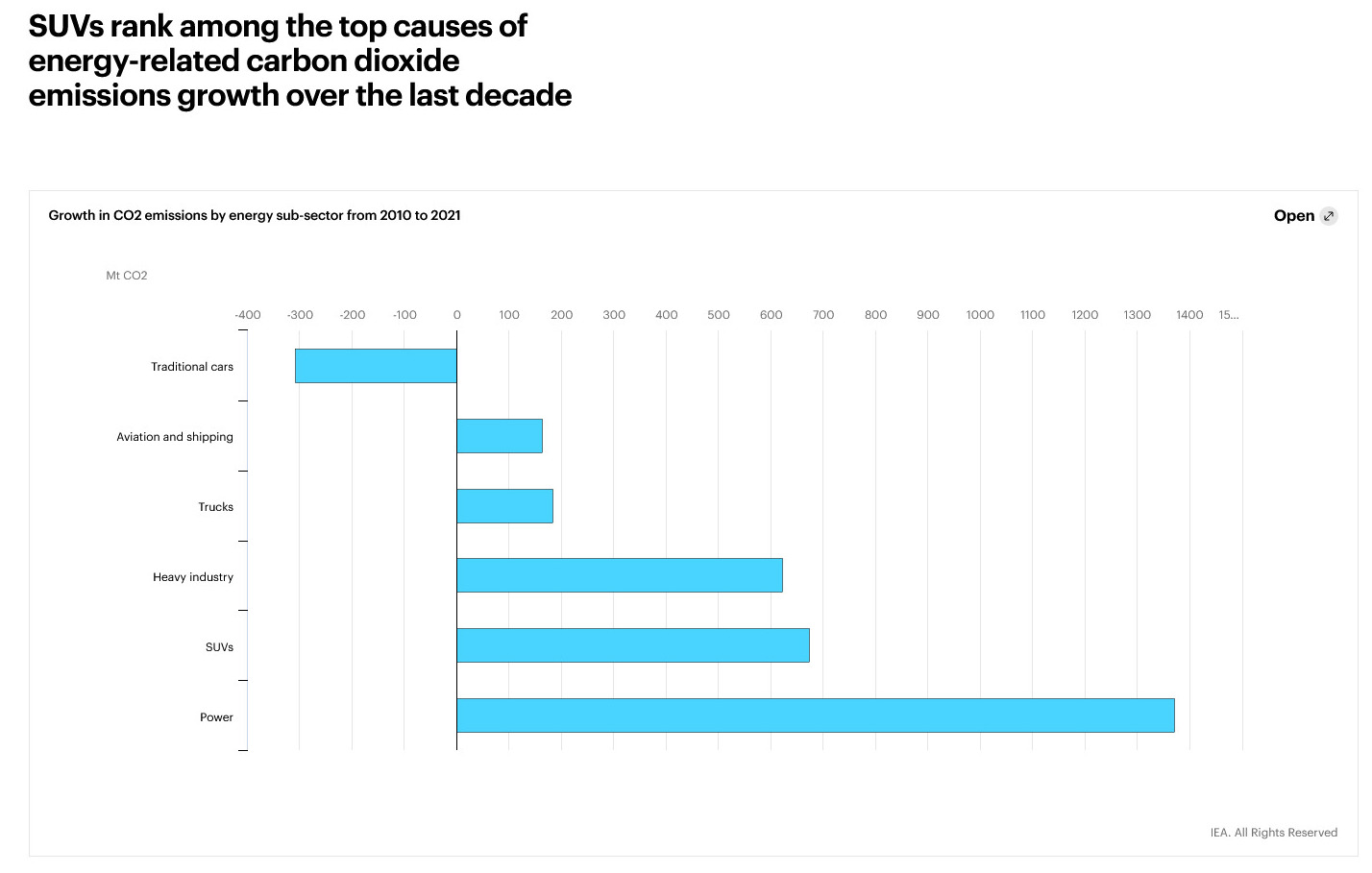
But, the IEA also noted that the gains made in reduced carbon emissions have been canceled out by increasing sales of SUVs.
The IEA is impressed with EV sales, highlighting in a recent commentary on their website that during “2012, about 130 000 electric cars were sold worldwide. Today, that many are sold in the space of a single week.”
It says that in 2019, 2.2 million electric cars were sold, accounting for 2.5% of global car sales. In 2020, according to the IEA, the global car market contracted but EV sales nevertheless rose to 3 million, accounting for 4.1% of total car sales.
And then again in 2021, car sales more than doubled to 6.6 million, accounting for close to 9% of global car sales and more than tripling their market share from just two years ago.

The IEA also estimates that there are now approximately 16 million EVs on the road around the globe, consuming roughly 30TWh of electricity per year.
As such, electric vehicles have helped to avoid oil consumption and CO2 emissions, although concerningly, the IEA notes that “these benefits were cancelled out by the parallel increase in the sales of SUVs.”
Finally, the IEA also highlighted the fact that electric vehicle sales generally tend to be higher later in the year. For example, in 2021, December EV sales were more than two-and-a-half times as high as EV sales in January.
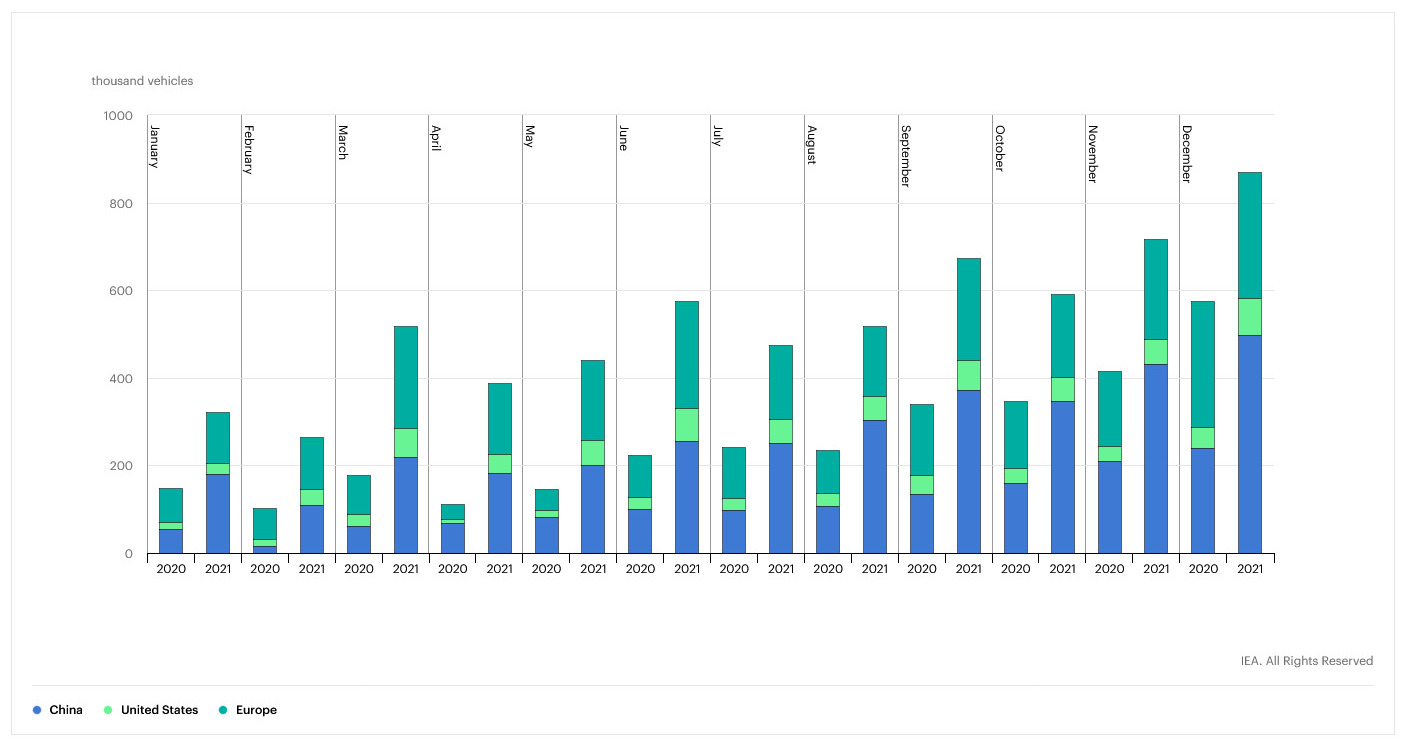
Nevertheless, over the course of 2021, monthly EV sales were consistently at least 50% higher than the corresponding month in 2020 – a somewhat unsurprising figure given the massive lockdowns and technology bottlenecks caused during the height of the global COVID-19 pandemic.