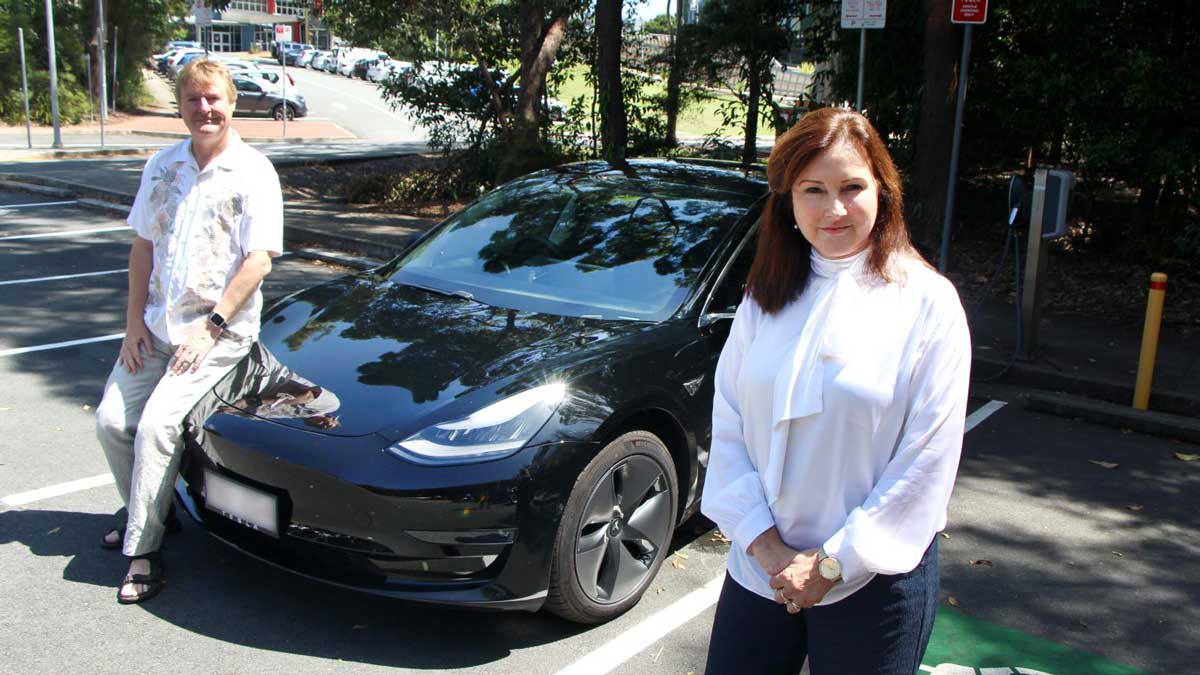
If the Australian auto industry is to have half a chance of cleaning its act up, it must significantly increase the number of electric vehicles on the road, says transport emissions expert Anna Mortimore.
This will require compulsory emissions targets, infrastructure planning and government incentives to accelerate the adoption of electric vehicles, says Mortimer, a lecturer at the Griffith Business School who published a 2018 research paper on the Australian government’s poor record on reducing transport emissions.
Although electric vehicle sales are on the increase in Australia, it is from a very low base, and any gains made in reducing emissions have been lost because of the continuing popularity of SUVs and utes.
A very unambitious goal to reduce Australia’s transport emissions on a voluntary basis was outlined by the Federal Chamber of Automotive Industries (FCAI) and reported by The Driven in late July.
It suggests – with not so much as a slap on the wrist if not met – that the Australian auto industry should aim for a reduction in CO2 emissions to 100gm/km for passenger and light SUVs and 145gm/km for heavy SUVs and light commercial vehicles by 2030.
The voluntary targets are well below the EU’s compulsory limits of 95gm/km by 2021, but even the weak FCAI targets will require the Australian government to change its stance on encouraging electric vehicles via financial incentives, says Mortimer.
“FCAI is pushing for a 4% reduction on average per year for passenger cars and light SUV sold between 2020 and 2030. But in 2019 the national average carbon emissions decreased by only 0.2% the smallest decrease since records started in 2002,” Mortimer was quoted as saying by Griffith News.
“Australia has really stalled in reducing its vehicle carbon emissions and the only viable way to meet its target is by significantly increasing the number of zero-emission EVs on our roads.”
“The Australian government did adopt voluntary standards in consultation with FCAI up until mid-2004 and they were never met because the industry body argued consumers preferred larger cars and the local car industry could not meet the targets set,” she says.
A national electric vehicle strategy was expected to be release by the Coalition government in mid-2020, but has now been delayed until the end of the year.
Energy and emissions reduction minister Angus Taylor has indicated the strategy will focus on technology-related strategies such as charging infrastructure, while Australian consumers will be left to grapple with the high premiums demanded by EVs.
As well as financial incentives to help consumers, Mortimer says that if Australia were to take a leaf out of the EU’s rule book and set compulsory vehicle emissions regulations, auto makers could reach the FCAI targets much earlier.
“But we only have to look to the EU, when they switched from voluntary standards to a regulatory emissions standard in 2009 and they set a target to be achieved by 2015. Car manufacturers achieved that target two years early.
“This is where governments play an important role, we’ve seen the European Commission advise member states to bring in policy influencing demand for EV that puts them favourably against other vehicles that cost far less.”
In addition to accelerating the adoption of zero-emissions transport and reaching CO2 targets, introducing incentives would help open up the market to a greater range of consumers.
Mortimer is currently collating the results of a consumer survey into EV ownership in Queensland and says that the early results show that because of the high cost of electric vehicles, early adopters of zero-emissions transport in Australia are typically men with high incomes.
“Most of our respondents chose full battery EVs because they reduced their carbon emissions. We’re still finalising the results, but we suspect many might be Tesla owners as they shared being excited about new technology and the car they were driving.
“Our early survey results show consumer demand is definitely there for EVs in our community but the cost of ownership rather than range anxiety is a significant barrier for many,” she says.