Policymakers should decide the location and quantity of new kerbside electric vehicle charging sites much as they would traffic lights, tailoring them to needs determined by consulting local residents and councils, a leading energy researcher says.
Bjorn Sturmberg, a senior researcher at the University of NSW who recently published a report on “Kerbside charging for the public good,” said governments have instead typically opted for a top-down approach in concert with distribution networks that treated charging like street lighting.
“[It’s] like there are black spots that don’t have EV charging,” he said. Politicians would then typically respond: “That’s bad. We need to … deploy them everywhere.”
A smarter approach would be for planners to be more selective.
Just as they deem that not every street needs traffic light, they can prioritise – with council input critical – where to install kerbside charging, said Sturmberg.
Getting on-street charging right is of increasing importance as EV ownership soars. Inner city EV drivers, for instance, usually have much less access to garages – where home charging can be done -than counterparts in outer suburbs or regional towns.
A recent study by Sydney’s Inner West Council, for instance, noted about two-thirds of residents “do not readily have access to off-street charging”.

Nationally, EV sales grabbed more than a fifth of new car sales in July as consumers acted on fears of oil supply disruptions from the ongoing Iran War. The ever-growing list of EV models, particularly from China, is also sharpening price competition with internal combustion-engined (ICE) rivals.
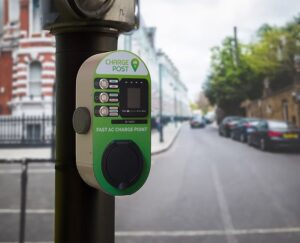
Present policies tend to let Distribution Network Service Providers [DNSPs] call the shots of charger locations and numbers, some times resulting in delays or limited deployment.
A recent trial of EV Charging Infrastructure in Melbourne involving DNSPs, CitiPower, Powercor and United Energy, found “considerable complexity” with site identification and approval.
“To date, more than 448 potential sites have undergone detailed technical assessment, with over 320 subsequently progressing to local council review,” the trial found. “Despite this substantial level of activity and stakeholder engagement, 34 charging locations have received approval from councils for deployment to date.”
“The multifaceted nature of site selection, where technical feasibility, customer demand, parking availability, local amenity considerations and the requirements of various stakeholders must all be carefully balanced to achieve viable and community-supported outcomes”.
The trial showed “the availability of a pole alone is not a reliable indicator of deployment suitability and that multiple rounds of assessment and refinement are often required before a viable site is identified, the DNSPs found.
Sturmberg said the trial highlighted the primacy of the local context – the built environment and people living and working there.
“Distribution network constraints are secondary,” he said. “The planning of charger deployments should therefore also place primary focus on local contexts, harnessing the insights of council to identify and consult on suitable spaces.”
Three eastern Sydney councils – Randwick, Waverley and Woollahra – are among local authorities working to maximise charger efficiency and equity.

The trio contributed to Sturmberg’s UNSW study and have also contributed to the Australian Energy Markets Commission work to address a federal government’s rule change request for its “Accelerating Electric Vehicle Charging Program”. A draft determination is expected 24 September.
Together, the three run more than 300 public charging ports, which they say is the largest such network in Australia. About a quarter are owned and operated by the councils themselves, with the rest installed through agreements with charging providers.
“Our own chargers have delivered over 150,000 charging sessions since 2019, around 80% of all 300 spaces are dedicated to EV charging,” the councils said their AEMC submission. “EV uptake in our area is roughly three times the NSW average.”
Anthony Weinberg, regional environment program manager, and Sam Kelley, electric vehicle project manager at the three councils, recently shared some of their experiences with The Driven, about what works and doesn’t when it comes to kerbside charging.

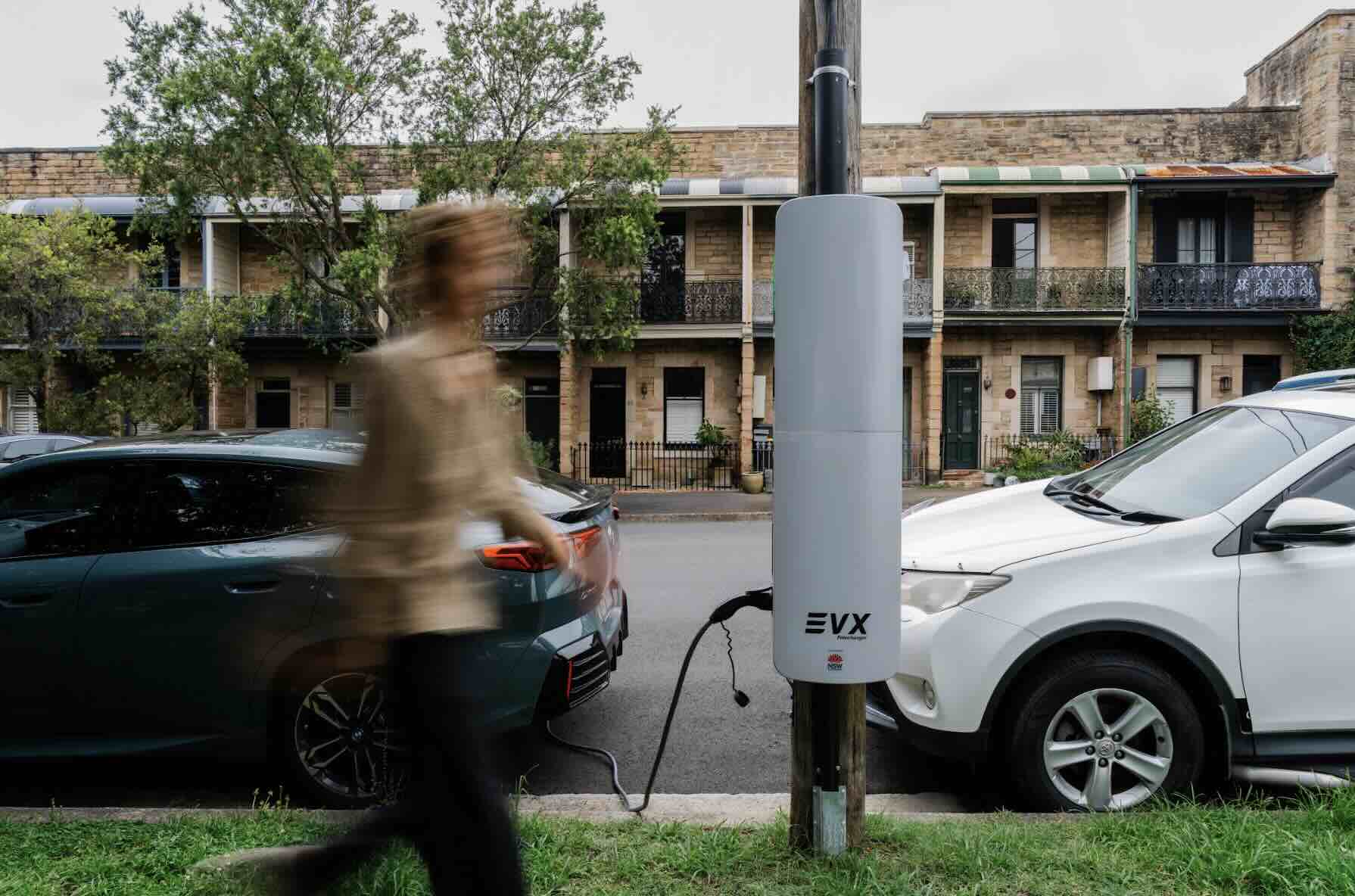
Firstly, a pole-mounted 50 kilowatt/hour DC charger will typically service many more vehicles than a typical 22kW/h AC charger. Weinberg said analysis of their network found the former resulted in as much as 40 times more energy delivered than the latter.
A particular EV model may actually charge from AC supplies at a lower rate than 22kW – often at 6-11kW – hence the differing delivery rates. The City of Newcastle had similar findings, Weinberg said.
“I think the thing that was striking was how much more popular the DC chargers are,” Sturmberg said. “[P]eople use want to use them more … and then when they are being used, they’re then delivering four or five times more power.”
Secondly, a DNSP might be able to install two chargers a day when there is funding available. However, installers would still need to clear a slew of planning hurdles from councils and state road authorities, Weinberg said.
“For us, it takes about, I would say, six to 12 months to get approved for the dedicated [parking] space next to that charger,” he said. “It has to be given a ‘yes’ by different departments, who have plenty of questions around it.”

Competing priorities for dedicated spaces including providing access for drivers with disabilities and also car-share firms. A single car-share vehicle can help meet the driving needs of as many as 10 private vehicles, Weinberg said.
“We’re working very hard on active transport and cycling paths and walking,” he said. “At the same time, we realise that for most people in the eastern suburbs, 80% of journeys are still done via car.”
Kelley said the provision of kerbside charging needs to treated as a national infrastructure priority.
Even having dedicated parking spaces isn’t the end of the story unless there are council officers patrolling to ensure that people charging don’t overstay, or that such slots are “ICE’d” by a non-EV occupying it.
“If you have a non-EV just parked in the bay, there’s no mechanism to move them other than by council patrolling,” Kelley said.
“We’re pushing for an outcome that benefits everyone,” he said. “[That’s’] the right chargers, with the right parking in the right locations, and that literally just leads to happier residents, happier drivers and happier councils as well.”
Sign up for The Driven’s free daily newsletter and get the latest EV news and analysis delivered straight to your inbox.