A tractor in a paddock isn’t using a public road.
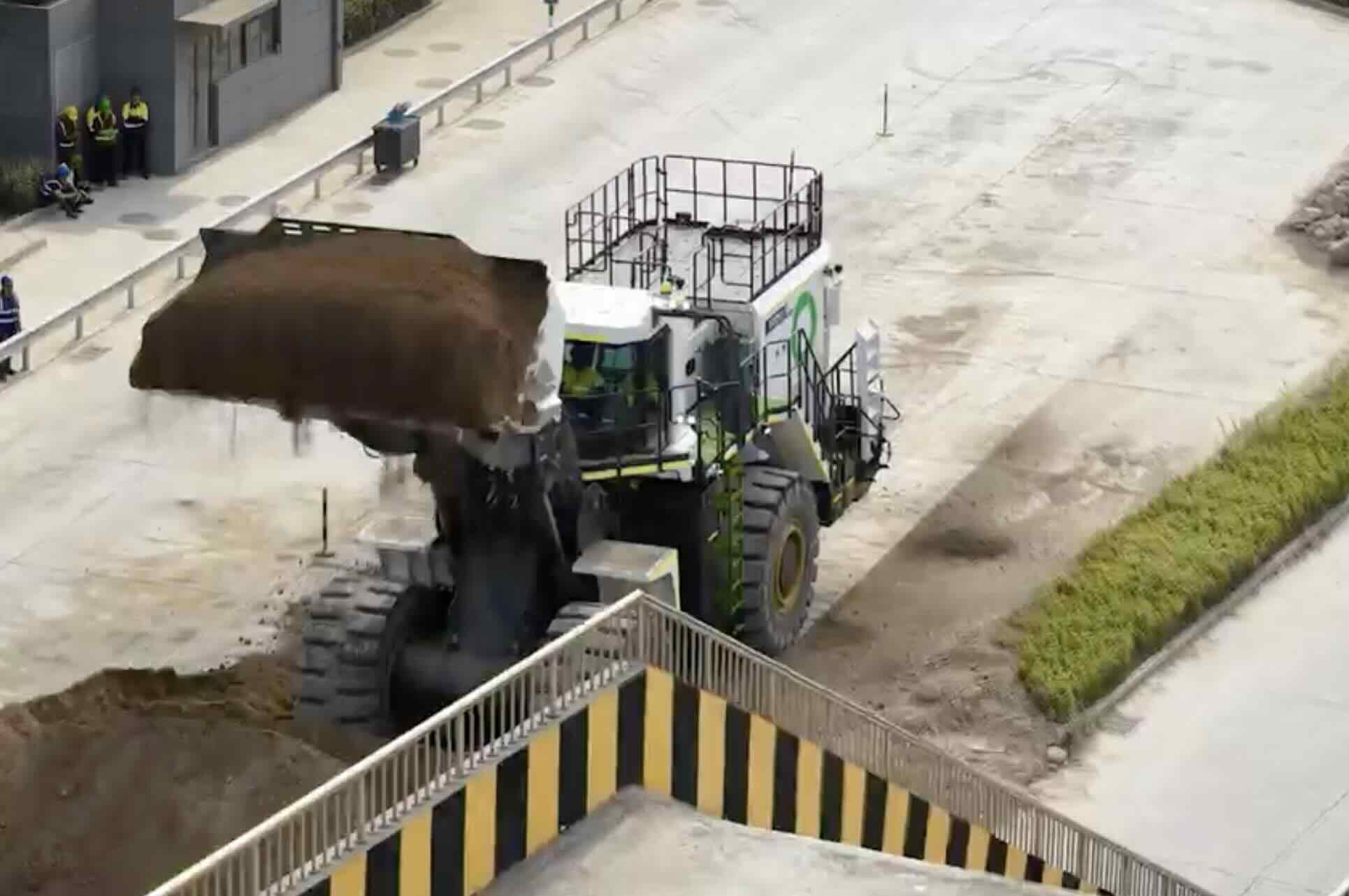
Neither is a 400-tonne mining haul truck at the bottom of an open-cut pit.
Both burn diesel.
Only one of them is being used as the poster child for a campaign that is really about protecting the other.
The National Farmers’ Federation is asking farmers and fishers to sign a petition at handsoffourfuel.com.au to defend the Fuel Tax Credits Scheme against being “cut, capped or removed.”
The framing is folksy and sympathetic: hard-working families on the land, boats at sea, the honest principle that you shouldn’t pay a road tax for fuel you don’t burn on a road.
Read the fine print on the website, though, and a different picture emerges.
The campaign is authorised by the Minerals Council of Australia. Industry associations wanting to join the “alliance” are told to email the MCA. Oh and the MCA claims ownership – the CEO is quoted: “we launched the Hands Off Our Fuel campaign.”
This is not a farmers’ campaign that the miners happen to support. It is a mining campaign wearing a farmer’s hat. Picture Matt Canavan in an akubra, dusted head to toe in coal.
Follow the money, not the tractor
The Fuel Tax Credits Scheme is worth over $10 billion a year. Farmers are not its main beneficiary, not even close. On ATO-derived figures for 2023–24, mining collected about $4.6 billion, roughly 47 per cent of all credits, against agriculture’s $900 million.
The average mining claim was about $1.2 million. BHP alone is received an estimated $622 million in a single year.
The average farmer’s claim was $12,671.
So when you see a tractor and a fishing boat on a petition website, understand what you’re actually being asked to defend. The specific reform in play – a $50 million-per-claimant annual cap – would touch around 18 very large companies and not a single farmer. The farmer is the shield. The miner is behind it.
I should be upfront here: I authored the Farmers for Climate Action report, Energy Sovereignty for Regional Australia, that this campaign is, in part, reacting to.
So let me be absolutely clear about what that report actually recommends, because it is being wilfully misrepresented.
The report’s very first recommendation is to protect farm businesses and directly related agricultural industries — explicitly, in the Budget and in policy statements.
Farmers for Climate Action could not have been plainer: “Farmers’ access to the diesel rebate must be protected,” and under the proposed cap “every single farmer continues to receive it.” Not removed, not cut – just capped.
The report threatens the uncapped windfall enjoyed by the scheme’s largest – and richest – claimants. It does not threaten the family farm. Anyone telling farmers otherwise is not protecting them – they’re using them on behalf of someone else’s lobby.
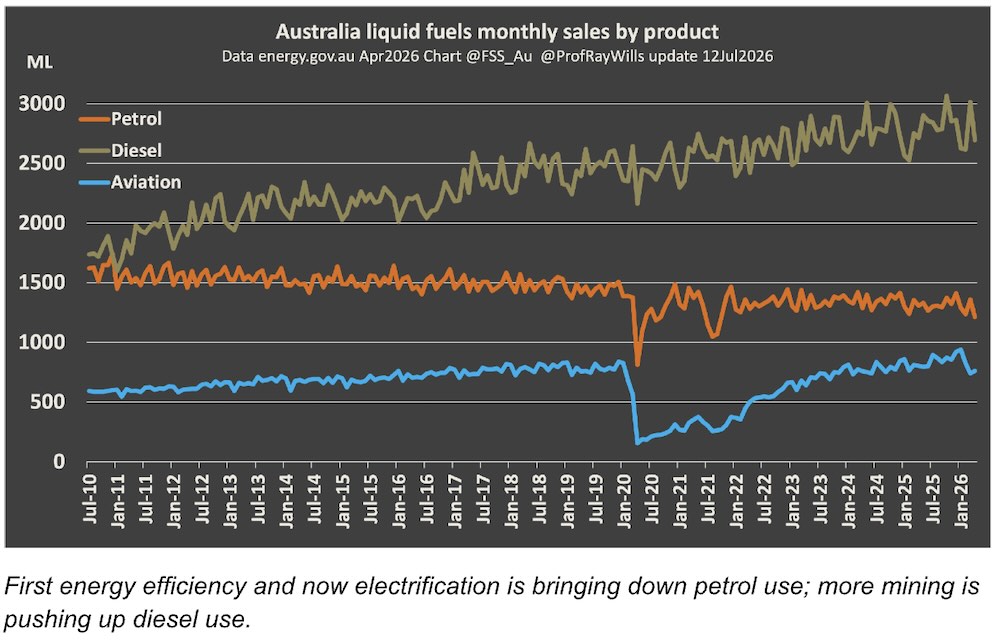
Diesel isn’t just expensive. It’s a fundamental risk.
Here is what the “hands off our fuel” crowd would rather you didn’t dwell on: the problem with diesel is not only its price. It is that we don’t control the price, the supply, or the geopolitics that move both.
In 2026 the oil crisis pushed diesel well beyond $3 a litre in many regions. Australia imports the overwhelming majority of its liquid fuel and holds only thin domestic reserves.
Every farm that runs on diesel is exposed to a shipping lane it can’t see, a refinery it doesn’t own, and a cartel it can’t lobby. A fuel tax credit does nothing to fix that. It subsidises the exposure. It pays farmers a little back on the very dependency that leaves them exposed – and locks in the higher-cost, import-dependent energy structure they will not need in future.
Defending the diesel rebate as an act of loyalty to farmers gets the loyalty backwards. Real loyalty to regional Australia means helping farmers off diesel, not paying them to stay on it.
The once-in-a-generation chance to delete the cost
And this is the opportunity the campaign is trying to talk over.
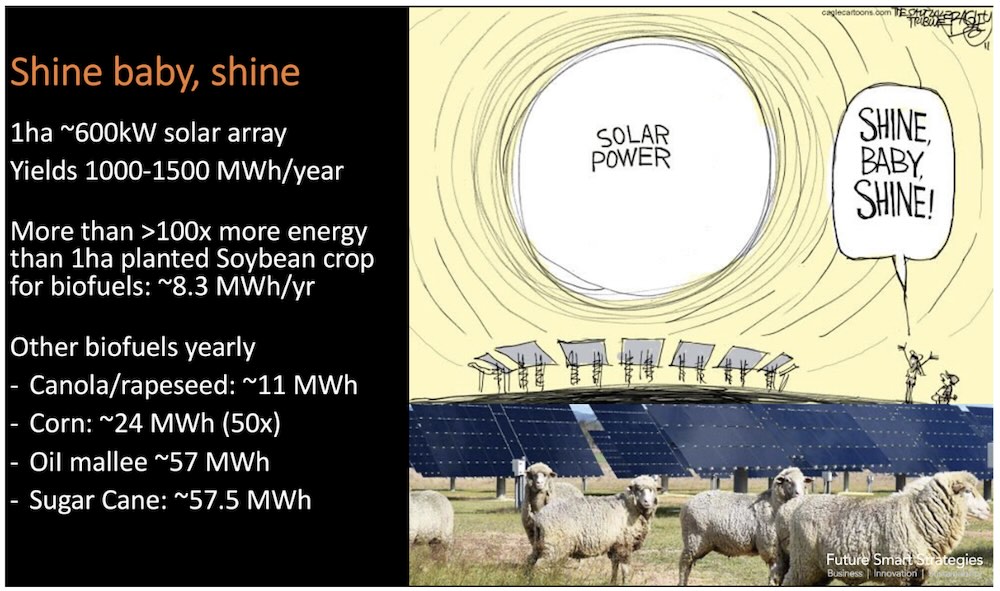
We are living through the fastest shift in energy in human history. Solar has raced down a cost curve – prices have fallen roughly 10,000-fold over 50 years – faster than any energy technology before it, and batteries are now scaling even faster from their own starting line. On current trajectories, solar, wind and storage drive renewables toward around 80 per cent of global electricity by 2035, pushing coal, oil and gas to the margins. Every forecast that assumed a convenient slowdown has been wrong since 2015.
That wave is now breaking over the farm.
Electric drivetrains, cheaper batteries, smart charging, solar-powered pumping and irrigation, cold storage and refrigeration, on-farm microgrids, and electric light and medium vehicles are all arriving at once – and an electrified system converts energy into useful work far more efficiently than burning imported fuel ever can.
The easy wins are the stationary and short-range jobs: pumps, sheds, cool rooms, utilities and light vehicles. Heavier machinery and long-haul follow, becoming mainstream in leading markets around the early 2030s – the same transition mining giant Fortescue is already demonstrating, swapping barrels and diesel for batteries and firmed renewables.
Electrification is the single greatest opportunity to structurally lower costs in the modern history of pretty much everything — including Australian farming.
Not to rebate the cost of diesel – to delete the cost of diesel.
A farmer generating and storing their own energy isn’t hoping the tanker arrives and dreading the invoice. They own the fuel. That is energy sovereignty, and it is the opposite of what a diesel subsidy delivers.
Why the empire is fighting so hard
None of this should surprise anyone who has watched Australian energy politics. This is the fossil fuel empire doing what it always does: defending its ground with someone else’s face on the placard.
The pattern is documented, not imagined.
In 2026, Coal Australia was found to have poured more than $1 million into a group calling itself “Energy for Australians” while it claimed to be an independent community association — an ANU expert called it “all the hallmarks of astroturfing.” A Senate committee heard evidence of coal money supplying around 95 per cent of another “grassroots” group’s revenue and recommended far greater transparency for third-party campaigning. Fossil fuel companies gave at least $3.98 million to the major parties in 2024–25, including $1.53 million from the MCA, Coal Australia and Australian Energy Producers.
And the results speak.
This week the Prime Minister once again ruled out any meaningful lift in taxes on gas companies — despite a gas industry that raised barely $1.3 billion in PRRT against LNG export revenues above $65 billion. That decision followed an advertising and lobbying blitz in which Shell alone told a parliamentary inquiry it had contributed around $1 million to a $6–7 million industry campaign against a gas tax. Spend millions, save billions. It is a very good trade, and they know it.
“Hands Off Our Fuel” is the same play run on the diesel rebate. Recruit the sectors with the strongest public sympathy — farmers, fishers, regional truckies — put them at the front, and frame a targeted cap on a handful of billion-dollar mining claims as an attack on every tractor in the country. Collapse three entirely different things — abolishing the rebate, cutting the general rate, and capping giant claims — into one undifferentiated threat, then dare the government to be seen “taxing farmers.”
To their credit, the MCA disclosed its authorisation. This is not a covert front in the strictest sense. But disclosure buried in a website footer does not change what the campaign is: a strategy to defend the biggest beneficiaries by hiding them behind the smallest.
Don’t defend the dependency
Farmers deserve better than to be conscripted into a fight to preserve a mining subsidy. What they actually need is the enabling policy to seize the transition already underway: protect the farm rebate, cap only the giant claims, and recycle the savings into farm electrification, storage, charging and regionally relevant technology — exactly the roadmap in the Energy Sovereignty report.
The choice regional Australia faces is not “keep diesel or lose money.”
It’s whether we spend public money rebating the legacy use of fossil fuels, or investing in the once-in-a-generation opportunity to delete it.
The fastest energy shift in human history is not going to wait for the fossil fuel empire’s permission.
Farmers shouldn’t wait either.
Prof Ray Wills is a futurist, Adjunct Professor at The University of Western Australia and Managing Director of Future Smart Strategies. He wrote the Farmers for Climate Action report Energy Sovereignty for Regional Australia — the one the fossil fuel lobby would rather you didn’t read.