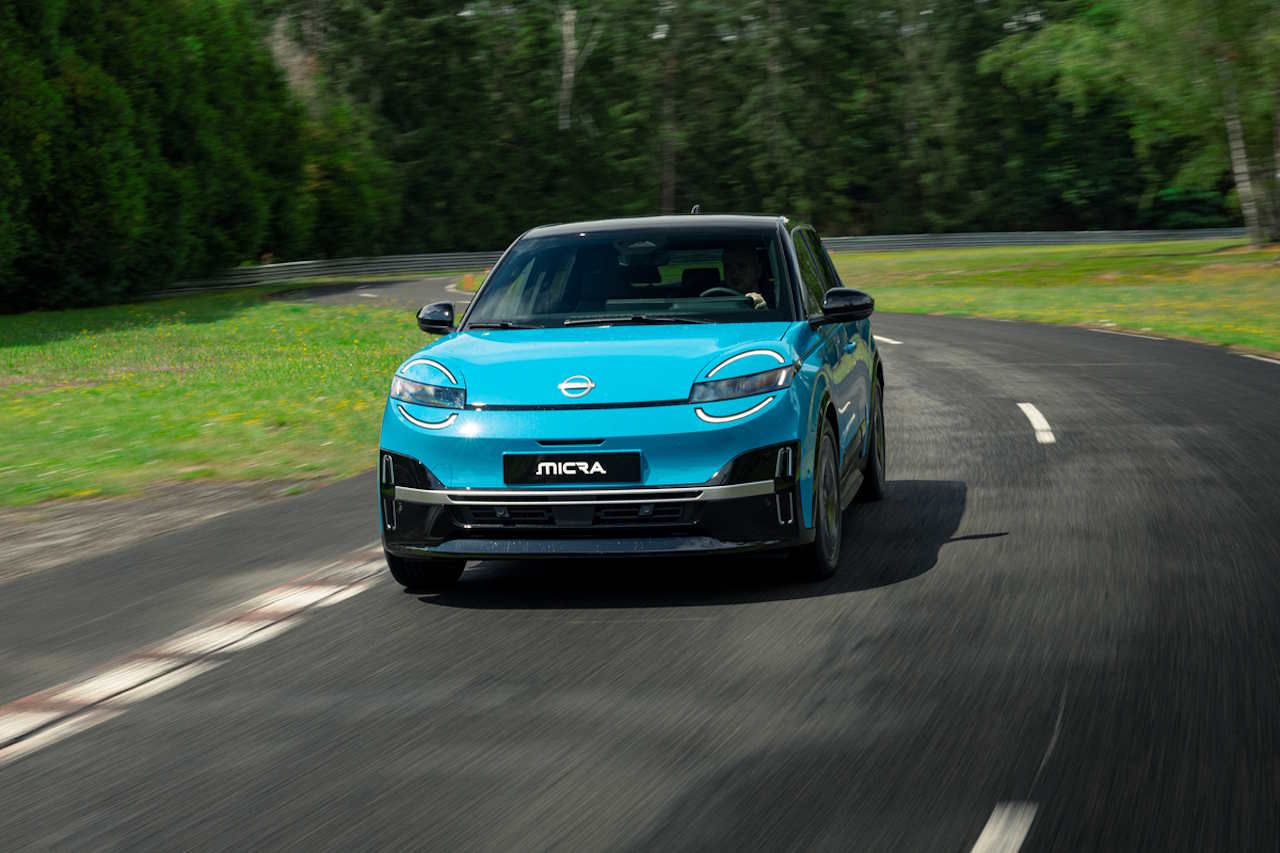
Just to rub salt into the wounds of disappointing Australian customers, the Renault 5 E-Tech and its Nissan Micra twin have won yet more prizes overseas, but we won’t be seeing them in the market.
The Renault 5 E-tech was recently canned for Australia due to the cited reason of difficulty in fitting a third ISO FIX baby seat point, which – hasn’t stopped many other manufacturers doing so to meet Australia’s unique requirements.
But it has garnered three more top awards in the UK from this year’s Autotrader Driver’s Choice awards, including the headline ‘New Car of the Year’ award, the ‘Best Car for City Drivers’ and ‘Most Fun Car to Drive’.
The awards are based on the views of more than 160,000 UK car owners, with this year’s winners shaped by the views of more than 160,000 UK drivers sharing their real-world experiences of buying, driving and living with their cars.
Owners rate their cars across 16 criteria, from reliability, performance and appearance to running costs, overall satisfaction and how likely they would be to recommend them.
Adam Wood, Managing Director, Renault UK, said:
“Awards judged by owners always carry special significance because they reflect the reality of living with a car every day. To see Renault 5 E-Tech electric voted New Car of the Year by UK drivers is a great achievement in itself, but to see it also recognised as the best car for city drivers and the most fun car to drive shows just how broadly its appeal extends, and why it has captured the imagination and hearts of so many people since its launch.”
Meanwhile, the new Nissan Micra (a product of the Renault-Nissan alliance) has just garnered ‘Small Car of the Year’ award from the UK publication, Car Dealer Magazine.
The new Micra also tied with the Renault 5 E-tech for ‘2026 Car of the Year’ in Denmark. Which is not surprising because, to all intents and purposes, the new Micra is the Renault R5 E-Tech.
From a distance the Micra may appear a different car, but looks can be deceiving. Not only is the Micra built on the same platform as the Renault 5, with identical battery options, motor and suspension, the exterior changes are limited to tweaks to the front/rear lights and associated panel work, along with a different set of wheels/tyres and colour options.
Meanwhile, the interior is barely different at all except for a different colour palette and materials. (Apart, that is, from the Nissan badge on the steering wheel and a few ‘Easter eggs’ of Mt Fuji embossed in discreet places).
The dash and its associated knobs and switches are identical, as are the seats. (The headlining in fact made it across totally unchanged!) It is therefore unsurprising that the new Micra is now garnering the same level of interest, and awards, that the 5 has been collecting since its release.
As for the second reason for including the Micra here: Nissan Australia long ago dropped the Micra (and anything else that wasn’t a medium to large SUV or ute) from its EV plans in Australia. It means the chances of the Micra small car badge returning to Australia is about as likely as Renault bringing the 5 E-Tech to Australia. (Effectively nil).
As a result, we will not get the chance to buy either of these highly sought-after European small BEV models in Australia, whilst we continue to be served up ever more medium to large SUVs and dual-cab ute models.
Thankfully, we will soon see a couple of small and micro passenger category cars arrive this year (the Nio Firefly and Honda Super One) followed by the Cupra Raval in 2027, to follow on from the Hyundai Inster. However, the small hatch/passenger car remains woefully under served with options here.
It really does leave one a bit bewildered why two established manufacturers won’t sell such popular overseas BEV models in Australia. Instead, they have effectively abandoned the segment for new Chinese brands to exploit and take over before the incumbents wake up.
Perhaps the ongoing roll-out and tightening of the Federal Government’s NVES (New Vehicle Efficiency Scheme) might encourage some rethinking – especially if manufacturers, such as Renault and Nissan, finally realise that there is a pent-up demand from potential buyers in these segments, meaning they might just get some surprisingly good sellers into their line-ups.
Currently, neither are anywhere near the top 10 brands in Australia, with Nissan currently lurking around the bottom of the top 20 and Renault in the low 30s, out of the almost 60 brands currently selling here.