This is not the first attempt by Clive Attwater and his partner Sue to do the Big Lap of Australia in an electric vehicle. The first was in 2021, in a Nissan Leaf, but their plans were stymied by Covid and state restrictions, even though they did eventually manage to get from Hobart to Darwin and back.
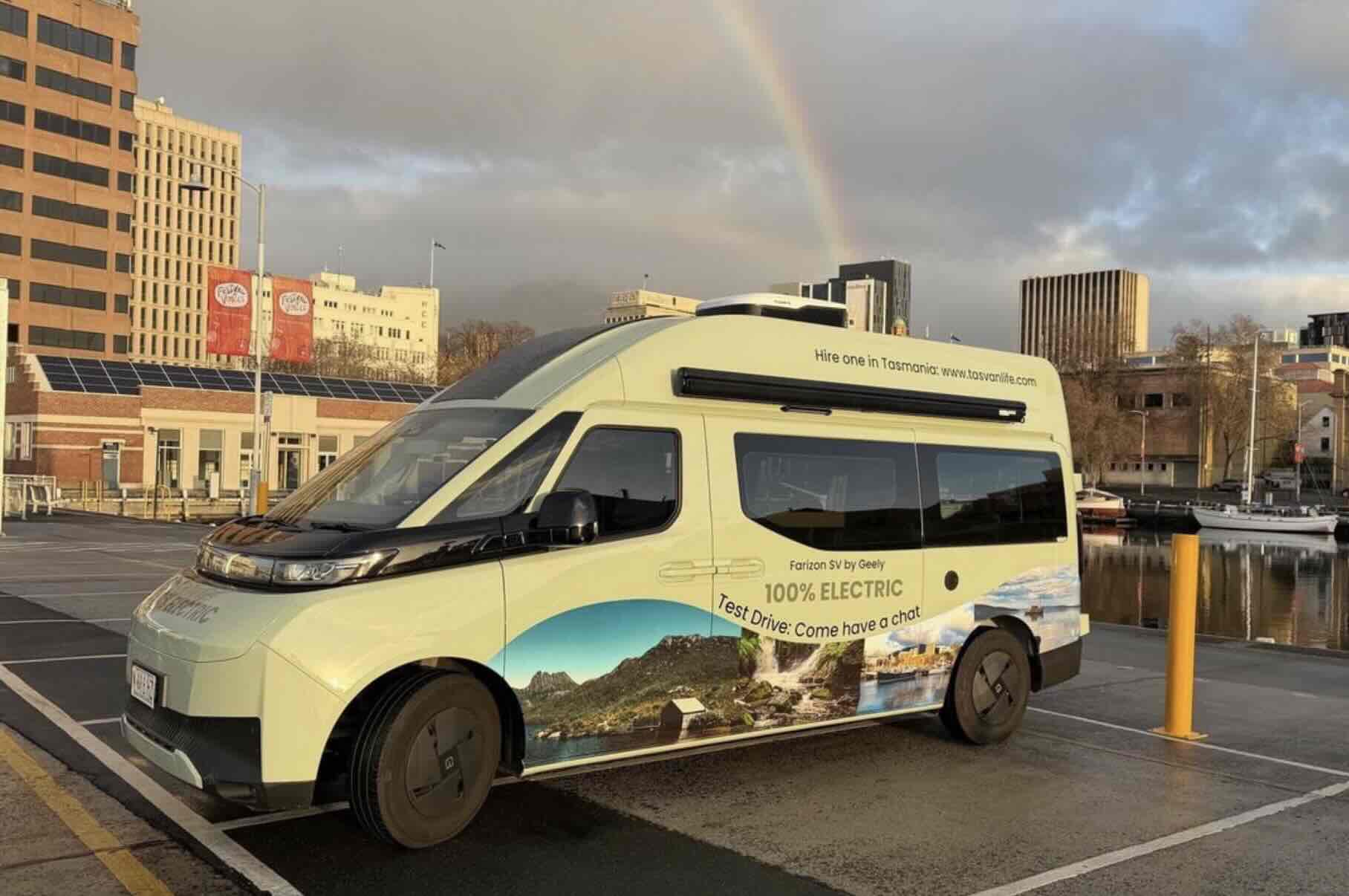
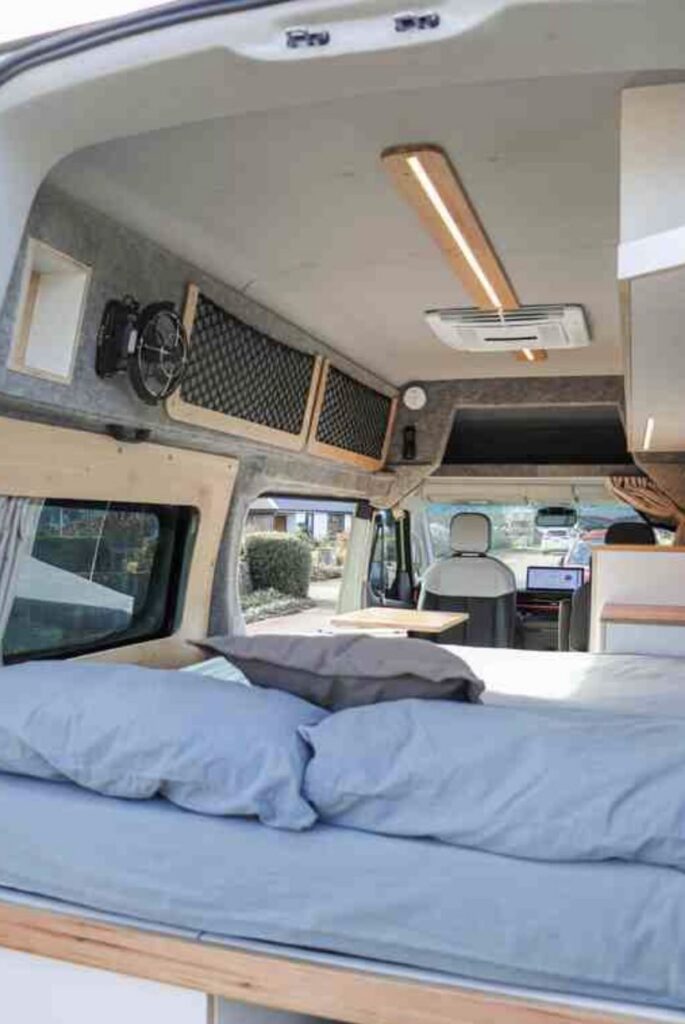
The second attempt could well be an Australian first – it is in an electric camper-van, based around the recently released Farizon SV electric van and converted with the addition of some solar, a small home battery and a fully electric cooktop and other appliances, including air-con.
The plan is to do a sort of figure 8 from Hobart through Victoria and on to South Australia (where they have already arrived), and then up through Alice Springs to Darwin, hang a left turn and come down through Western Australia before crossing the Nullarbor and then heading north to Townsville and back down the east coast.
Maybe. Plans could change. “We don’t have to hurry, we’re going to slow the pace,” Clive says in an interview with The Driven this week from near Burra in South Australia.
Clive says he has wanted to do this trip for years, but never found the right vehicle until the Farizon SV turned up. Some vans he had looked at were too long, too heavy, wouldn’t have enough range, and most didn’t have the capacity for a full spare tyre.
The Farizon SV, however, ticked all the boxes. They chose a 5.54 metre medium wheel base (so it can park legally in charging spots), and a high top.
It has an 84 kWh battery and a range of around 250 kms, even at around 3.3 tonnes with electric bikes in the back. An empty cargo version of the same van has a range of around 325 kms.
“Converting the van adds significant weight and adding the canopy, solar panels and aircon all stick out and add to drag on the highway,” he says.
A long wheel based version has a bigger battery of just over 100 kWh and more range, which Clive suspects will become the dimensions of choice for those looking to travel on the mainland.
Attwater has already been a pioneer in the EV industry, having set up Electric Highway Tasmania and playing a key role in rolling out EV charging infrastructure across his home state.
Now he is leading on electric vans – the Farizon SV has been so compelling that he is having another five fitted out that will be rented out under the Tasvanlife brand. Two are already on the road with more to come before the summer. And the first customers have been very happy.
Clive says that the aim of doing the big lap of Australia in an electric camper-van is to have fun, and to spread a couple of key messages. “We want to show that it can be done,” he says. And the van has plenty of signage that is inviting people to come and have a chat.
The other aim is more practical, an information giveaway to the owners of camping grounds and caravan sites to advise them on how to prepare for what’s coming, and to make sure they understand the needs of electric vans and how to deal with it.

They may only be a couple on the road now, but Attwatter is convinced that with the arrival of a host of other suitable vans, from the likes of BYD, Kia and Hyundai which are arriving in Australia now, the numbers of electric camper-van conversions will rapidly grow.
“The other thing we are trying to do is to get caravan park operators to understand that there are things they need to know … they need to get their electrics checked, they need to understand it and what it will be like if you get a lot of them.
“They can provide power cheaper than public chargers. If they think about it, you don’t to treat it as a problem, treat as profit centre.”
Clive says the electric cargo vans cost around $70,000 to $80,000, with another $30,000 to $50,000 needed on the fit-out, depending on what exactly you want.
“I bought this van (the Fairzon SV) for us and we threw a mattress in the back and went camping,” Clive says. “We then rented a sprinter diesel from a company in Hobart, and worked out what we liked about it, and then got one built. Now we have another six being built.”
The electric vans come with a 3kWh house battery and a 400 watt solar array for extended off-grid camping, along with a canopy. The rental vehicles have benches, but Clive’s own electric van has a swivel seat in the passenger position to add to the furniture.
We will be providing updates as Clive and Sue make their way around the country.
Sign up for The Driven’s free daily newsletter and get the latest EV news and analysis delivered straight to your inbox.