
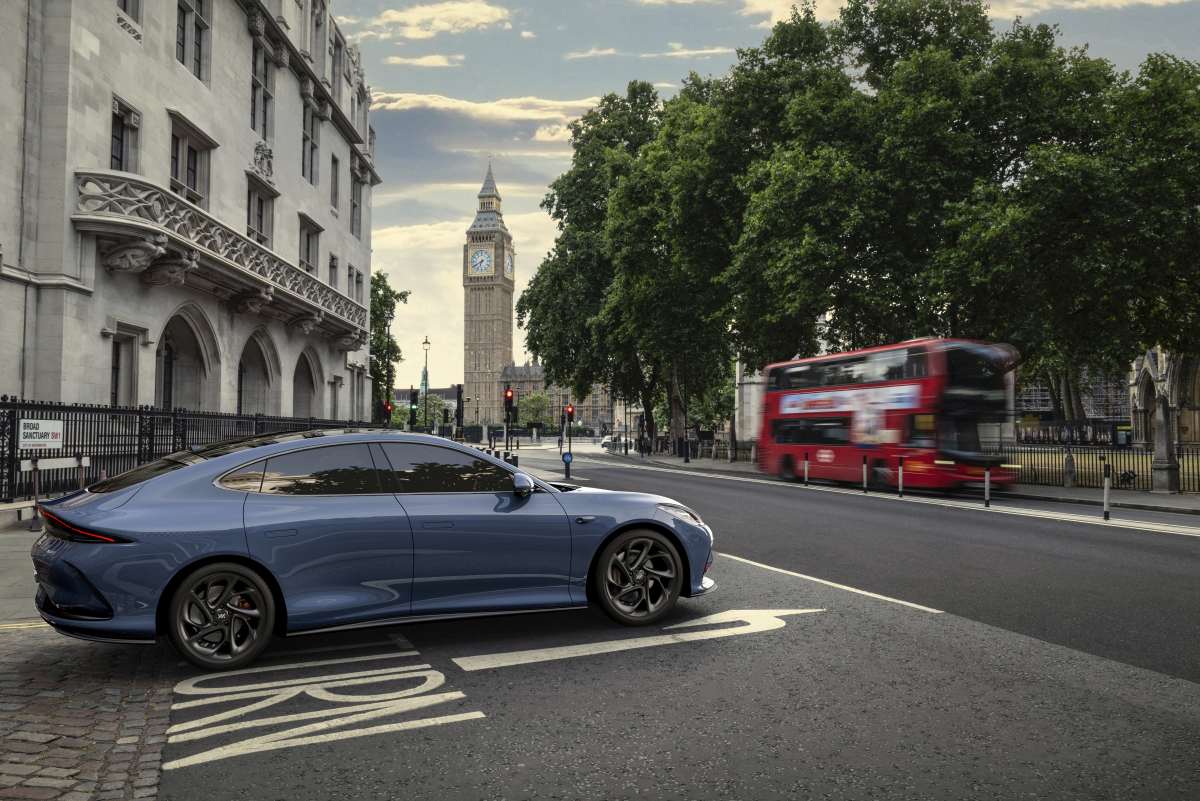
The UK government has confirmed this week that its proposed mileage-based electric Vehicle Excise Duty (eVED) will take effect from April 2028 with only a few changes to its original form.
The eVED was flagged by the government in the country’s Autumn Budget 2025 in November last year, ahead of a consultation period which ran through to March.
Despite significant opposition from the electric vehicle (EV) sector and following over 5,000 responses from a range of stakeholders, the UK Treasury confirmed this week that the eVED would take effect from April 2028 as a mileage-based charge on EVs and plug-in hybrid EVs (PHEVs).
It was justified to “ensure EV and PHEV drivers make a fair contribution to the public finances as fuel duty revenues decline, while continuing to pay less than the equivalent fuel duty paid by petrol and diesel vehicles.”
The eVED, which joins and will inevitably replace the current Vehicle Excise Duty (VED), will impose a 3 pence per mile tax for battery EVs (BEVs) and hydrogen fuel cell vehicles (HFCEVs), and a 1.5 pence per mile tax for PHEVs. (For reference, this is around 5.8 and 2.9 Australian cents respectively.)
The rate will be uprated in 2029 to 2030 and in future years, in line with Consumer Prices Inflation (CPI) so as to ensure that the tax maintains its real-terms value.
Drivers will be required to provide an odometer reading from their car as well as estimate their mileage for the forthcoming tax period.
According to the Treasury, the consultation period revealed “support for the principle that motorists who drive more should make a greater contribution” while also acknowledging that the primary concerns raised “were around the potential impact on electric vehicle uptake” as well as the “administrative complexity for motorists, businesses, fleets, leasing companies, and MOT garages.”
The Treasury made only a few changes to its originally proposed eVED, including agreeing not to proceed with an annual mileage check for pre-MOT check vehicles (all vehicles in the UK over 3 years old are required to undergo an annual legal inspection to ensure they meet road safety and environmental standards).
Arrangement for fleets and leasing companies have also been “significantly simplified” so as to reflect the way these businesses manage large vehicle fleets, including allowing fleets to provide estimated mileage readings, introducing bulk licensing arrangements, and providing greater payment flexibility.
However, while these modifications have been welcomed, the general consensus from the electric vehicle industry is lacklustre at best.
“This policy still does not work for drivers,” said Victoria Edmonds, CEO of EVA England, the member association representing current and prospective EV drivers across England.
“The government has made one welcome change for newer EVs, but the wider scheme remains too complex, risks leaving people out of pocket and fails to give drivers the confidence they need.
“At such a crucial point in the switch to electric, ministers should be making the system simpler, fairer and easier to understand, not pressing ahead with a policy whose key faults remain unresolved. This now piles pressure on the public charging review that must pave the way for affordable charging, or this transition simply won’t work for drivers.”
Toby Poston, chief executive of the British Vehicle Rental and Leasing Association (BVRLA), also criticised the policy’s impact on the transition to EVs, saying that “there is no avoiding the fact that you can’t create a smooth switch to electric vehicles by making them more expensive to own. The mechanics of the tax may have improved, but the timing is still wrong.”
The NSW government is also considering an EV road tax. Tesla and Hyundai are the latest to oppose it. See: “Perverse”: Tesla and Hyundai say state-based EV tax would mean electric car owners subsidising hybrids
Sign up for The Driven’s free daily newsletter and get the latest EV news and analysis delivered straight to your inbox.