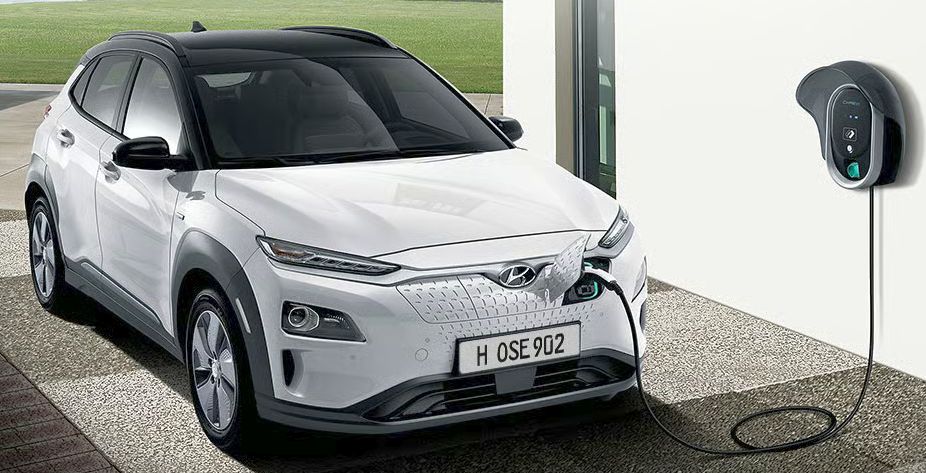
Electric car giant Tesla and South Korea legacy car maker Hyundai have both come out against the proposed EV road tax for electric vehicles, arguing that it would result in electric car owners being hit harder than those driving more polluting hybrids.
Hyundai says an EV road tax would deliver a perverse outcome, while Tesla says it will end up with EV owners effectively subsidising the owners of hybrid cars, which still pollute despite their improved efficiency over regular petrol and diesel cars.
The NSW government is currently holding a parliamentary inquiry into the proposed EV road tax, with most submissions coming out against it – with the notable exception of motoring group NRMA.
Tesla’s opposition is to be expected, given it is focused solely on the EV market and argues that EVs already pay their fair share of taxes through car purchases, registrations, insurance, and other taxes. It says that
It cited the example of a Toyota Yaris Hybrid, which has a fuel consumption of 3.3 L/100km, equating to a tax contribution (fuel GST + excise) of $249.25 when driving the Australian average of 11,025 km annually.
“For a similar sized EV to contribute the same amount of tax (charging GST + road user charge), a RUC rate should be set at 1.62 c/km,” Tesla wrote.
“If a RUC were imposed on EVs exclusively at a rate any higher than 1.62 c/km, the EV car would be paying more tax than the petrol car. A RUC would effectively be subsidising the higher emissions vehicle.
“At NSW’s proposed 2.97 c/km RUC rate, the zero-emissions EV driver would be paying $148.87 more tax – a full 60% more – than the Toyota Yaris driver.
Hyundai, which has a rapidly growing number of EV models, cited the case of its own i30 sedan and Kona hybrids, which it says are rated at 3.9 L/100km, and face a fee of about 2.05 cents per kilometre from the federal fuel excise, much less than 2.974 cents per kilometre EV road user charge envisaged by the NSW government.
“A fully electric vehicle would pay around 45 per cent more per kilometre than Hyundai’s most fuel-efficient hybrid through fuel exercise,” Hyundai wrote. “This creates a perverse outcome in which a zero-emissions vehicle is charged materially more than a highly efficient petrol hybrid.”
It should be noted that Hyundai makes petrol, hybrid and fully electric versions of the Kona.
Hyundai also noted that the assumption that EVs are bought only by well-off “early adopters” no longer holds true as EV sales move into the mainstream, particularly in recent months as EV sales surge as households sought protection from rising petrol and diesel costs.
“A visible per-kilometre charge could therefore affect precisely the households that would benefit the most from reduced fuel and maintenance costs.”
Tesla and Hyundai agree that a road tax could be fair, if it was applied equitably to all vehicles. And given the High Court’s rejection of the Victoria government’s unilateral imposition of an EV road tax, efforts should be made for a national policy.
“The High Court’s invalidation of state-based EV charges presents a unique opportunity for Governments at all levels to work together in modernising Australia’s transport funding model,” Tesla wrote.
“Rather than progressing an outdated system with EV-specific taxes, Tesla recommends the NSW Government lead a national push for a framework that encourages zero-emission transport, protects cost-of-living, and fairly priced road usage for all motorists.”
See The Driven’s detailed EV sales data here: Australian electric vehicle sales by month in 2026; by model and by brand.
Sign up for The Driven’s free daily newsletter and get the latest EV news and analysis delivered straight to your inbox.
“