Battery electric vehicles sold at the equivalent of roughly one every 2 minutes across Australia in May, and the ACT reached a record peak of 36.5 per cent electric share in the last month.
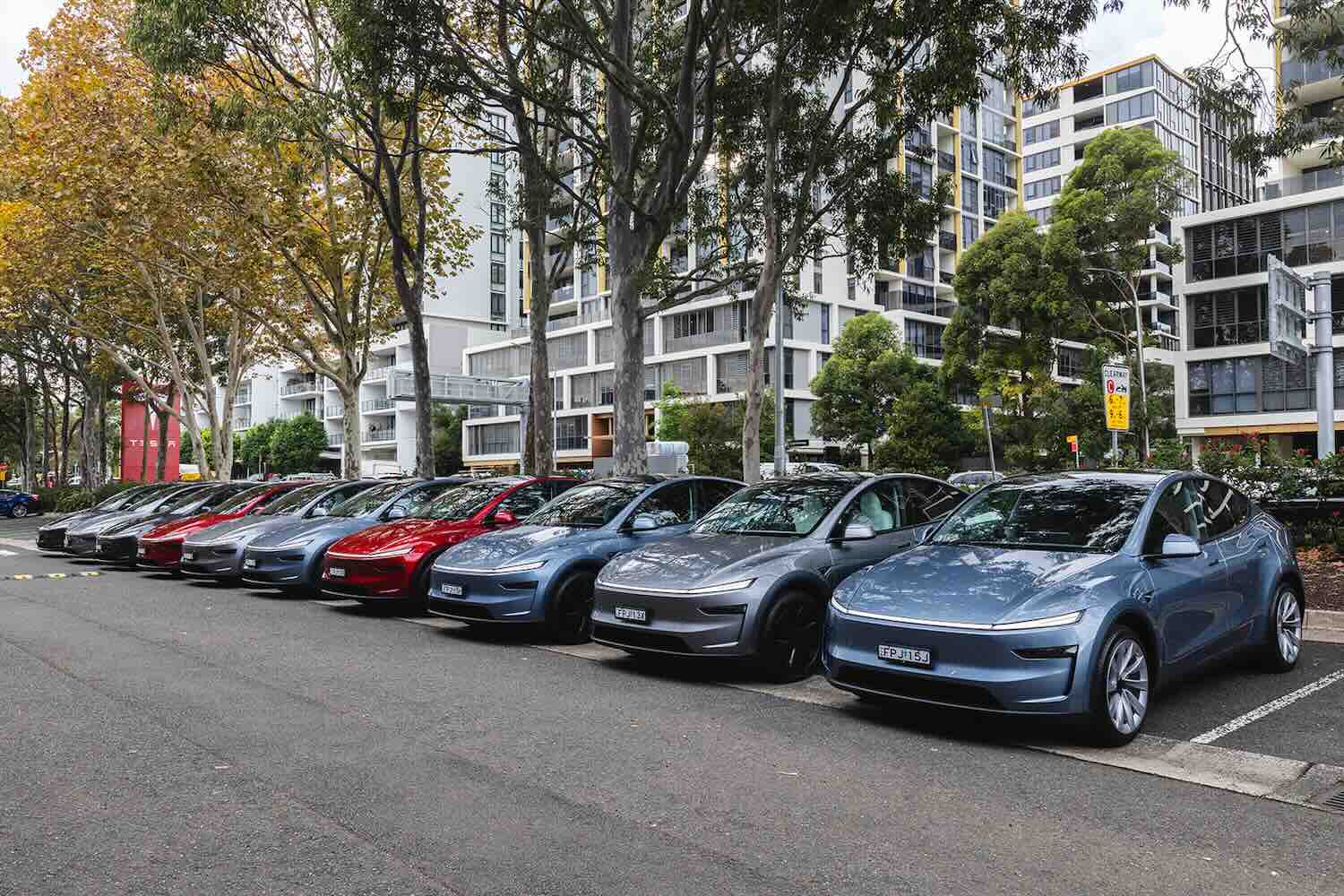
These are just some of the remarkable statistics to come out of the data released this week by the Electric Vehicle Council and the FCAI, which confirmed that the Tesla Model Y was the country’s best-selling vehicle in May, the first time an EV has taken that crown.
“May 2026 represents a breakthrough moment for electric vehicles in Australia,” says Julie Delvecchio, CEO of the Electric Vehicle Council (EVC).
“Almost 30 per cent of all new vehicles sold were electric in May (the EVC includes plug in hybrids in its electric definition) and an EV became the nation’s best-selling vehicle for the first time.”
Together, battery electric vehicles (BEVs) and plug-in hybrid EVs (PHEVs) accounted for almost 30 per cent of all new vehicles sold in Australia in May, with BEVs more than doubling year-on-year to account for 20.6 per cent of the market.
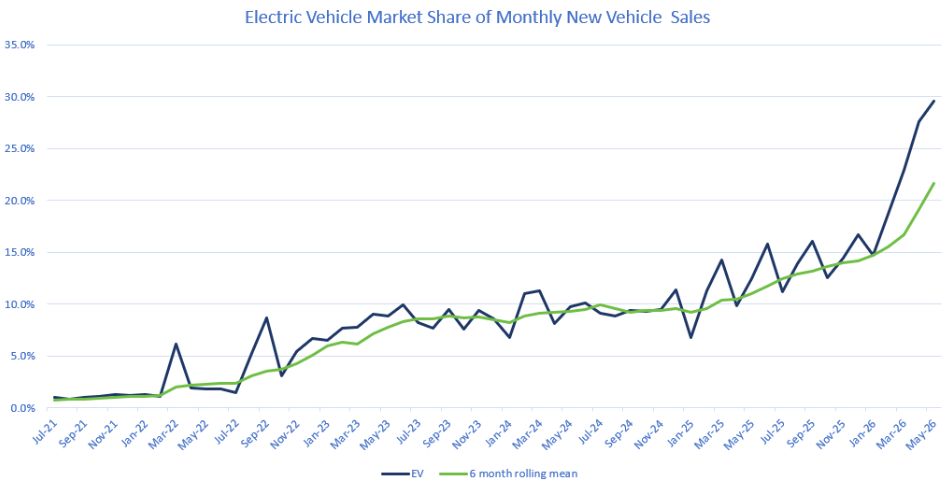
With a total of 21,303 BEVs sold in May, that averages out to 687 battery electric vehicles were sold per day, or the equivalent to about 29 sold every hour or roughly one sold every 2 minutes.
When including PHEVs, Australians purchased 30,618 rechargeable vehicles. And when expanding the data to include all types of hybrids, all electrified vehicles accounted for 46 per cent of all new vehicle sales, according to the Federal Chamber of Automotive Industries (FCAI).
In the ACT, for a long time the market leader in EV adoption in Australia, sales hit 36.5 per cent in May, taking the total share of EVs in the existing fleet to 4.7 per cent.

FCAI chief executive Tony Weber said that May’s numbers demonstrated the pace of consumer adoption of lower-emission technologies in response to an international shock.
“The shift is particularly evident in the SUV segment, where consumer preferences are changing rapidly. Today’s SUV buyer is increasingly choosing hybrid, plug-in hybrid and electric options,” Weber said.
And it was one of these SUVs, the Tesla Model Y midsize SUV, which finished the month of May as the best-selling model in Australia, with recorded total vehicle sales of 5,605, according to the Electric Vehicle Council.
This is the first time an electric vehicle has ever topped the national monthly sales charts.
Chinese carmaker BYD, which only sells BEV or PHEV models in Australia, was the second best-selling car brand behind evergreen favourite Toyota, finishing the month with sales of 8,211. Tesla is a little way back in the top 10 best-selling brands, with a total of 6,433 sales in May 2026.
The EVCs Delvecchio said that May’s numbers marked a significant milestone in Australia’s electric transition and highlighted the role that cost-of-living pressures is having in the increased interest in electric vehicles.
“We know Australians buy cars that save them money, suit their lifestyle and perform well. Record EV sales suggest more Australians are finding electric vehicles tick all three boxes,” said Delvecchio.
“When fuel prices rise, Australians naturally look for ways to reduce household expenses. Electric vehicles allow families to avoid the volatility of petrol prices while saving around $3,000 a year in fuel and maintenance costs.
“The combination of more vehicle choice, lower running costs and supportive government policy is helping more Australians make the switch.
“The Federal Government’s decision to extend the Electric Car Discount (ECD) sends a clear signal: Australia is committed to making cleaner, more affordable transport a reality for households.
“The ECD and New Vehicle Efficiency Standard have been building the conditions for this moment – more models, more affordable prices, more choice. When petrol prices surged, Australians didn’t just feel the pain at the bowser. They had an alternative. And they took it – in record numbers.”
Delvecchio added that the record sales data and continued strong interest in EV ownership highlighted the urgent need for an accelerated national EV infrastructure plan.
“While the government has rightly invested in charging infrastructure, with adoption increasing, the federal, state and local governments all need to work together to redouble efforts to meet demand.
“We need to make sure the infrastructure keeps pace with the surge – so when Australians choose electric, the charger is there when they arrive.”