If we’d treated electric vehicles as a nation‑building priority back in 2019, rather than a culture‑war prop, Australia would be in a very different place today.
On reasonable, conservative assumptions, we’d have roughly three times as many EVs on the road as we do now, and they’d be displacing on the order of 100 million litres of petrol and diesel every month.
That’s fuel we simply wouldn’t need to import or burn. Instead, as oil markets tighten after the latest “special military action” in Iran, we’re scrambling to push an extra 100 million litres a month of high‑sulphur, dirtier fuel into the Australian market just to keep the pumps flowing.
In other words: the volume of “dirty” petrol we’re hurriedly unleashing now is about the same as the “clean” fuel savings we could already have banked if we hadn’t spent the last decade sneering at EVs.
The parallels with toilet paper during COVID are uncomfortably familiar. One reported fuel shortage in regional Australia appears to have been triggered less by genuine physical scarcity and more by stockpiling – deliveries diverted to fill on‑farm tanks rather than regional servos, as nervous “cockies” responded rationally to the prospect of being left short.
When you design a system that depends almost entirely on imported fossil fuel, any geopolitical tremor produces waves of panic buying and hoarding.
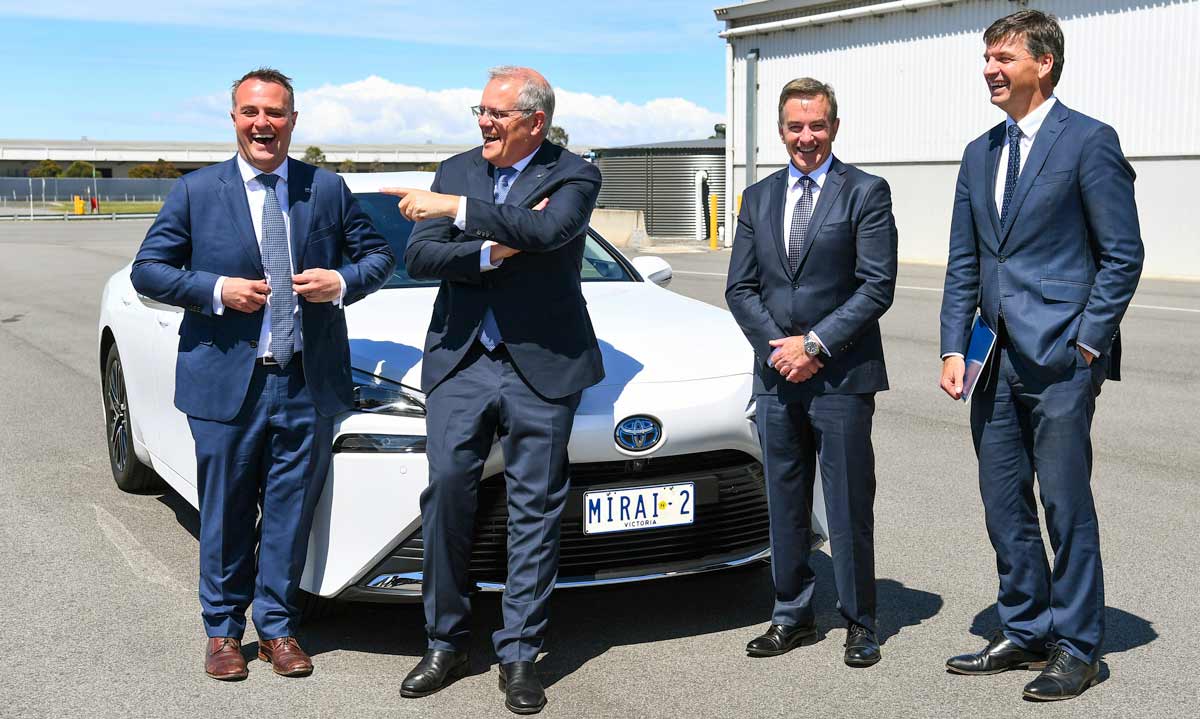
This is not an accident. In 2019, the Coalition federal government led by Scott Morrison ran a deliberate scare campaign against vehicle efficiency standards and EVs – remember the “cars that will ruin your weekend” line – and in doing so it caved to a coalition of oil and car‑industry interests who wanted to keep dumping inefficient vehicles here.
The price of that decision is now painfully clear. Because we delayed both fuel‑efficiency standards and large‑scale electrification, we are at least 70 million litres a month short of the clean savings that a more ambitious EV rollout would already be delivering. To fill that gap, regulators have relaxed fuel quality limits and opened the door to dirtier, higher‑sulphur petrol.
New Zealand offers a stark companion story in miniature. On the Shaky Isles, EV uptake was accelerating strongly in 2022, with plug‑ins pushing into double‑digit shares of new registrations. A supportive policy mix – clean‑car discounts, exemptions from road‑user charges – was finally shifting the fleet.
Then a MAGA‑lite coalition came to power, scrapped key incentives, imposed full road‑user charges on BEVs and PHEVs, and tilted the system back towards “self‑charging” hybrids heavily favoured by Japanese manufacturers.
Instead of continuing up the S‑curve, EV sales stalled. By now, New Zealand is plausibly 100,000–120,000 EVs short of where it could have been, and that missing fleet represents something like 150 million litres a year of extra petrol and diesel the country still has to import and burn.
The common thread is structural vulnerability by political choice. Both countries had clear opportunities to reduce exposure to oil‑price shocks by lifting vehicle efficiency and accelerating electrification.
In both cases, short‑term political tactics and lobbying pressure won out over long‑term resilience. The result is that when conflict spikes oil prices, households pay more at the bowser, governments scramble to relax standards, and “energy security” is reduced to a frantic search for more fossil fuel.
The counterfactual is not science fiction; it’s visible in markets that did act early. Norway, the Netherlands, even California show what happens when you take EVs seriously: a rapidly growing share of kilometres powered by domestic electricity, lower per‑capita fuel imports, and far less sensitivity to every crisis in the Middle East.
Australia and New Zealand could have been on that path. Instead, we are pumping dirty fuel into our tanks because we refused to put clean cars on our roads.