Queenslander Grant Schmidt would love to charge his BYD Sealion 7 from the solar panels sitting on his roof and then send it power back into the grid at night.
Given the ducted aircon in his Mount Cotton house can chew through 60–70 kilowatt-hours (kWh) of electricity a day, he promises there will still be plenty of business for the grid.
But he can’t, the frustrated electric vehicle (EV) owner has been thwarted by Queensland’s arcane network rules.
“Queensland is getting left behind,” he tells The Driven.
“The rules won’t let me install a vehicle-to-grid (V2G) charger and have a rooftop solar system that can charge the car.”
What Schmidt is talking about is a 10 kilovolt-ampere (kVA) maximum limit on inverter capacity for a single phase connection.
That means a house in Queensland is limited to either a 10 kVA hybrid solar inverter – one that can export to the grid or to a home battery – or a V2G charger with an inverter rated at up to 10 kVA, but can’t connect both.
So while Schmidt can charge his EV and home battery from his 13.2 kilowatts (kW) of rooftop solar, and export the solar directly into the grid, he cannot export any electricity separately from his car.
It’s not just Schmidt who is baffled by the esotericism of Energy Queensland’s strictures.
The Australian Electric Vehicle Association’s man in Queensland, Nathan Gore-Brown, says they’re hearing from frustrated members about the issue too.
“They’ve done everything right: solar, a battery, an EV and when they try to add a vehicle-to-grid charger, they’re told their home has hit its inverter limit,” he tells The Driven.
“The network’s real concern is how much power a home exports, and that’s already controlled through export limits and dynamic connections.
“Right now the connection rules shut them out. That means the large batteries already sitting in driveways can’t help cover the evening peak, when the grid needs it most.”
He’s encouraging the state-owned company to find a way through and align with other networks across the east coast.
It is not the first time Queensland has found itself out of step with the rest of the east coast network operators, nor the first time Energex, in the south-east of the state, and Ergon in the remainder have struggled with the shift to electric: for example, they only changed the rules to allow EVs to charge from rooftop solar in 2023.
Energex was not able to respond to questions before publication.
Petitioning for change
Schmidt has launched a petition to bring the state into line with the rest of Australia, one that has the backing of former energy minister Mick de Brenni.
“You should be able to control the electricity you own. Apparently not in Queensland,” de Brenni wrote on Facebook on Tuesday.
“I caught up with Grant and I’m backing his calls on the Government to let you use your own vehicle to cut your power bills. Vehicle to grid was a specific action under our energy policy – but that was torn up.”
“With 1 in 4 car sales now being EV, why won’t the LNP Government let all Queenslanders use their car to power their homes, and keep your money in your pocket?”
At the time of writing, the petition had attracted 682 signatures and a lengthy thread on Reddit by equally ticked-off electric vehicle owners.
“The funny thing is I only want a 7 kVA bidirectional charger, so it’s not even the full 10 but it allows me to turn my vehicle, that I use to drive to the shops, to work, to use that as additional backup and storage,” Schmidt says.
The petition asks energy minister David Janetzki to let households with existing hybrid inverters rated at up to 10 kVA install to install an approved bidirectional V2G charger as well, and work on the dynamic connections framework so it can accommodate both.
Janetzki’s office did not respond to a request for comment.
“Because a 10 kVA hybrid inverter is the standard setup for modern solar-and-battery homes, this restriction locks early adopters out of V2G technology even when total grid exports are safely managed via site export limits or Dynamic Connections,” Schmidt says in his petition.
Currently only South Australia comes close to Queensland, with a limit of 10 kVA on hybrid solar inverters. But it treats chargers as batteries and allows a house on a single-phase connection to also install an additional 10 kVA of battery or V2G inverter capacity.
Locked out
The connection limit is causing real problems now, as Schmidt and other Queenslanders are finding themselves locked out of a subsidised V2G trial.
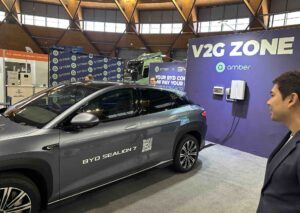
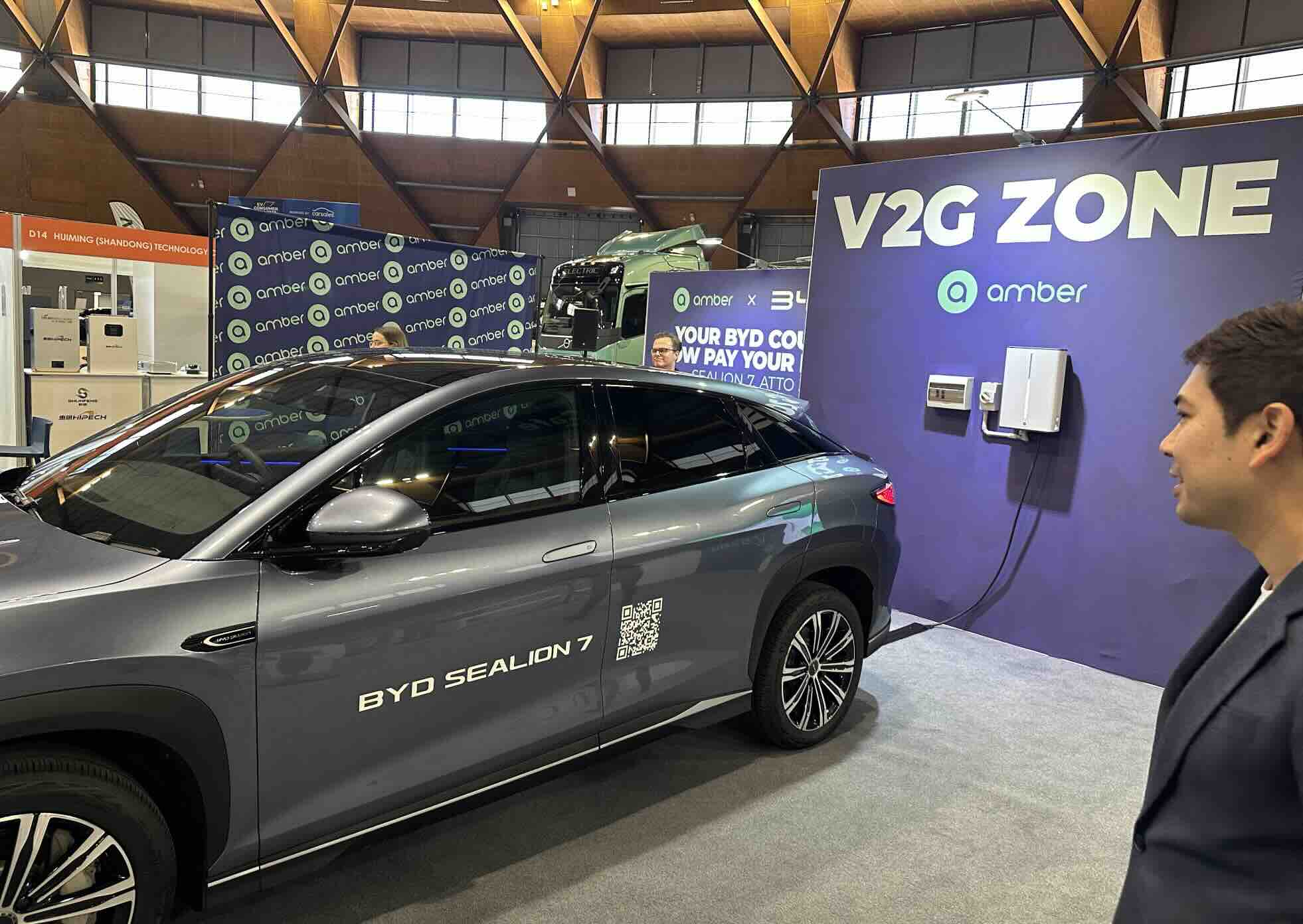
Schmidt was invited to join Amber Electric’s V2G trial after BYD approved the Sealion 7 for use in the trial in September. BYD says using V2G in the trial won’t affect battery warranty coverage for participating Sealion 7 and Atto 3 owners.
The program, which has $16.8 million in funding from the Australian Renewable Energy Agency (ARENA), wants to test how 1000 V2G chargers will work.
Schmidt spent $2000 on a Zaptec bidirectional charger last year in anticipation of the device being approved for V2G – it still is not. Now he’s prepared to spend another $3000 on the subsidised Starcharge Halo bidirectional charger which is approved in Australia.
Schmidt says Energex rejected his application to install a bidirectional charger because his existing hybrid inverter already reaches the 10 kVA limit for his single-phase connection. He can still charge his EV at home using rooftop solar and export surplus solar electricity to the grid. The ruling prevents him from adding the ability to export electricity from his car as well.
Amber’s latest data shows it had a fleet of 64 sites by the end of October in the trial, and for the first time electricity exports delivered more value than powering homes directly.
So far, most of the testers are in NSW but there are three in Queensland who managed to get set up during the initial 50-household trial.