Japanese car giant Mitsubishi recently invited us to take a look at the ASC VR-e, the second electric car it has launched in the Australian market – almost 16 years after it released the now iconic and fondly remembered i-MiEV.
I had the pleasure of driving the i-MiEV in Melbourne back in 2010, so I was naturally very curious to see what the all-new Mitsubishi ASX VR-e – a modernised and electric version of the ASX crossover vehicle – would be like at its first Australian preview.
In contrast to the -MiEV, the ASC VR-e is headlined as the fastest car that Mitsubishi has ever launched in our market, coming up with a 0-100 km/h sprint time of just 3.9 seconds in the top-spec dual-motor GSR variant, which is faster than the Lancer Evo X’s 5 seconds that it boasted of in the 2010s.
Mitsubishi is tracing the heritage of the VR-e back to the famous Gallant, and it is seen as a potential competitor to Chinese offerings from BYD and MG. Pricing will be key, and if NZ pricing is anything to go by, it could land in Australia starting from under $50,000.
That acceleration for the GSR variant is enable by its dual-motor setup that delivers 340 nm and is powered by a 57.7 kWh CATL-supplied battery pack, which in this top-spec variant delivers 328 km of range.
There will be three other single-motor variants which deliver 380 – 403 km depending on the variant. Breaking that down by variant, the base LS has 403 km of WLTP range, Aspire packs 398 km, and the Exceed variant delivers 380 km.
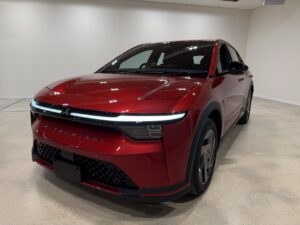
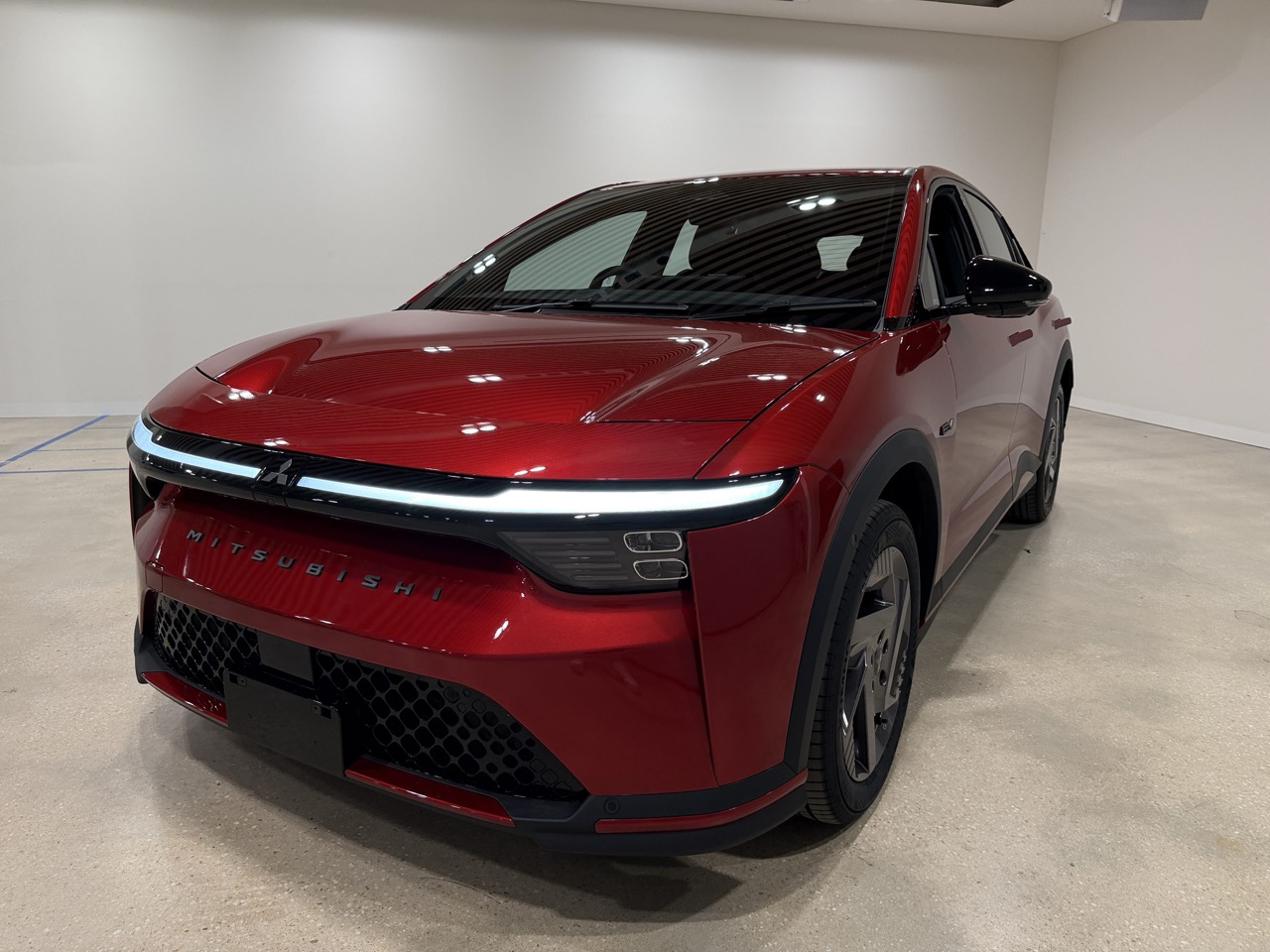
From the outside, it’s very clear that this is a big shift from the standard ASX SUV, and up close, it’s definitely a head-turner.
That’s thanks to the sleek design of the car, which has been designed by iconic Italian styling house Pininfarina, which has previously designed a few prominent supercars and hypercars.
The Mitsubishi ASX VR-e’s styling takes cues to improve the overall efficiency of the car through aerodynamic elements such as those seen in the front bonnet and the rear of the car.
At the front, there is an S-Duct which takes the air through a lower front bumper and moves it inside the duct to leave through the upper frontal part of the car. There are also active grille shutters that allow air for cooling.
The charge port is also located at the front right hand-side of the car, just in front of the driver’s door and also has a powered flap.
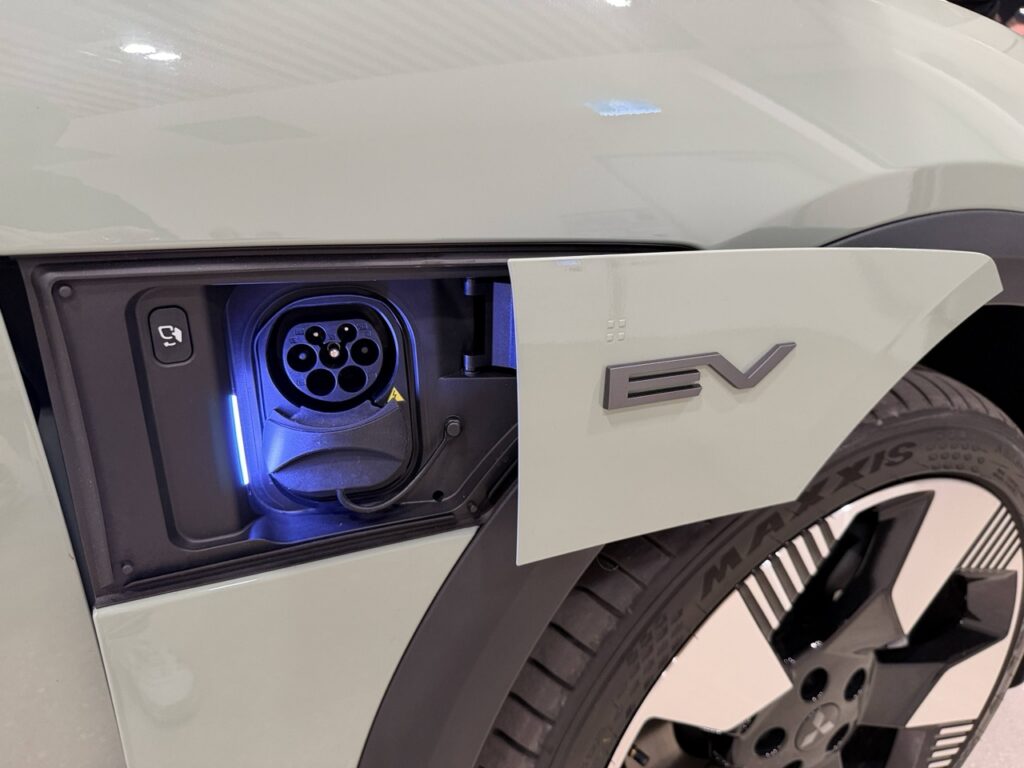
On the side, there are flush door handles as well as alloy wheels which help reduce drag, improving the efficiency compared to other similarly sized models.
On the inside, there is a large 15.6-inch screen and a 9.2-inch instrument cluster screen behind the steering wheel. There are still a few physical buttons, which will make it easier for somebuyers making the switch from an ICE vehicles to EVs.
Speaking of the centre screen, the layout of the user interface is quite different from those seen on many other EVs, where quite a few controls can be placed on the screen for quick access.
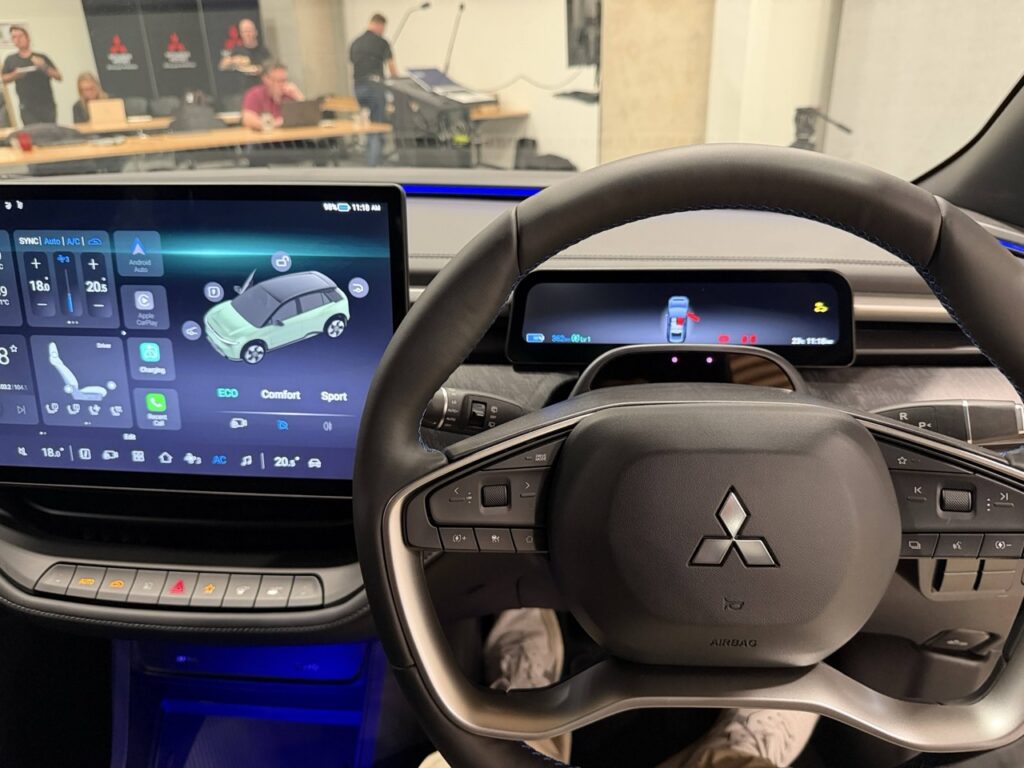
It was refreshing to see that, given the screen size available, and we’d love to see what it’s like use during everyday testing, once we can get it on the road later this year.
There are now over-the-air (OTA) updates also on offer, which would make this EV, one of the first Mitsubishi models with this tech and we are likely to see more of this from the brand in future models.
For those wanting to bring their apps into the car with Apple Carplay or Android Auto, both are available, making it easier to get into the ASX VR-e for those coming from other brands.
Sitting inside the car, it’s clear that Mitsubishi has tried to keep a level of familiarity with the ergonomics and material choices.
The seat materials, the quality of stitching and general build seem very high and they need to be given credit, as this car is backed by Mitsubishi’s 10-year warranty in our market as part of the brand’s Diamond Advantage program.
This would give peace of mind to many of the brand’s long-standing fleet customers across the country. It could also be the first EV in many of the fleets, making it an important car to leave a good impression to further transition their fleets.
Servicing is also a key area that’s important to everyday buyers as well as fleet operators and on the ASX VR-e, it’s backed by the brand’s capped price servicing program.
This allows for 10-year or 150,000 km servicing for the first 10 scheduled services at 15,000 km or at 12-month servicing intervals.
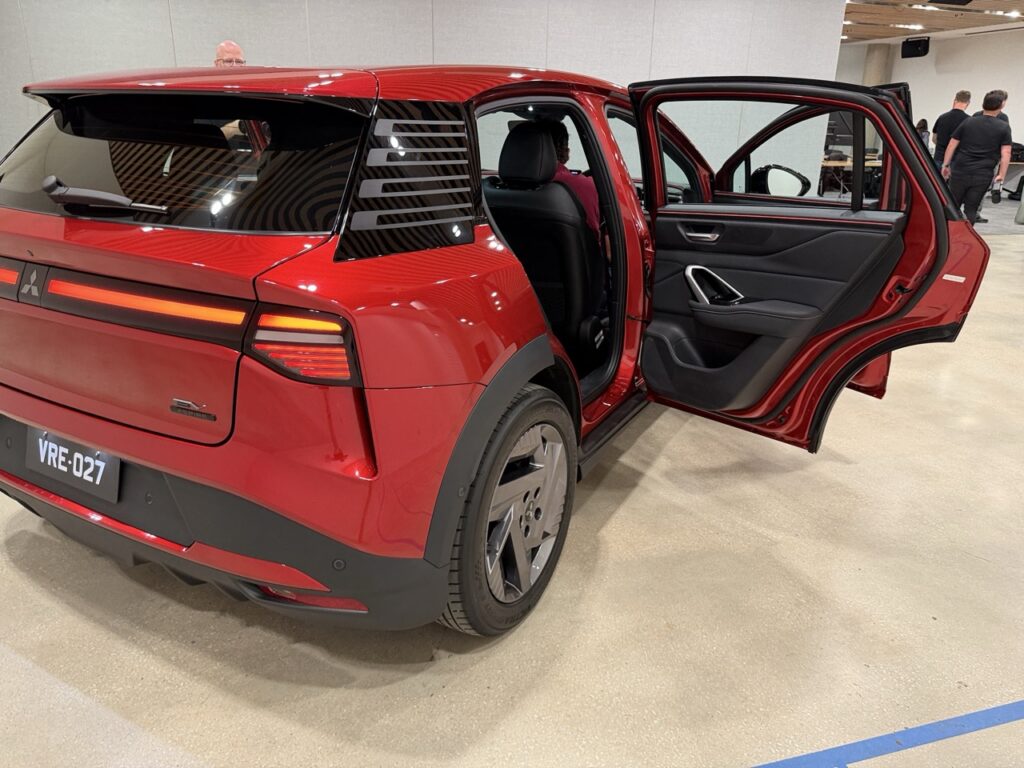
The new model will be available in 6 single tone colours as well as two-tone exterior options. We got to see the Sage and Red in person and both colours do make the car stand out from so many other small SUVs on the market.