How long does it take to charge an electric vehicle? How often do you have to do it? EV drivers will be familiar with the questions. It’s often posed by people struggling to get their minds around the transition to electric motoring.
Australia’s biggest mining group BHP is one of those. It has looked into the issue, with their Early Learner Caterpillar electric truck models in the Pilbara and concluded that to convert its fleet of giant electric haul trucks to fully electric ones is just too hard.
BHP reckons the trucks will need to be charged for up to 15 minutes eight times a day, and the time and motion experts have decided that is too much lost productivity to make the investment worthwhile, and so they have put a stop to those transition plans.
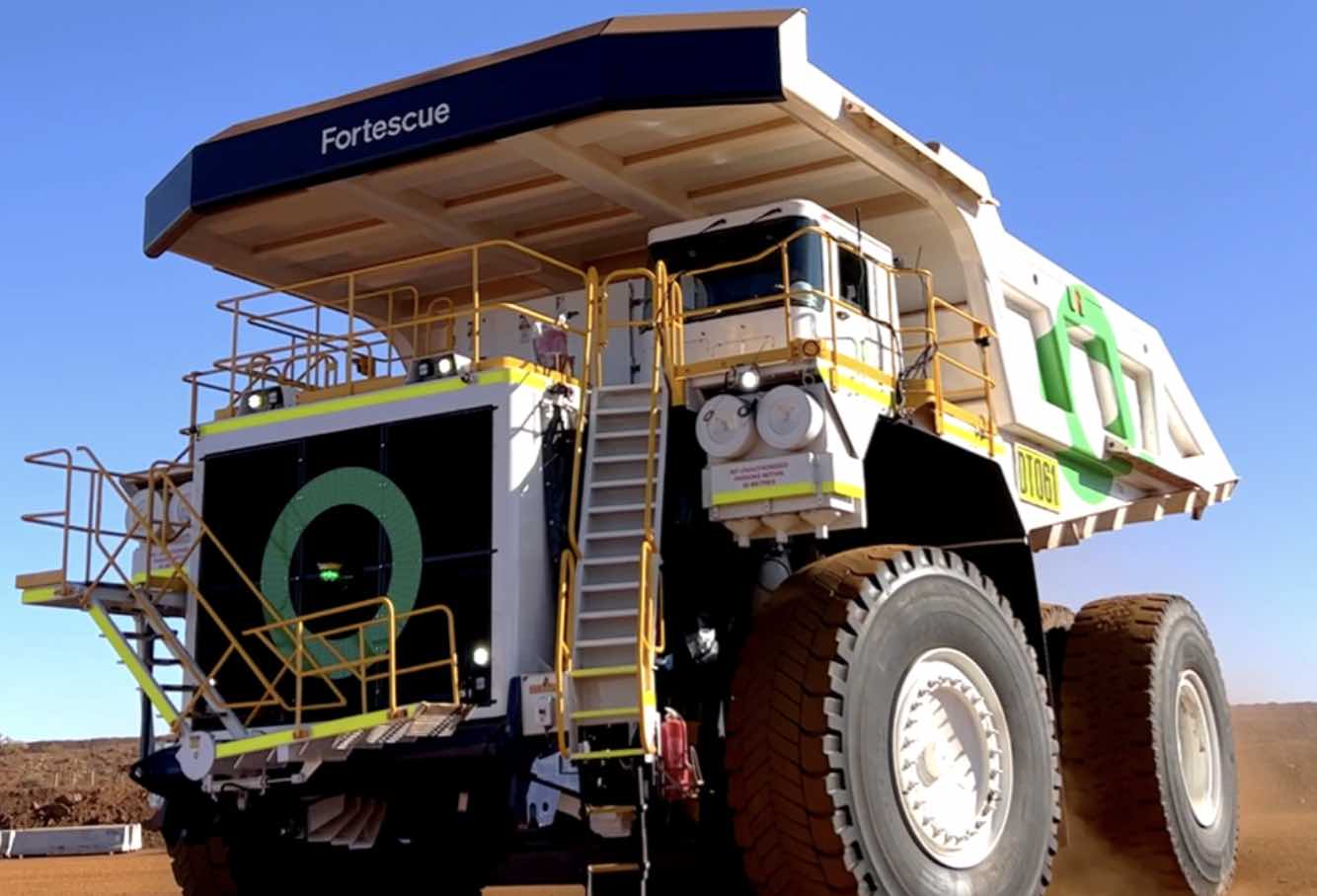
Which begs an obvious question: If it’s too hard for the world’s biggest mining company, how then can its Pilbara iron ore rival Fortescue, succeed in its ambitious goal of replacing several hundred diesel haul trucks – weighing up to 260 tonnes – with full battery electric ones by the end of the decade, when it plans to reach “real zero” and burn no gas or diesel for power or machinery.
Last week we reported Fortescue’s initial response – saying BHP was obsessed about small details and missing the bigger picture, Now we have more information about the approach that Fortescue is taking as it prepares to roll out the first of its electric fleet later this year.
And it comes down to a truth that most EV owners already understand: The biggest issue is not so much charging time, but when you charge. Always Be Charging (ABC), the saying goes. And it also comes down to making use of EVs other key attributes – incredible torque and lower maintenance.
“A truck’s charge time on its own doesn’t tell you how efficiently it can operate across a shift,” says Warren Harris, Fortescue’s director of Decarb and Green Product Delivery.
“We’re redesigning how the fleet works, using short, opportunistic top-ups to reduce charging downtime and keep trucks moving.
“Truck speed and cycle times matter too. Battery electric trucks can travel faster than diesel trucks, while removing the diesel engine and its associated components reduces maintenance hours and extends service intervals.”
Fortescue own calculations are that its battery electric haul trucks will require six 15 minute charging times each day, which is, of course, longer than needed for a diesel truck to top up its fuel tank once a day.
But Fortescue’s calculations are based on the bigger picture – and it reckons it can make up for lost time with faster acceleration that results in quicker journeys, and 350 hours less maintenance a year that results in an extra hour of availability each day.
And the company is also looking at taking advantage of inevitable “down time” – just as queuing at excavation sites – to charge up with its own 6 MW chargers located nearby.
“We’re also looking at how to charge more when renewable energy is available,” Harris says. “These trucks are batteries on wheels, so charging when the sun is shining or the wind is blowing helps us make better use of that energy.
“Our current modelling puts electric haul trucks at total cost of ownership parity with diesel, using conservative assumptions around charging downtime, truck speeds and service intervals. Battery costs have fallen significantly and are expected to keep improving. As more manufacturers enter the market, upfront costs should also come down.
“As our battery electric trucks enter operations, we expect to unlock further efficiencies that are only possible in an electrified mining operation.”
Fortescue expects the first electric haul truck delivered by Liebherr will be on site later this year, quickly followed by 10 more, which will enable it to decarbonise the trucking of the first of its giant ore pits. The first from China’s XCMG will arrive in 2028, with the last diesel truck phased out by the end of the decade.
It already has its 20th electric excavator on site, and these are proving more productive than their diesel predecessors, and by the end of 2026 40 per cent of its digger fleet will be fully electric.
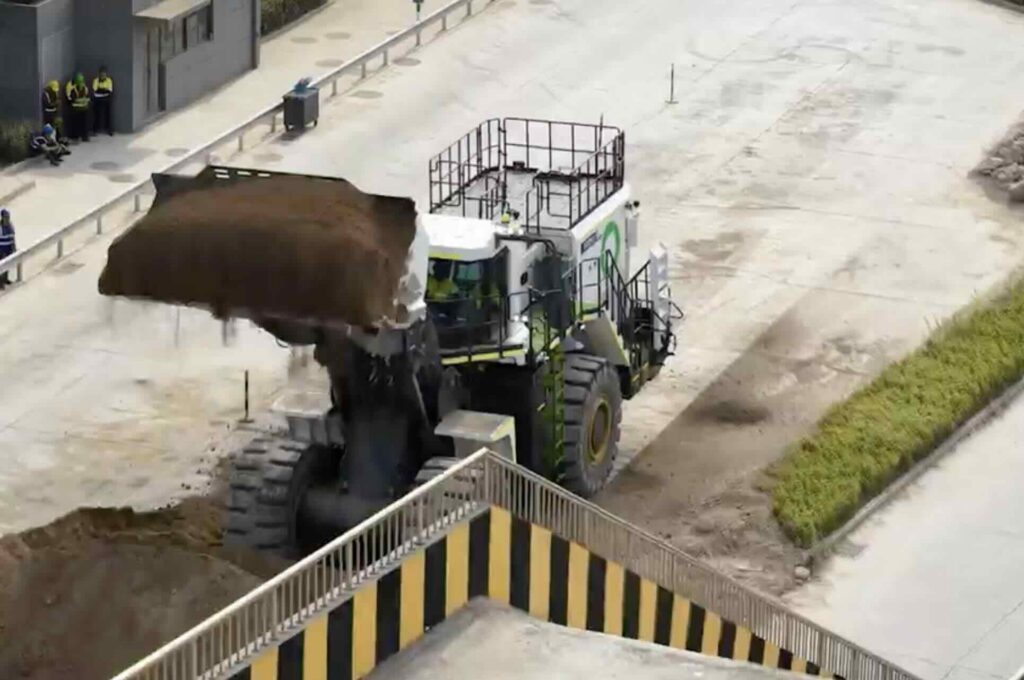
Its first electric wheel loader, made by XCMG, is on the boat (pictured above)(, and an electric grader is also on its way. Electric trains are proving more challenging, and its has two 14.5 MWh locomotives already trialling.
It is looking at overhead pantographs to help out given that the original plan for regeneration on the downhill trip to port is not going to work out. And it has taken delivery of its first Toyota Hilux electric utes.
These, of course, will be powered by renewable electricity, with 1.2 gigawatts of solar, more than 600 MW of wind, and 4,000 MWh of battery storage due to be in place by the end of 2028.
Sign up for The Driven’s free daily newsletter and get the latest EV news and analysis delivered straight to your inbox.