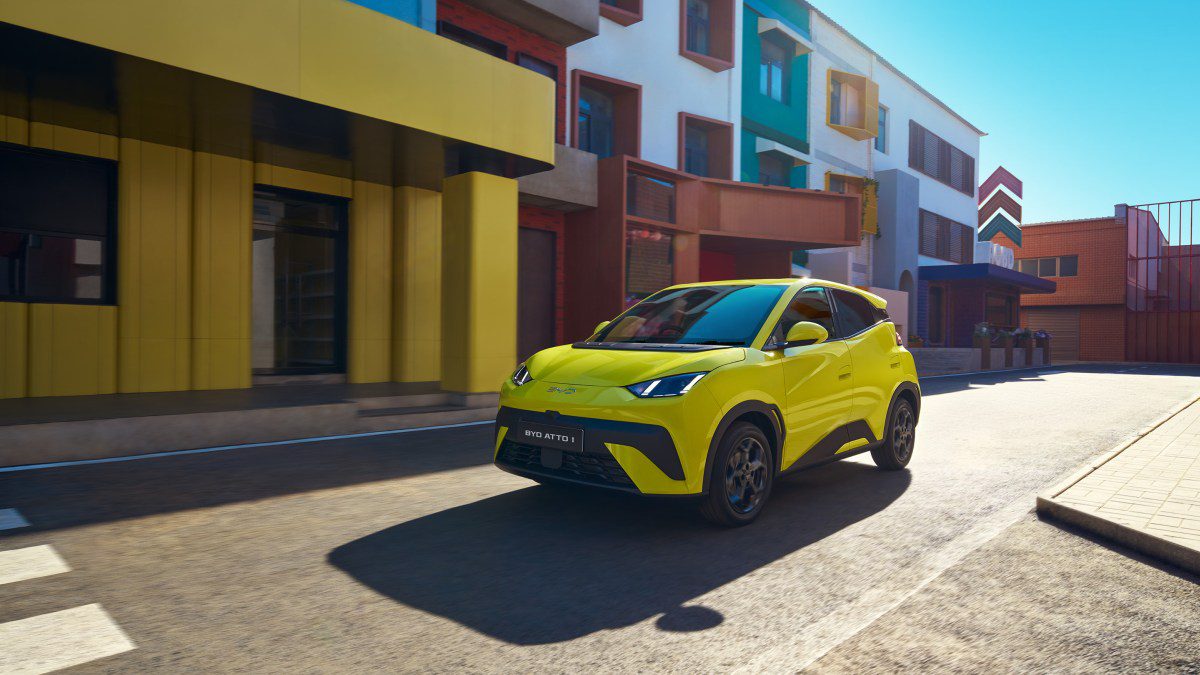
The BYD Atto 1 is a long way from being Australia’s best selling car, or even its best-selling EV. But it is now the cheapest new car of any fuel system on offer in Australia, at a driveway price of just $19,990.
The special deal announced on Tuesday by BYD, now ahead of Tesla as the best-selling electric brand in Australia because it has a lot more models on offer, has stunned the industry, as we reported on Tuesday.
The BYD Atto 1 has sold 3,838 units in 2026 until the end of August, according to official data – check out The Driven’s month by month sales here – which puts it at number 11 on the EV best selling list for the year, just ahead of the BYD Seal and BYD Dolphin, and behind the BYD Atto 3.
Its sales, however, are just half of the bigger BYD Atto 2, and one fifth of the BYD’s best selling model, the Sealion 7, which sells from around $55,000. And it’s a long way behind the market leader, the Tesla Model Y, which retails from around $60,000 to more than $80,000.
Which means that the lowest cost EV is not about to become the best selling EV, but market experts say its biggest contribution will be helping to change the conversation about the transition to EVs, particularly when it comes to complaints about the lack of price parity.
“On the surface, that’s just a price cut. But it’s much more than that,” says Julie Delvecchio, the CEO of the Electric Vehicle Council.
“We’ve always known EVs are cheaper to run. Charging at home costs a fraction of filling up with petrol, and maintenance costs are typically much lower than petrol and diesel cars.
“But for many Australians, those savings have remained out of reach because of the upfront purchase price. A brand-new EV under $20,000 starts to break down one of the biggest barriers to EV adoption: affordability. That’s why this matters.”
The Delveccio’s post on LinkedIn sparked an interesting conversation about the impact of BYD’s move. One suggested that a price of under $20,000 also eliminates fears about devaluation, another suggested it also raises questions about after-sales delivery and servicing.
Delveccio made this observation: “’Cheaper to run’” sells to people who already trust EVs. ‘Cheaper to buy’ unlocks a completely different buyer – first-car buyers, price-sensitive households who haven’t been in the conversation.
That will be key as Australia makes the next big leap into the electric vehicle transition. The surge in interest in EVs over the last six months – since Donald Trump declared his ill-advised war on Iran and sparked a huge leap in petrol and diesel prices – has seen the market share of electric cars jump to a record 24.9 per cent in the month of August.
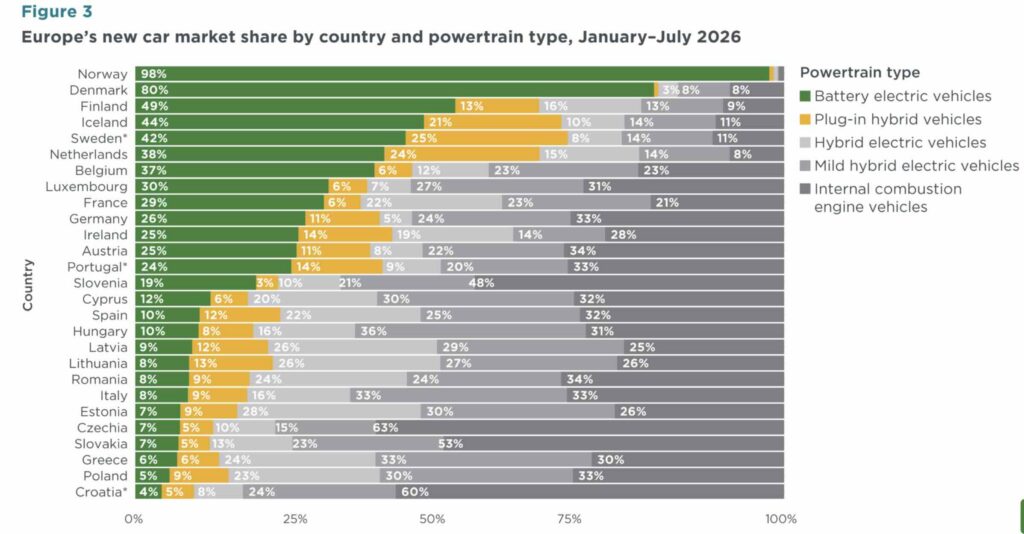
That lifts Australia off the floor in terms of western markets – a ranking it shared with the US – and into the middle of the pack when compared to European countries, according to the graph above from the International Council on Clean Transportation.
It is still well short of the stunning 98 per cent market share for EVs in Norway and 80 per cent in Denmark, but well ahead of most eastern European countries and about equal with the Portuguese, Austrian and Ireland markets.
Where Australia stands out is the market share of Chinese brands, and Chinese-made EVs, which now dominate the market (Tesla EVs sold in Australia are made in Shanghai). The intense competition and emerging brands is ramping up the number of EVs priced below $40,000 and even $30,000.
The growth in that market, and now under the $20,000 price point, along with the continued surge in petrol and diesel prices, suggests that there is no turning back.
There are even electric utes – released by market leader Toyota and MG – that are starting to make people thing twice about their choices in this key part of the market, now that people realise that they can tow their boats and won’t ruin their weekends.

Save 30% on tickets to Everything Electric This Weekend. Use the code DRIVEN at checkout.
And a conversation change is needed, despite the surging sales, with mainstream media seemingly obsessed with their efforts to try and demonise the technology in whatever way they can.
The past week has seen both Murdoch Media and Fairfax Media seek to equate the surge in EV sales with inflation pressures and damage to the Australian economy.
“Our enthusiasm for electric vehicles could drive risk of higher inflation,” wrote Millie Muroi in the Sydney Morning Herald last week.
Her point was that increased household spending on EVs, even offset by lower fuel spending, would add to inventories and pressure on economic growth.
That might be regarded as a good thing, were it any other less controversial commodity, but her own story points out that inventories actually fell in Australia, due to a drawdown on the mining sector, and the effect in imports was offset by increased coal exports.
The Daily Telegraph chimed in with “The EV boom is killing the Australian economy”, and The Australian initially blamed a jump in car spending for the weak economy, before deciding it was actually a boost. The Australian Bureau of Statistics actually reported that a surge in electric vehicle purchases helped keep the national economy growing rather than killing it.
But perhaps the real concern is that one of the last bastions of the internal combustion engine car, the petrol hatch, is now being attacked by the electric motor.
CarsGuide had actually published an analysis a week before this latest cut arguing that the Atto 1 and Geely EX2 were already eating into the traditional light-car market, noting flagging sales for the MG3 and the Toyota Yaris.
That was when the Atto 1 was priced a lot more than it is now. The significance now, even the motor industry scribes write, is that the Atto 1 now undercuts cars like the MG3 and Kia Picanto rather than merely competing with other EVs. Can’t wait for the fully electric BYD ute.
For a full rundown of all available EV models in Australia, please go to our Compare EVs page here.
You can find The Driven’s detailed EV sales data here: Australian electric vehicle sales by month in 2026; by model and by brand.
And you can sign up for The Driven’s free daily newsletter and get the latest EV news and analysis delivered straight to your inbox.