Hi, I have two unrelated questions that may also be of interest to other readers, if your experts wouldn’t mind answering them.
First- the easy one, would it make any difference to either the power available to the wheels or the suspension tuning if wheel sizes were switched from 20 inch to 18 inch? I am thinking of the Subaru Solterra or the Trailseeker where variants loose range and cushioning with the more expensive models, due to cosmetic increase to wheel size.
Second- I have two phase power connected to my house, I believe it was done years ago to then allow different charges for electricity for hot water heating. Could this setup be used to increase power available for EV charging?
Many thanks Bob.
Hi Bob, what great questions! I will answer them as separate articles, as neither is quite as simple as they might first appear. I will address the tyre question here.
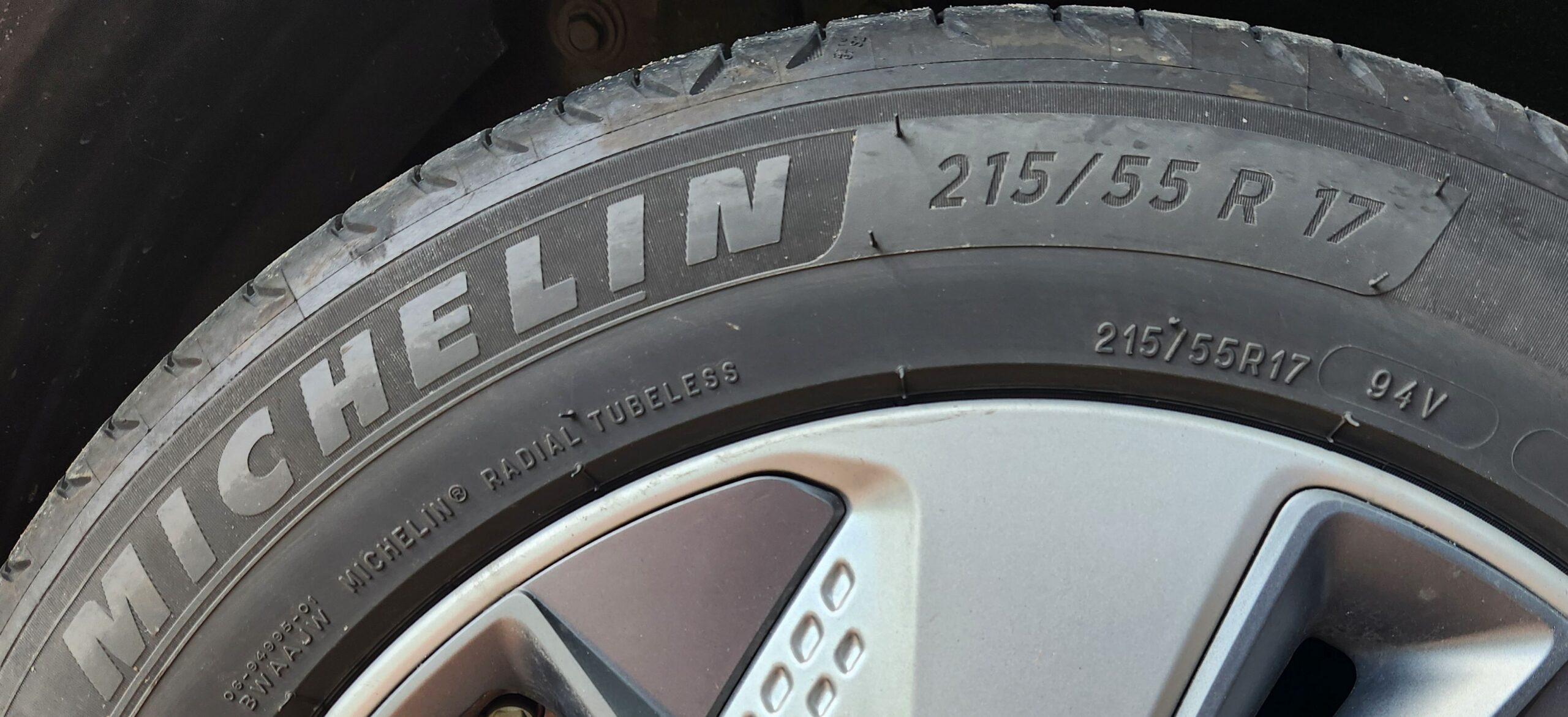
I am guessing Bob you do know how to interpret tyre codes, however for those people reading this who may not know exactly what they mean – perhaps I should do a quick detour to explain them before going on with your answer:
Tyres sizes are generally written in the form XXX/YY R ZZ.
X is for the tyre tread width in mm. Y is for the ‘aspect ratio’ or ‘profile’ – which is the ratio of the tyre width to its height. Eg a 300 wide tyre that is 150 mm high is 150÷300 x 100 (which equals 50). This is then written as 300/50. The R number (ZZ) is the wheel rim in inches. (Yes, some things were never converted from imperial to metric: one of them being wheel rims, even though the tyre dimensions were!).
Putting this in concrete terms: a 300/50 R19 tyre is 300mm wide with a width-to-height ratio of 50 (meaning it is 150mm high) and fits a 19 inch rim.
Getting back to your answer Bob: Switching down in wheel size is easy, provided you put on a higher profile tyre to match the original circumference of the tyre to ensure the odometer and range estimator readings remain unaffected.
This means if swapping from a 19 inch to a 17 inch rim, a 255/50 R19 would be swappable to a 255/60 R17. (The circumference and width are identical, but the sidewall is 20% higher). There are many tyre size calculators on the web to help you in making such choices.
The reasons for choosing a higher profile tyre are many. As you point out, it gives a more compliant ride (due to the higher tyre sidewalls allowing the tyres to flex more and ‘soak up’ bumps better) as well as longer range, especially where the higher profile tyre option has a slightly narrower tread.
They are also often cheaper that the ‘fashionable’ low profile equivalent. Although the Subaru models all use the same width tyres, they do have longer ranges for the higher profile ones. In other cars, the higher profile tyre is often narrower as well, meaning there is less rubber on the road and therefore less rolling resistance … and a resultantly longer range again.
And yes, you could go for a narrower tyre on the Subaru – but as you point out, you might be straying into not having enough rubber on the road for the design of the motor power/braking system.
The new tyre width may also be incompatible with the rim width. As we are now starting to stray into specialist territory, I wouldn’t go there unless the chosen new width was a factory option and fitted to a rim of the correct width.
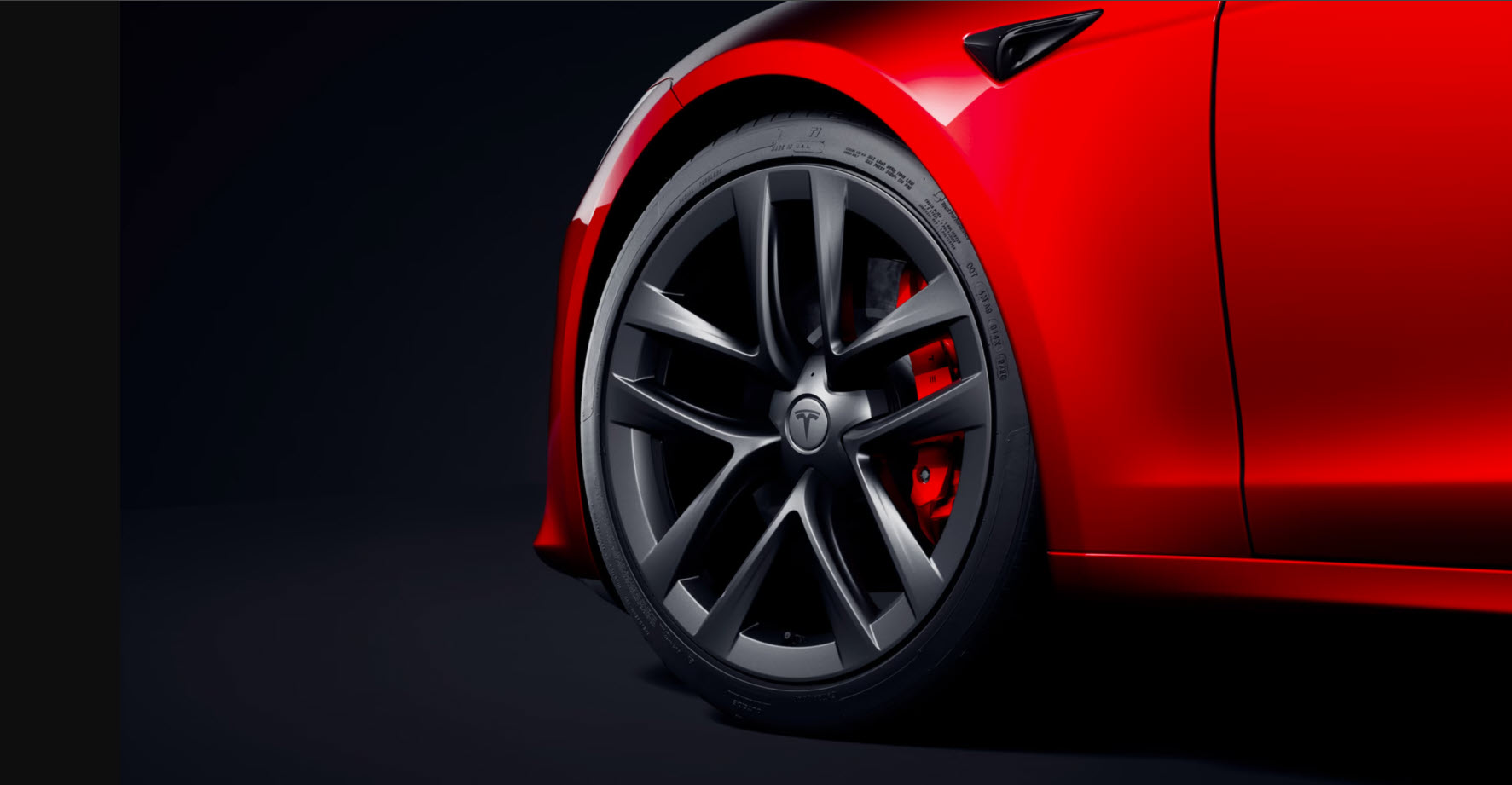
These together add up to why you often see fancier BEV models with the ‘cool’ looking bigger rims having shorter driving ranges. (And why Tesla owners in particular with their very low-profile tyres pay through the nose for new ones).
To give some real-world examples:
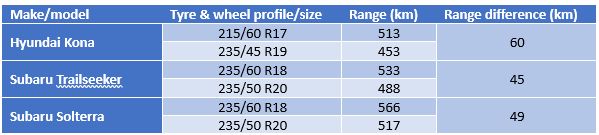
Given auto manufacturers (like the examples in the table above) often offer different tyre sizes for the same models, it should be fine to swap between the factory size options provided there is little weight difference for your new wheel/tyre combination. (Matching the weight is definitely a consideration when going for after-market wheels.
Smaller diameter factory wheels with original tyres may be easy to come by as some people buying the lower spec car might want to do a trade and swap to the fashionably bigger rim & tyre. You might even get money back on the swap).
Another issue to be aware of is ensuring you fit tyres appropriate to a BEV – I have heard reports of noticeable drops in range where non-eco type tyres have been used as replacements to original factory fitments. Again, when fitting tyres to a BEV that are different to the original (even if they are of the same size) – consult a tyre specialist to avoid disappointment.
It was probably always the same for internal combustion engine cars when buying cheap versus high-spec tyres, but it seems people have become more aware of the issue. My guess (and it is only that) is it’s because BEVs give you far more real-time efficiency and range stats than we were used to with ICE vehicles.
Summing up: Going for the smaller/wheel higher profile tyre option may not be fashionable – but it does offer advantages in ride on less-than-perfect road surfaces, with the added benefits of more EV range and lower replacement tyre prices.
Narrower, higher profile ones may make more difference to the range, but I would suggest going there only if the factory options included it. The same goes for the other aspects of tyres, like load and speed ratings. If it was fitted to the model, fine: otherwise it is vital to consult a tyre expert before buying.
The over-riding caveat though is if changing brands to cheaper and/or non-BEV rated tyres, you may undo all your good intentions.
Do you have a question about EVs? Send it through to [email protected]
Sign up for The Driven’s free daily newsletter and get the latest EV news and analysis delivered straight to your inbox.