The local Australian subsidiary of insurance giant Zurich Insurance announced on Monday that it would include Tesla’s self-driving technology as a rating factor in calculating premiums, a first for Australia’s insurance industry and only the second instance of an insurer doing so globally.
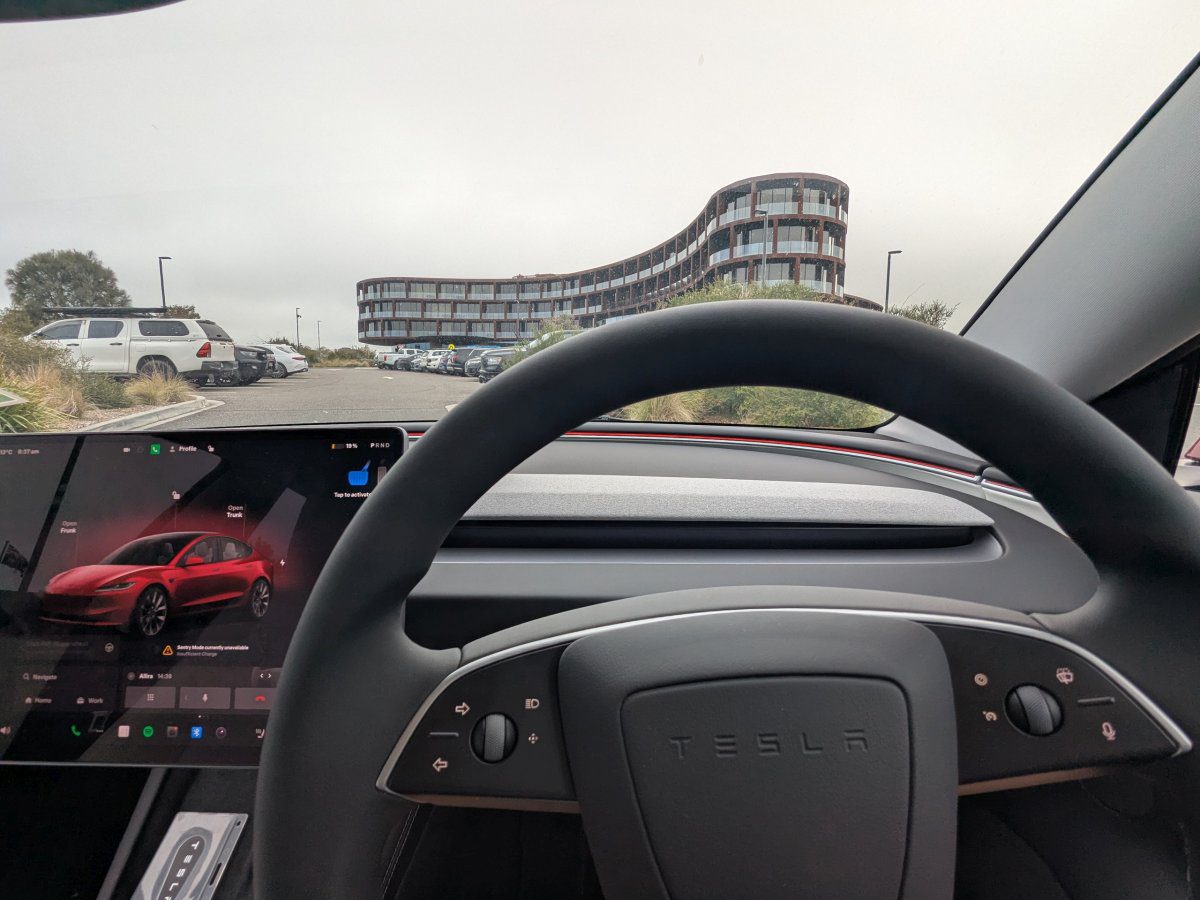
Zurich, which has acted as the preferred insurance provider for Tesla in Australia since 2024, saidit would include a subscription to Tesla’s Full Self-Driving (Supervised) technology as a rating factor for its Tesla insurance offering, InsureMyTesla.
While Zurich chose not to offer any specifics on how big the discount to premiums would be, they nevertheless confirmed that drivers need only have an active subscription to be eligible. Tesla does not share data on whether its FSD (Supervised) technology is being used or if it was used during an accident.
“This is a really exciting milestone – both for Tesla owners who are rapidly adopting this FSD (Supervised) technology, and for Zurich as the first insurer in Australia to actively lean into this space,” said David Toma, product manager at Zurich.
“The data shows that drivers using this technology are involved in far fewer accidents, so it’s important they can access insurance that reflects this lower risk.”
According to Tesla’s own data, drivers using FSD (Supervised) – which utilises eight external cameras to allow cars to navigate set routes with driver supervision – have seven times fewer major or minor collisions compared with regular EVs.
This claim is drawn from a comparison with the “estimated US average”, according to Tesla, and with FSD technology only launching in Australia & New Zealand in October 2025, local data sets will likely take a while to build – even though recent data shows that local Tesla customers have now self-driven more than 132 million kilometres.
“We’re pleased to see the insurance industry recognising the safety and value of FSD (Supervised),” said Thom Drew, country director for Australia & New Zealand at Tesla.
“The data is clear – FSD (Supervised) is making driving significantly safer, and it’s encouraging to see InsureMyTesla by Zurich pioneering this benefit and reflecting the reduced risk for Tesla owners.”
However, some experts in Australia are nevertheless concerned that self-driving technology could end up making local roads more dangerous, and insist that it needs strict supervision, as the technology suggests.
A team from the University of Queensland spent 100 days in the middle of the year driving a Tesla Model Y with FSD (Supervised) and recorded “500 safety-critical events where the system required driver intervention or revealed an important limitation in how it interpreted the road environment.”
According to Zuduo Zheng, a professor at the University of Queensland’s School of Civil Engineering, two things stood out from their experience: Firstly, “the technology is already far more capable than many people realise,” and in many cases they found that “the vehicle handled the driving task smoothly, with a precision that is hard for a human driver to match.”
Conversely, FSD (Supervised) “is also less capable than many people assume,” occasionally struggling “with situations human drivers handle almost automatically, making mistakes that were surprising and sometimes dangerous because they weren’t the kinds of errors an experienced driver would make.”
To improve the overall safety of self-driving technology, Zheng and his team recognised the need to improve both vehicle intelligence as well as road infrastructure. “If Australia wants to be ready for autonomous driving, governments and the automotive industry should work together on these repeatable problems by making infrastructure more friendly for autonomous vehicles,” Zheng said.
Concerns have also been raised more recently following the roll out of a new Tesla FSD software update which records the longest distance a driver has travelled with the technology enabled, as well as the number of consecutive days it has been used. When certain milestones are surpassed, the car’s screen displays an animation of confetti celebrations.
This subtle “gamification” has been described by some experts as risking making Australia’s roads more dangerous by encouraging drivers to avoid intervening while in FSD mode. According to reports, tapping the brakes or turning the steering wheel both count as a human disengaging the technology, resetting the counters to zero.
Queensland University of Technology’s road safety researcher Dr David Rodwell told News.com.au that FSD requires strict supervision.
“At the level of automation that we have at this time, the requirement to be monitoring and engaged even while your car is in self-drive mode is paramount,” he said.
Sign up for The Driven’s free daily newsletter and get the latest EV news and analysis delivered straight to your inbox.