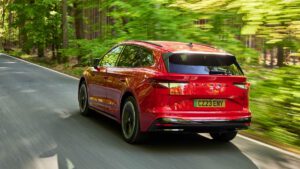
German luxury automaker Audi has slashed the asking price of its updated Q6 e-tron electric car, in the same week as it relaunched one of its most successful models, the A2, as a full battery electric vehicle that the company claims is the most efficient Audi model in the company’s history.
The company says the revised pricing of updated Q6 e-tron – which starts from $89,980 for the base model and up to $134,990 for the SQ6 Sportback e-tron, represents a price cut of up $22,800 – although it will be available for only a limited time.
Meanwhile, Audi says the new Audi A2 e-tron has been unveiled with four variants and three battery sizes, delivering electric driving range from 423 kilometres (WLTP) for the entry-level model and up to 646 kilometres (WLTP).
“The A2 e-tron is more than a new model: It represents Audi’s renewal,” hoped Audi CEO Gernot Döllner. “It shows how we are rethinking premium for Europe: using resources more intelligently without compromising on quality, technology, or customer experience.
“Developed for the needs of our European customers and built in Ingolstadt, it demonstrates our ambition to shape the future of premium mobility.”
The big headline from Audi’s point of view was the vehicle’s efficiency, boasting energy consumption of just 12.8 kWh/100 km thanks in part to a drag coefficient of 0.24.
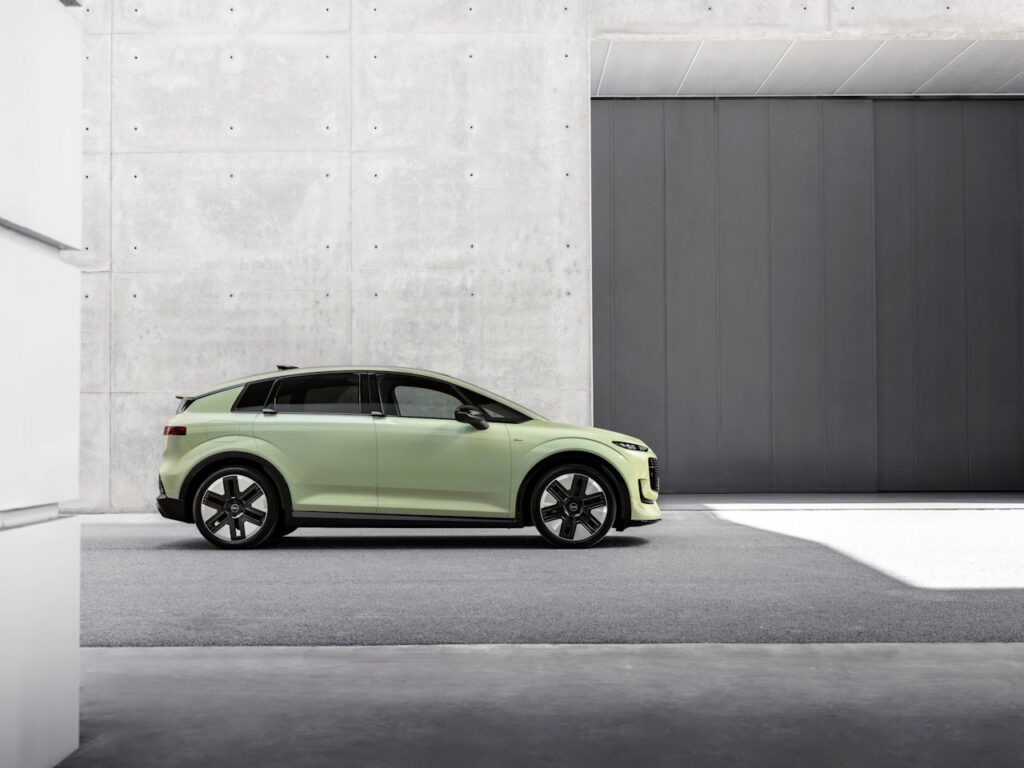
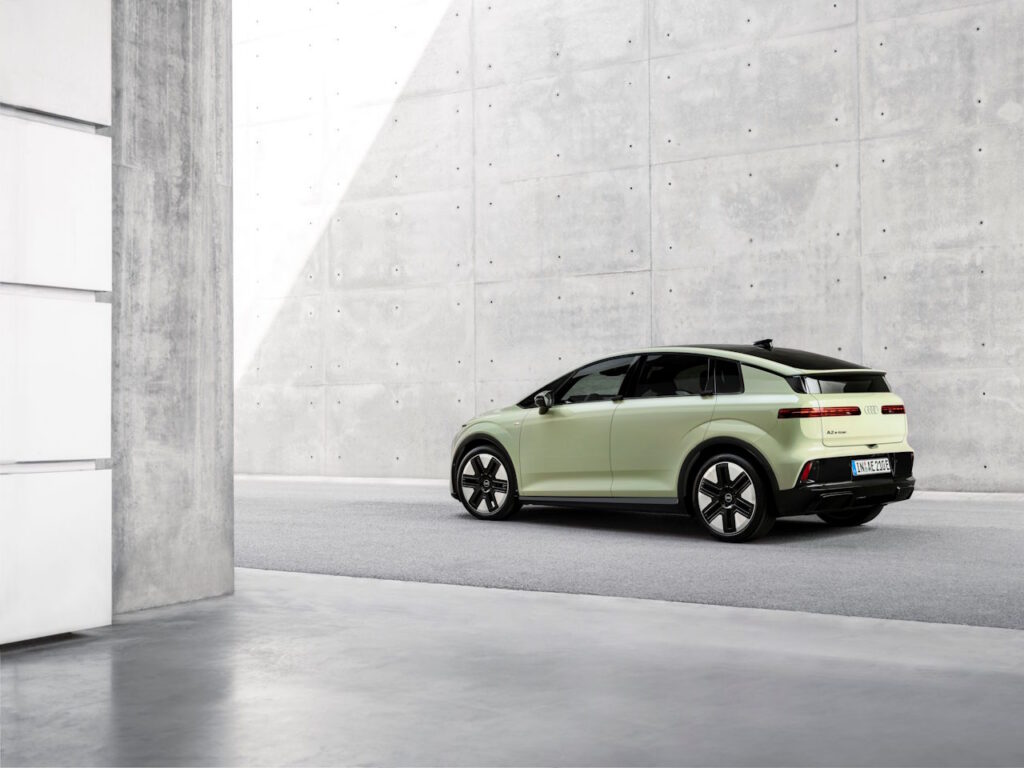
Four power levels and three battery sizes offer significant choice for customers, starting with the entry-level model, which boasts a 52-kilowatt-hour (kWh) lithium iron phosphate (LFP) battery putting out 125 kilowatts (kW) of power and 350 Nm of torque, with a range of up to 423 km (WLTP) and acceleration from 0-100km/h of 8.8 seconds.
A 61 kWh LFP battery powers the next variant, putting out 140 kW maximum power and 350 Nm of torque and a maximum range of up to 515 km with acceleration of 7.9 seconds.
Audi switches up the battery chemistry for the top two variants, both of which feature an 84 kWh nickel manganese cobalt (NMC) battery for extra performance.
The top-of-the-line A2 e-tron boasts maximum power of 240 kW and maximum electric torque of 545 Nm, and a maximum range of up to 630 km and acceleration of 5.7 seconds. Just below it is a slightly less powerful variant with 170 kW of power and 350 Nm of torque, which drops its acceleration down to 7 seconds but helps improve its maximum range to 646 km.
All four models boast varying levels of DC charging, from 100 kw and 105 kW for the bottom two variants, and 183 kW for the top two variants, which allows charging from 10 to 80 per cent in 29 minutes. With a smaller battery capacity, the 52 kWh and 61 kWh LFP batteries take around 25 minutes to reach the same state of charge.
Bidirectional charging is described as “available as an option” but supports both vehicle-to-load (V2L) and vehicle-to-home (V2H).
A single electric synchronous motor on the rear axle powers all four variants, and features four regenerative braking levels, including one-pedal driving. Audi didn’t provide complete measurements for the A2 e-tron, saying only that the car rides on a wheelbase of 2770mm, providing a spacious interior. This translates into rear storage of 396 litres, or up to 1,336 litres with the rear seatbacks folded down.
Up front, an 11.9-inch virtual cockpit is paired with a 12.8-inch curved touch display that has been fully oriented towards the driver. An augmented reality head-up display is available as an added option, capable of projecting speed, navigation instructions, and other information directly into the driver’s field of view.
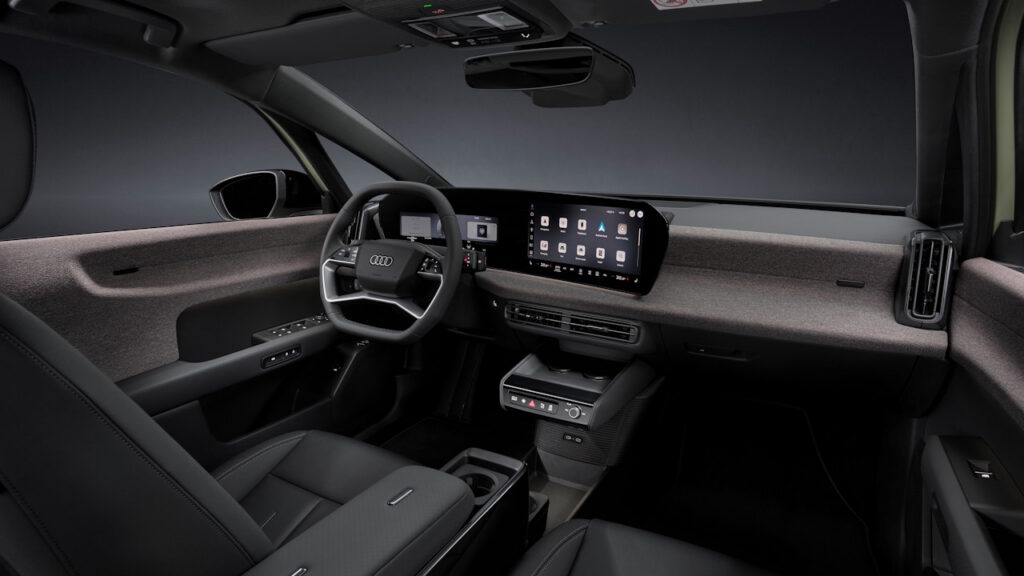

A full suite of driver assist functions are also included, depending on the vehicle’s specification and which added packages – including Tech, Tech plus, and Tech pro. Standard equipment includes adaptive cruise control, intersection assist, emergency brake assist, and swerve assist.
Despite a press release from Audi Australia, there is no mention of when the Audi A2 e-tron will make its way Down Under. All Audi promised was that deliveries are expected to commence in December of this year, starting with Germany, where it will start from €38,200, which converts to around $A62,000 at the time of writing.
The price steadily increases per variant to €41,900 for the 140 kW variant, €48,900 for the 170 kW variant, and €51,200 for the top-of-the-line model.
You can find The Driven’s detailed EV sales data here: Australian electric vehicle sales by month in 2026; by model and by brand.
And you can sign up for The Driven’s free daily newsletter and get the latest EV news and analysis delivered straight to your inbox.