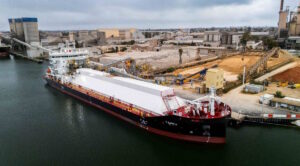
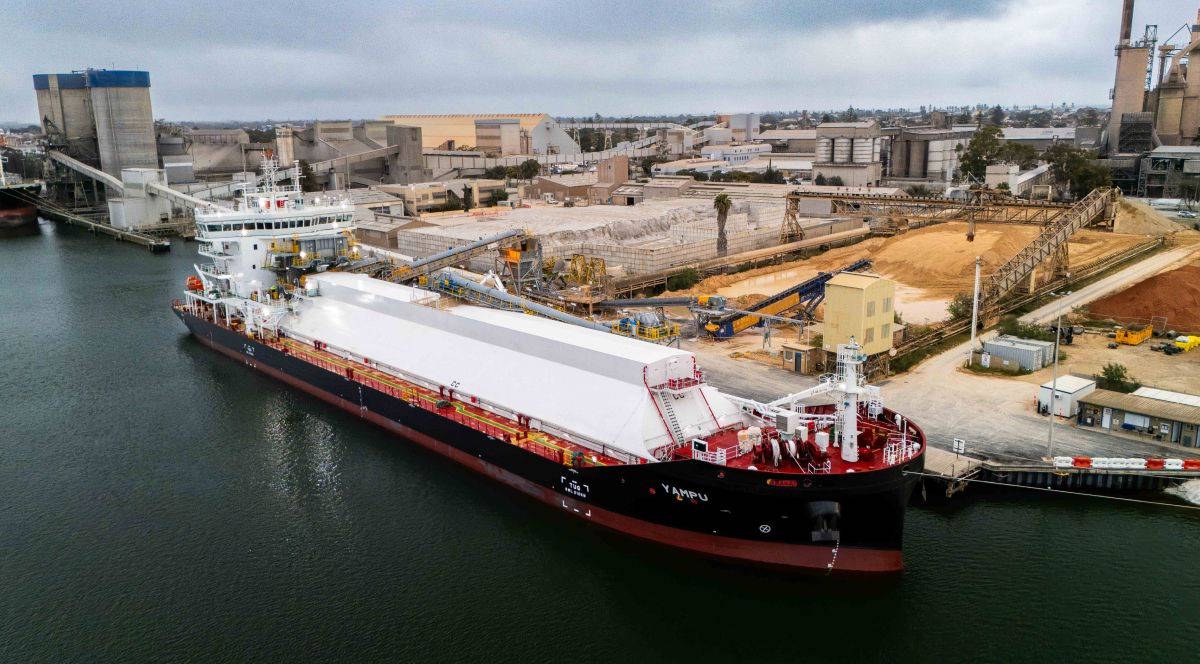
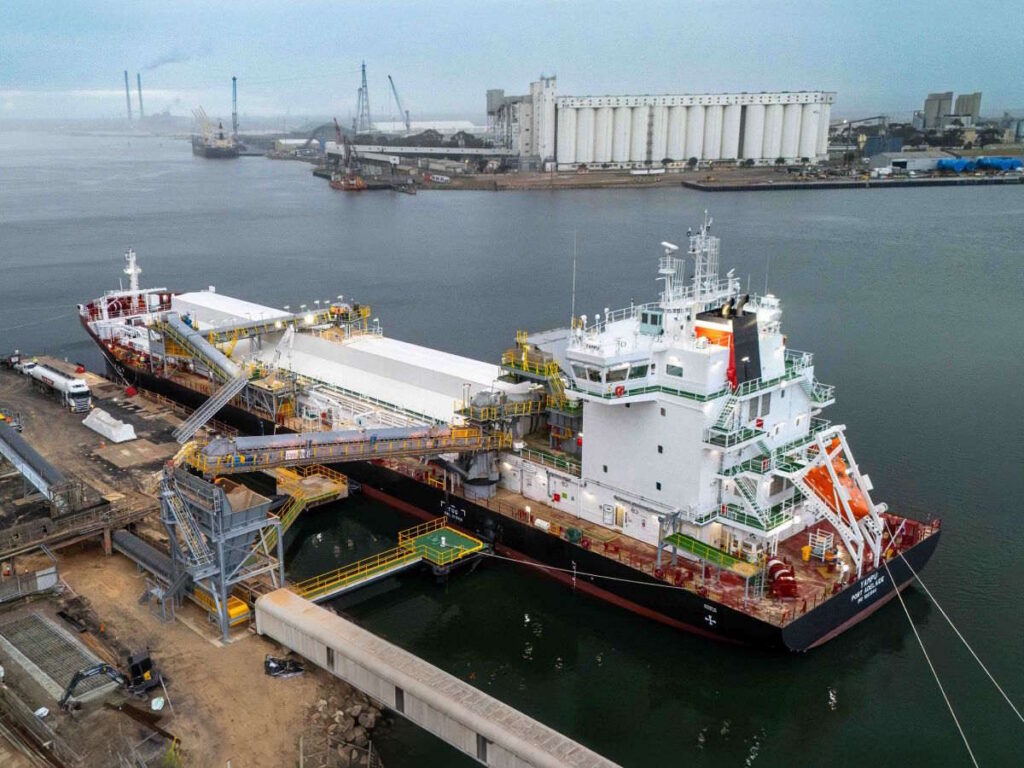
The world’s first hybrid battery-powered self-unloading bulk carrier has begun operations in South Australia, transporting limestone from the Yorke Peninsula to Adelaide to help secure the supply of locally manufactured cement.
The 125-metre MV Yampu, built by Canadian marine shipping company The CSL Group, will transport limestone from Australian masonry supplier Adbri’s Klein Point quarry on the Yorke Peninsula to the company’s Birkenhead cement manufacturing in Adelaide.
Named from the Narungga and Kaurna languages of South Australia, meaning “dolphin”, the MV Yampu will initially only operate on battery power 40 per cent of the time, relying on an onboard battery capacity of 6,758 kilowatt-hours (kWh) and putting out 600 kilowatts (kW) of power. Recharging will take place when docked at Adbri’s Birkenhead facility.
The MV Yampu is nevertheless designed to eventually operate on 100 per cent battery power.
The vessel is expected to reduce diesel consumption by half a million litres of fuel and Scope 1 emissions by 40 per cent, compared with the previous vessel, the MV Accolade II.
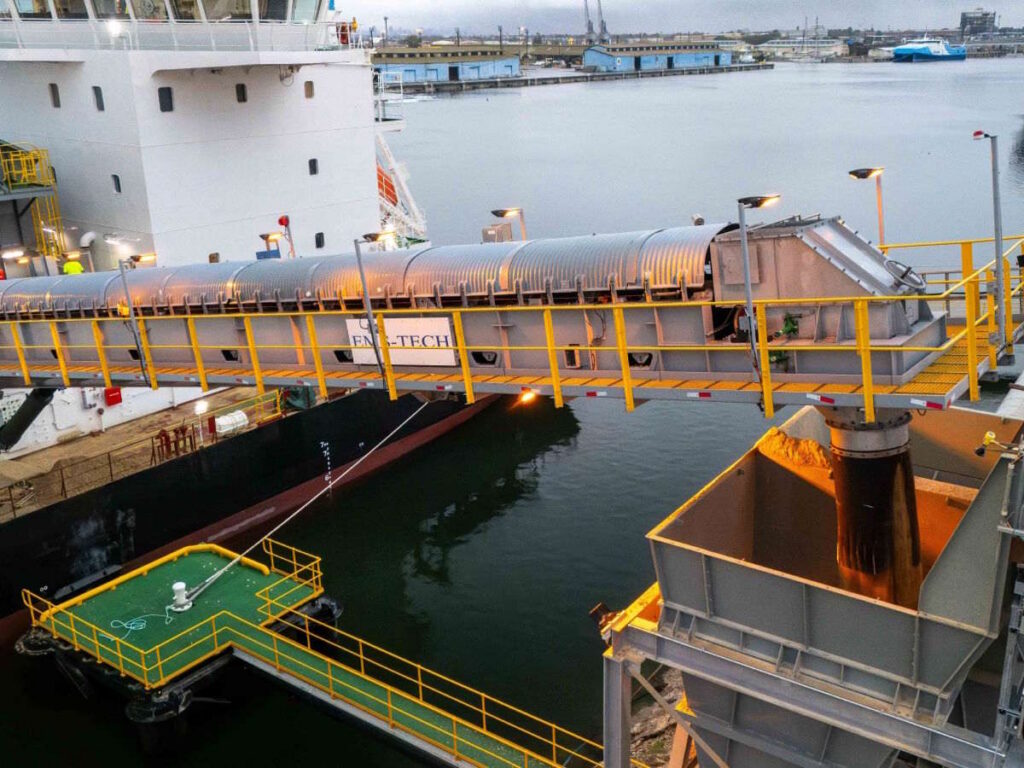
The ship boasts a capacity of 11,900 deadweight tonnes, tand is expected to transport approximately 2.7 million tonnes of limestone each year, increasing annual limestone transport capacity by 35 per cent. A fixed, single point of loading system is paired with a single hopper and a cargo-handling system that eliminates the need for shifting during loading.
“MV Yampu represents a significant step forward in our decarbonisation journey and demonstrates how practical innovation can deliver real environmental benefits while meeting the demands of commercial operations,” said Louis Martel, CSL’s CEO.
“Every improvement in cargo handling, every enhancement to onboard systems, and every operational innovation has been implemented with one goal in mind: helping our crews perform their work safely, efficiently and sustainably.
“Ultimately, this vessel showcases how smart design can improve performance.”
Sign up for The Driven’s free daily newsletter and get the latest EV news and analysis delivered straight to your inbox.