While it might not be the splashiest announcement to ever promise increased electric vehicle (EV) driving range, a new tiny sensor developed by American semiconductor giant Texas Instruments (TI) could do just that, as well as improve ride quality and efficient motor control.
TI, generally more well-known in Australia for manufacturing the scientific calculators that helped get most of us through high school, this week announced the launch of the TMCS2100-Q1 sensor.
Measuring in at less than 32 mm², the TMCS2100-Q1 is a first-of-its-kind traction inverter sensor that combines multiaxial measurement and a proprietary algorithm, which TI says helps to eliminate “the trade-off between precision and system size in traction inverter designs.”
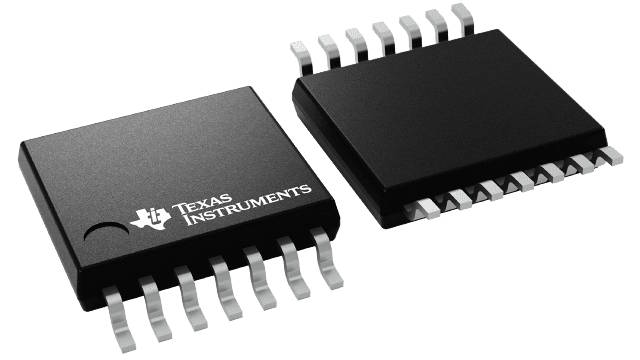
The sensor is the first to measure magnetic fields in both horizontal and vertical directions, delivering measurements 20-times more accurate than single-axis alternatives.
According to TI, this translates to a displacement error of less than 1 per cent at 0.4mm movement and as low as 0.25 per cent at 0.1mm.
Importantly, this sort of improvement has a direct correlation to how electrified vehicles perform, with the improved precision increasing EV powertrain torque control loop, maximising efficiency and power delivery across varying load and thermal conditions.
As a result, carmakers will be able to build electric vehicles that are more efficient, boast a longer range, and a smoother ride.
“For the first time, engineers have a Hall-effect current sensor that breaks through the limitations of existing solutions, which is especially critical as 800V architectures raise the bar for traction inverter accuracy,” said Jason Cole, vice president and general manager for sensing products at TI.
“The TMCS2100-Q1 was developed to give automakers a tool to build HEVs and EVs where tighter current measurement translates directly into longer range, smoother ride quality and more efficient motor control.”
The development of the TMCS2100-Q1 is a significant achievement. Traditional traction inverters were traditionally forced into a choice of trade-offs: inverters with a magnetic or C-core delivered accuracy but also weight and size; whereas coreless alternatives were smaller and lighter but compromised on precision due to displacement errors and magnetic crosstalk.
TI’s TMCS2100-Q1 addresses these trade-offs by significantly reducing vibration-induced errors by measuring magnetic fields in both horizontal and vertical axes at once. The sensor is also able to reduce errors and maintain accuracy by minimising magnetic crosstalk influence and torque ripple – often a cause of jerky acceleration, motor noise, and inefficient operation that combine to reduce range.
“By eliminating the magnetic core without sacrificing precision, the TMCS2100-Q1 sensor enables smaller, more power-dense traction inverter designs, helping automakers build EVs that are more efficient, longer-range and more enjoyable to drive,” the company explained.