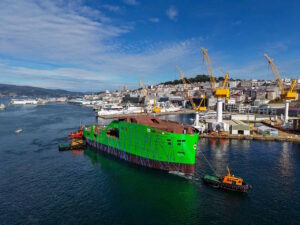
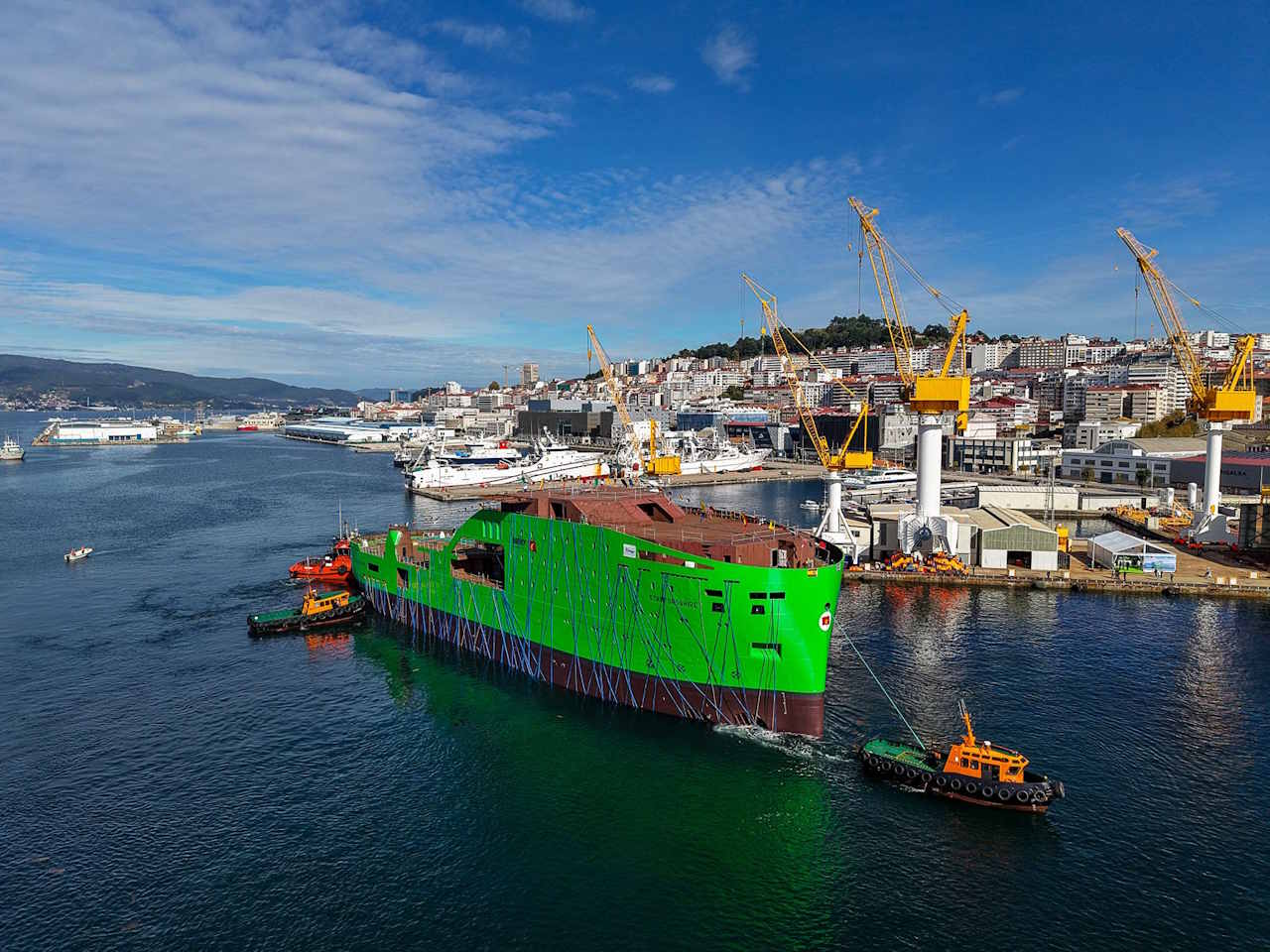
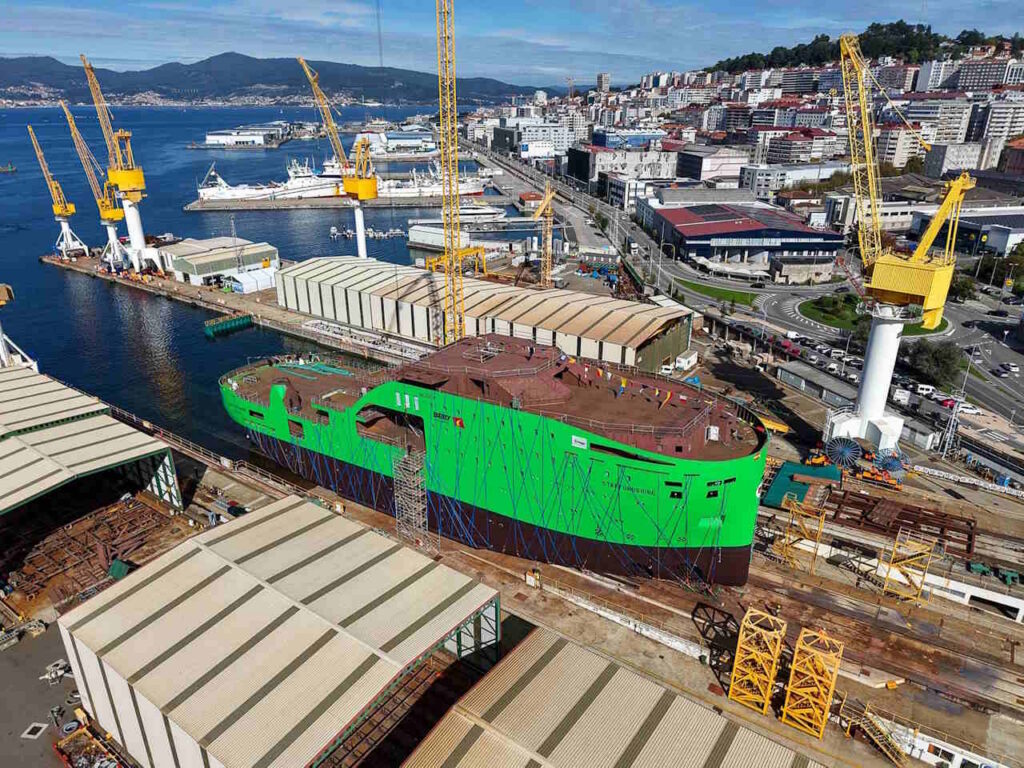
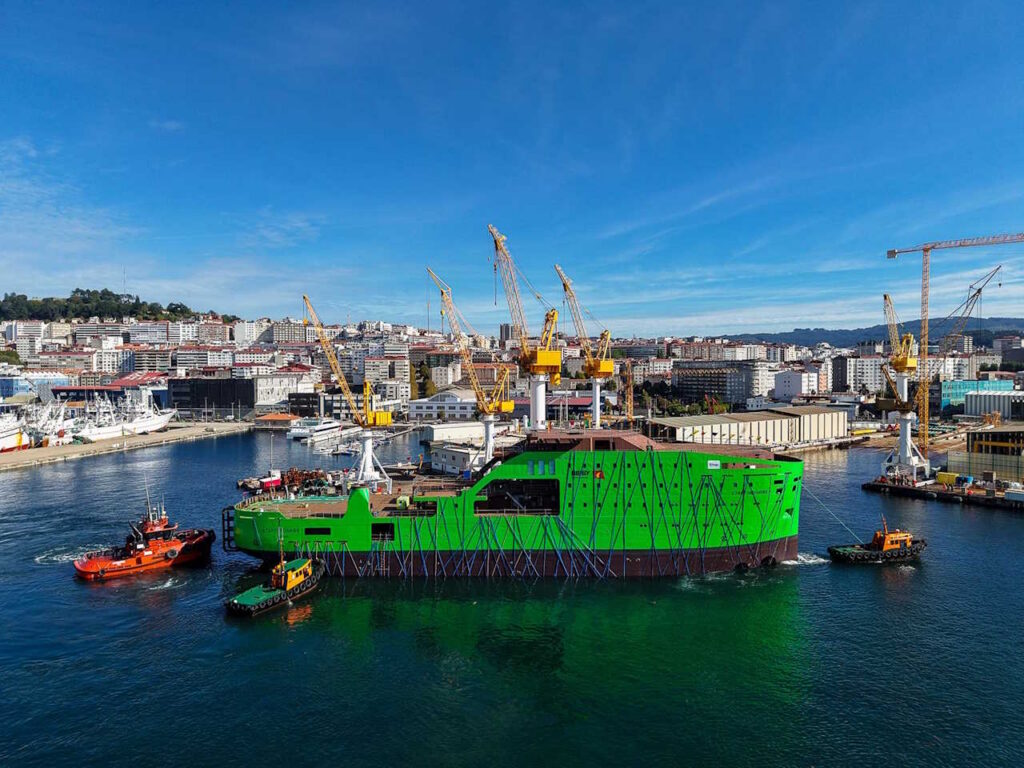
A first-of-a-kind so-called “battery-first” electric commissioning service operation vessel (eCSOV) has been launched in Spain by British maritime transportation firm Bibby Marine.
Bibby Marine, which traces its history back to the Bibby Line Group in 1807, describes the Staffordshire as the most advanced and efficient commissioning service operation vessel in the market.
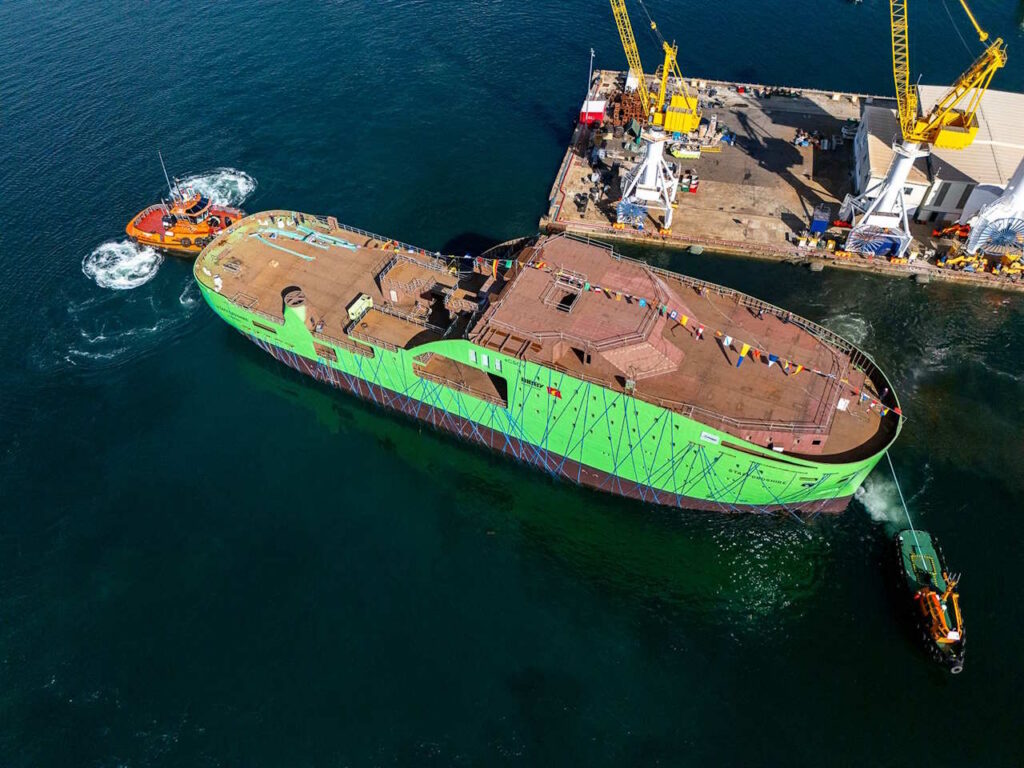
The Staffordshire has been designed by Bibby to revolutionise offshore wind farm operations was launched at the Armon Shipyard in Vigo, Spain on Saturday, and will soon be fitted out with its battery systems, a 22.4 megawatt-hour (MWh) lithium iron phosphate (LFP).
However, the Staffordshire eCSOV is not currently a fully battery-powered vessel, but what Bibby Marine describes as a “battery-first” vessel, with onboard dual-fuel methanol generators charging the batteries.
By switching to methanol, Bibby Marine says it can “significantly” reduce harmful emissions such as nitrogen oxides, sulphur oxides, and particulate matter, while also cutting carbon dioxide output. Looking to the future, Bibby also envisages a day when “green” or “eMethanol” is used, synthetic fuel that, when sourced sustainable, can make operations virtually carbon-neutral.
However, Bibby is also working on developing offshore charging compatibility which will utilise two AC/DC offshore power connection boxes capable, one each located forward and aft.
The current battery-first setup is capable of delivering 24 hours of battery “endurance” in good weather, and over 15 hours in rough conditions. On a full charge, the eCSOV will be bale to complete transits of up to 130 nautical miles, saving 155,000 tonnes of CO2 over its 25-year life span.
Bibby Marine expects the so-called “self-charging” mode to cut vessel operating costs by over 40 per cent, but this figure is expected to increase to as much as 70 per cent once the eCSOV is able to operate on offshore charging alone.
“The launch of Staffordshire is a proud moment for Bibby Marine and for everyone who has helped bring this vessel to life,” said Jonathan Lewis, group CEO at Bibby Line Group, the parent company of Bibby Marine.
“This is not just another vessel entering the water; it is a game-changing step towards cleaner, smarter and more efficient offshore operations. It shows what can be achieved when vision is matched by delivery – bringing together new technology, maritime expertise and a team committed to making change happen.”
The Staffordshire boasts accommodation for 120, including 84 single or large double cabins fitted out with internet, telephone, and video entertainment such as video-on-demand and satellite TV.
The vessel also features 3 client offices, 2 meeting/conference rooms, a recreation dayroom, mess, reception room, hospital, male and female changing rooms, and a gymnasium. A large helideck is situated at the forward end of the vessel.
Sign up for The Driven’s free daily newsletter and get the latest EV news and analysis delivered straight to your inbox.