China’s Xpeng appears to be a company in a hurry. Founded in 2014, Xpeng may have only been delivering cars for the last seven years, yet by the end of 2025 it ranked number 7 in worldwide BEV sales and has already delivered over one million vehicles.
Xpeng are also rapidly moving into AI, developing everything from robotaxis, vertical take-off and landing (VTOL) ‘flying taxis’, autonomous car tech and even humanoid robots.
In that vein, Xpeng ran a ‘brand day’ event in Melbourne on Tuesday, where it made a wide-ranging set of announcements in all these areas.
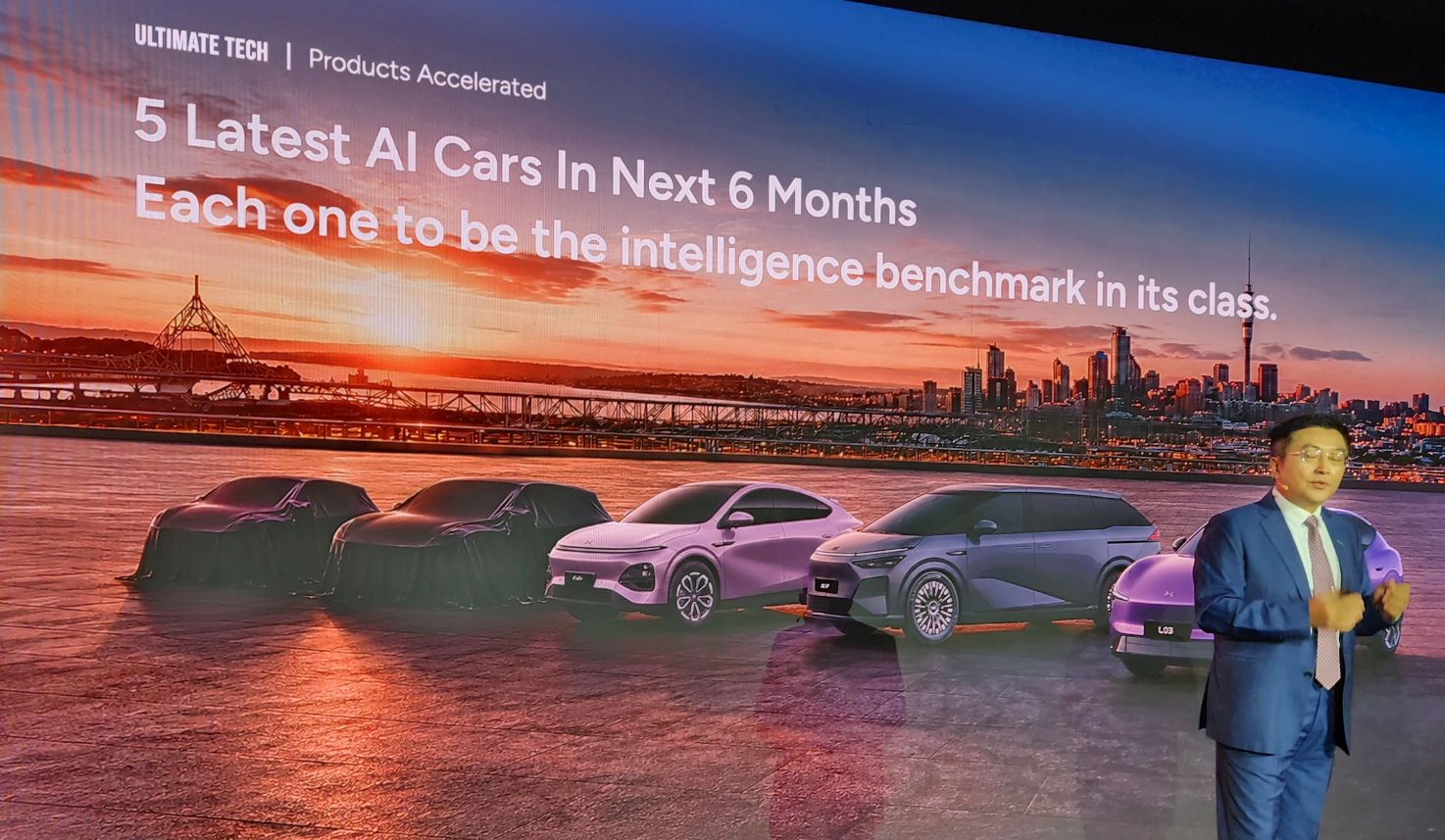
First-up, Xpeng announced they are expanding their current sole Australian vehicle offering (the G6 BEV) to five, with four all-new models to appear in showrooms over the next six months with the updated G6, for which The Driven has given its first-impressions here.
Additionally, Xpeng announced they were expanding their existing 24 outlets in Australia/New Zealand to around 50 with the aim of placing most Australian customers within a 40-minute drive of an XPENG showroom.
Xpeng also announced they planned to address the oft-perceived issue with new vehicle brands: the timely delivery of service and parts.
This is being done through delivery of a training program for technicians and dealer staff, establishing three support offices (Melbourne, Sydney and Brisbane), a 24/7 help line and a large parts warehouse in Melbourne.
Servicing is also not going to be limited to Xpeng dealers: authorised and independent repairers will soon be able to access eligible XPENG service and repair information under MVIS (the Motor Vehicle Service and Repair Information Sharing Scheme) — meaning owners can choose an independent workshop for service and repair work.
Circling back to the new models being launched: two were formally shown at the brand-day event, these being the X9 luxury seven-seat BEV people mover – priced at $89,900 before on-road costs – and the L03 medium SUV/crossover BEV.
Whilst the other two models were shown in a ‘black room’ to the attending media – details of these are still under embargo until Xpeng release them formally later this year. What can be released at this stage is that one will be launched in November this year and the second early in 2027.
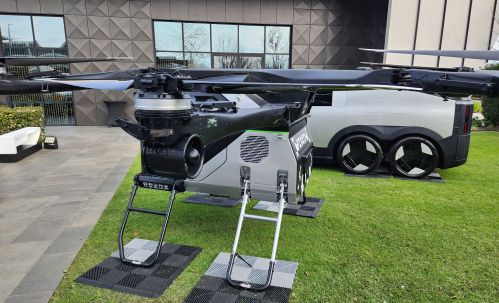
Also on show were Xpeng’s vertical take-off and landing (VTOP) ‘flying car’ and the vehicle that caries it – dubbed the ‘Land Aircraft Carrier’.
Xpeng also announced plans to accelerate their expansion in Australia by launching all future new models in sync with China, plus to move rapidly into commercialising leading edge vehicle AI applications such as autonomous vehicle tech, robotaxis, flying cars … and even humanoid robots.
That last was shown to the audience in a video as moving with an almost human-like gait and natural looking arm movements. Named ‘Iron’, the robot is said to have the ‘ability to reason and decide autonomously rather than follow pre-programmed routines, with human-like motion and interaction’. Xpeng expect to start rolling examples of Iron out as AI-powered retail sales assistant in Chinese stores in Q1 2027 and in selected overseas stores later that year.
Summing up: the overall impression from the event is Xpeng seem to have taken a leaf out of Elon Musk’s playbook with massive expansion plans beyond just vehicles based on an AI future.
However, Xpeng also seem to have learnt from Tesla’s stumbles by building a more traditional R&D based company rather than rely on the single-minded vision of an individual (and arguably massively flawed) genius.
We shall have to wait and see which of these two similar, yet very different, visions of an AI and robotic future rolls out more smoothly and/or lasts.
You can find The Driven’s detailed EV sales data here: Australian electric vehicle sales by month in 2026; by model and by brand.
And you can sign up for The Driven’s free daily newsletter and get the latest EV news and analysis delivered straight to your inbox.