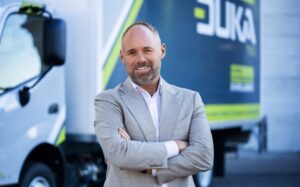
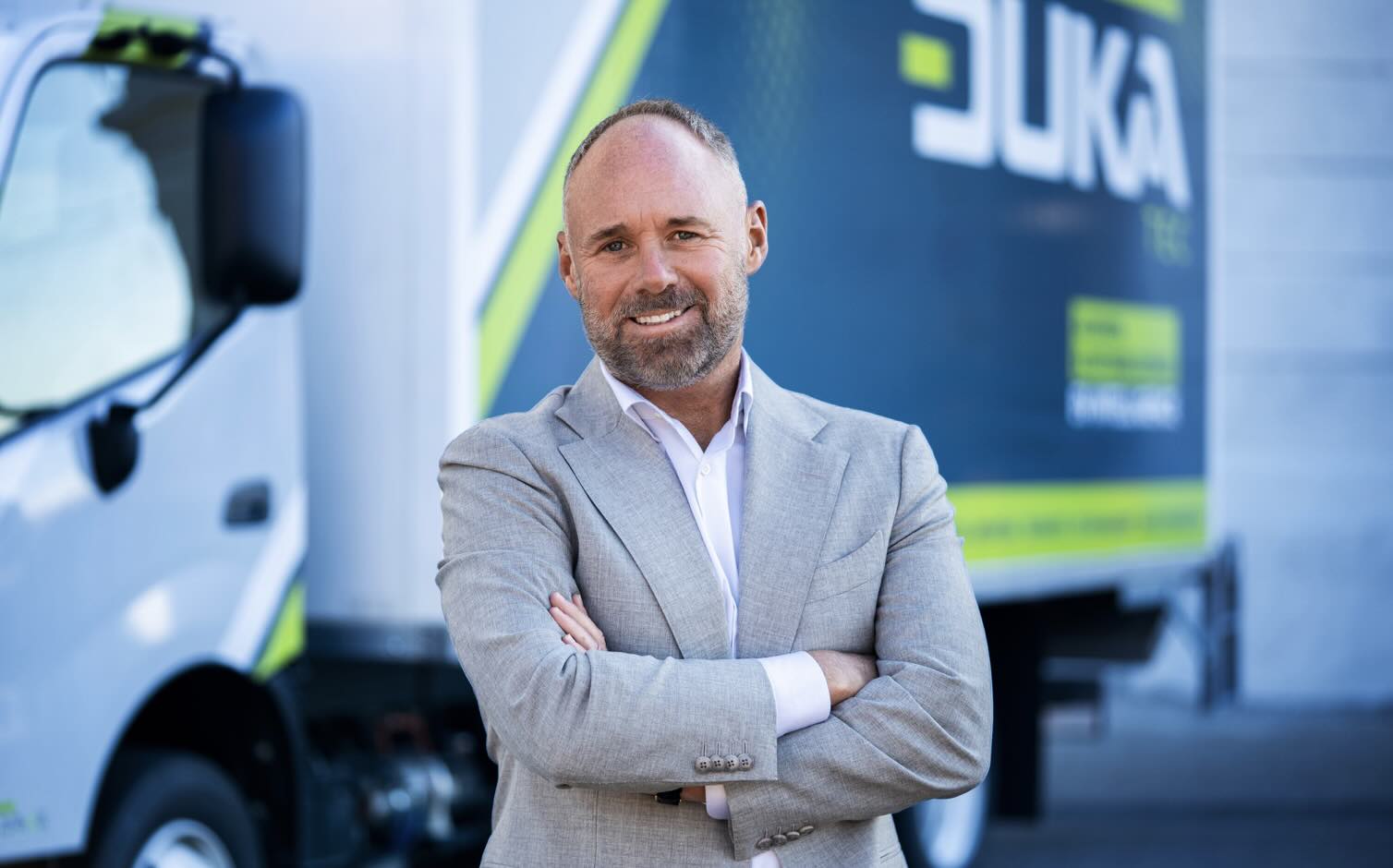
Australia electric truck pioneer Tony Featherstone is having a second crack at the global market, with the launch of a new company that is offering electric drive-trains and software for the burgeoning delivery truck market.
The now Miami-based Featherstone is seeking $10 million for his new company Duka Tec, which he describes as a “continuance” of the concept he rolled out with SEA Electric, which he founded more than a decade ago in Melbourne before moving to the US.
The key difference, however, is that Duka Tec will be licensing its technology rather than doing its own manufacturing, avoiding the need for huge amounts of working capital that was ultimately the undoing of SEA Electric, which he sold in 2024, but which entered administration in 2025 after the Trump administration reversed course on electric transportation.
Featherstone is confident the licensing model will succeed, pointing to extraordinary success of US giant Cummins – which specialises in diesel power trains – and the plunging cost of electric transport, and the huge boost in interest since the Iran war lit a fire under fossil fuel prices.
“It is now cheaper to buy an electric commercial vehicle for urban applications,” Featherstone told The Driven on Tuesday. “There is a difference for long distance trucking because of the need for more batteries and more weight, but for anything from delivery vans to small prime movers doing container or retail logistics, electric is cheaper than diesel.”
Featherstone says that a decade ago, the payback for electric trucks was 10 years or more, but that has now fallen to 3 to 5 years, thanks to the falling costs of electric technologies – driven largely by China – and the rising cost of diesel.
But he says the shift to electric is also requiring a significant demand in Ai-driven software, to manage fleet data, operations and diagnostics, and that companies based in the US and or Australia will have a significant advantage in this respect that China-made systems.
“SEA has proven the operation ability of electric trucks, and the fuel crisis has escalated demand and the need for protection, particularly in countries like Australia that are so reliant on imported diesel,” he says.
So much so, that Featherstone that the new company’s business will be split around 50-50 between the US and Australia, although it is also pursuing licensing agreements in other countries, including Dubai.
“We will be the technology provider,” Featherstone says. “We don’t need to do the manufacturing. It will be a capital light business model.”
Duka Tec says legacy truck makers like Isuzu, Hino, and Fuso have found it difficult to innovate, but its technology can provide a faster route to electrification at a fraction of the cost of developing their own electric drivetrains and systems.
“The scale of the opportunity is huge,” it says. “250 truck makers already produce 3,500 models, ranging from 4.5-tonne delivery trucks to metropolitan prime movers. “Duka Tec aims to electrify 25% of Australia’s new medium-duty trucks by 2034.”
“Our technology is light, low cost and efficient, and designed specifically for urban delivery trucks,” Featherstone says.
“The reality is many truck makers simply don’t have the volumes to justify developing electric drivetrains for every model. We supply the electric drivetrain, the software and the support, and the truck maker sells the truck. It means they can bring their models to market as electric, much faster and cost effectively.”
The company says it has a service agreement with a major global logistics operator, is in conversations with some of the largest fleet operators in Australia and the US and is in discussions to partner with the world’s largest truck makers, including Japanese manufacturers.
The funding will accelerate ĐUKA Tec’s work with OEMs and assembly partners around the world, enabling the company to bring more truck models onto its platform, grow its engineering team and build out its AI and software platform.
“ĐUKA Tec is generation two. It takes everything we learned at SEA Electric and builds on it with a capital-light licensing model, AI-driven technology and software we’ve rebuilt from the ground up,” Fairweather says.
“The tipping point has already happened. The question now is how fast we can electrify this segment, with the connectivity and control fleet operators want.
“With proven technology, an experienced team and a capital-light model, ĐUKA Tec has the potential to scale quickly, delivering cheaper, cleaner freight and a more secure, independent for transport, in Australia and around the world.”