The MG badge has come to represent a few very different things over its long history. For some, it still evokes lightweight British sports cars. For many Australians today, however, MG is better known for affordable Chinese-built hatchbacks and SUVs. Personally, for me, it’s a bit of both.
I step into the MGS6 as the first MG I have driven myself, though my colleagues at The Driven have covered MG’s recent electric expansion including the most recent MG4 Urban.
The MGS6 appears to be an attempt to move beyond that budget-focused reputation without abandoning the value that has helped make the brand so successful.
I spent a week with the all-wheel-drive model, using it as the everyday vehicle for my family of four with two young children, to see how it compares to some of the more established electric SUV models already in the Australian market.
The MGS6 is not especially radical or exotic, but neither is your dishwasher, yet it still makes family life considerably easier. And that is what I think MG are pitching with the S6 – an EV that is spacious, comfortable, well equipped and easy to live with, something most families will value.
The range opens with the rear-wheel-drive MGS6 EV Essence at $49,990 drive-away, while the dual-motor Essence AWD costs $56,990 drive-away. Both versions use the same 77kWh nickel-manganese-cobalt battery.
The rear-wheel-drive model produces 180kW and 350Nm, with a claimed WLTP range of 530km. The AWD raises output to 266kW and 540Nm, but the added motor cuts the official range to 485km.
The AWD can accelerate from zero to 100km/h in 5.1 seconds, compared with a little over seven seconds for the rear-drive version. It also adds a panoramic glass roof, but the two variants otherwise share much of the same equipment.
Unless you particularly want the extra acceleration, the all-wheel-drive traction, or the panoramic roof, the cheaper rear-wheel-drive version in my opinion would be more than sufficient for most urban families, while keeping an extra $7k in your pocket. The RWD option also offers more range and retains nearly all the features that make the MGS6 appealing.
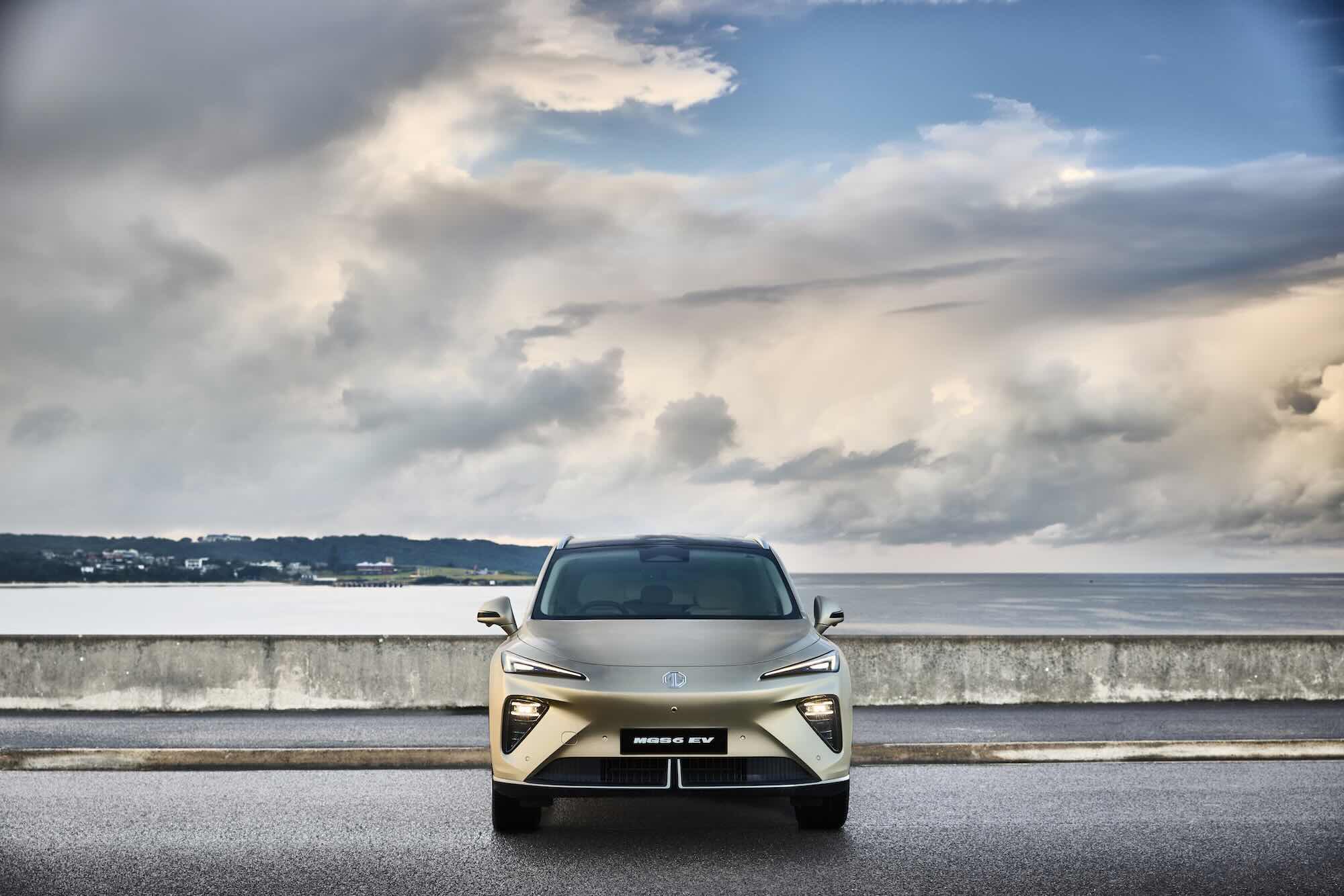
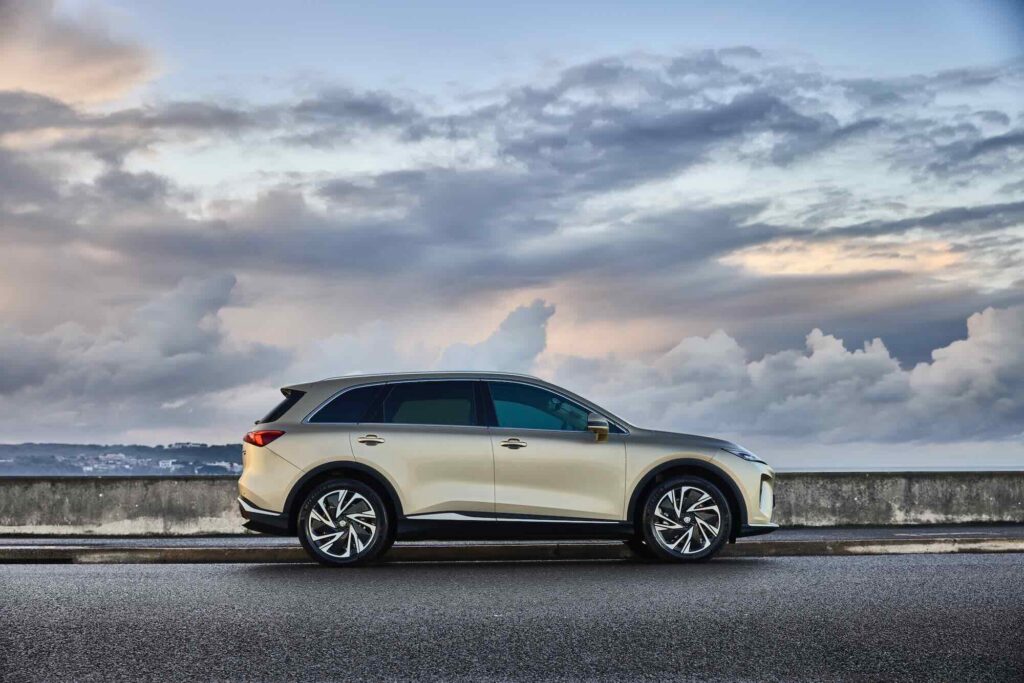
At a little over 4.7 metres long and more than 1.9 metres wide, the MGS6 is a proper mid-sized SUV. In the increasingly strange world of modern EV styling, the MGS5 design is almost refreshingly neither especially memorable nor offensive. No illuminated grills, it just looks like a conventional family SUV with normal door handles.
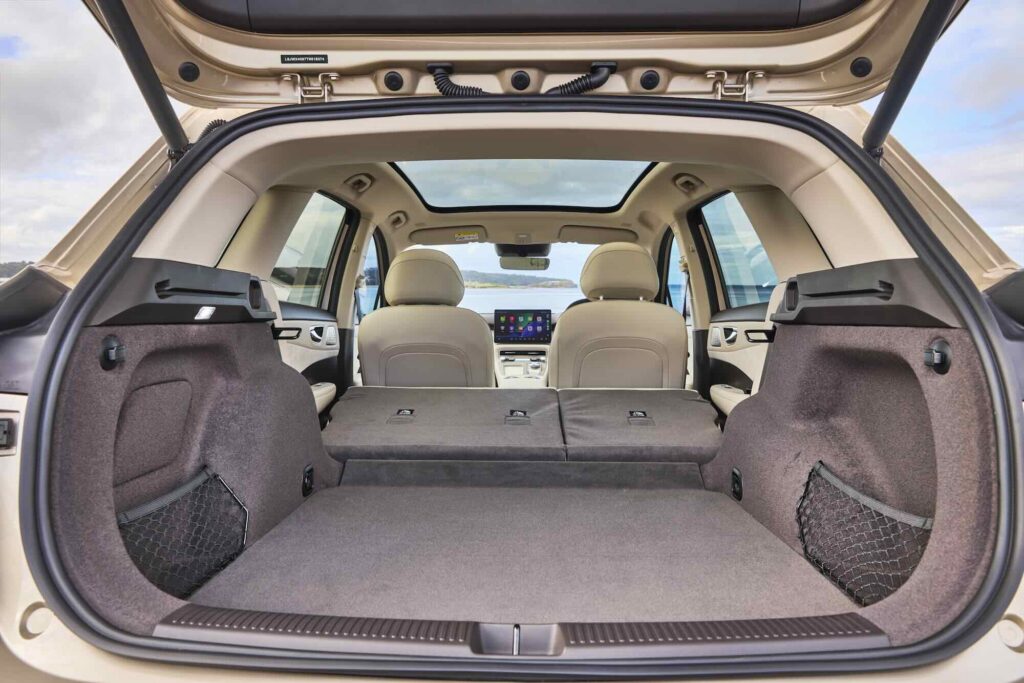
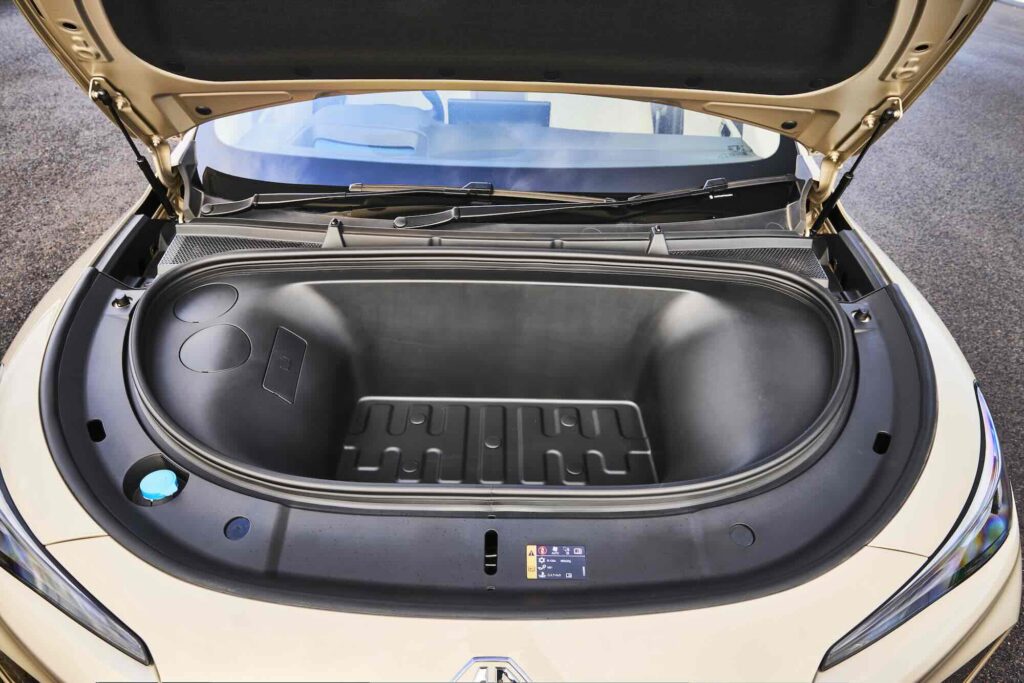
The boot provides 581 litres of capacity with the rear seats upright and 1,690 litres with them folded. There is disappointingly little useful space beneath the boot floor. MG does compensate with a proper front storage area. The rear-wheel-drive version gets an 86-litre frunk, while the AWD’s front motor reduces that to 67 litres. It also means opening the bonnet reveals a neatly integrated EV rather than the usual assortment of orange cables and plastic covers.
The second row is one of the MGS6’s strongest features. I was really impressed with the amount of space in the back. At 198cm tall, I could sit between two installed child seats without my head meeting the roof. The long wheelbase and completely flat floor also help make the cabin feel spacious. Rear passengers also receive air vents, USB-C ports and heated outboard seats.
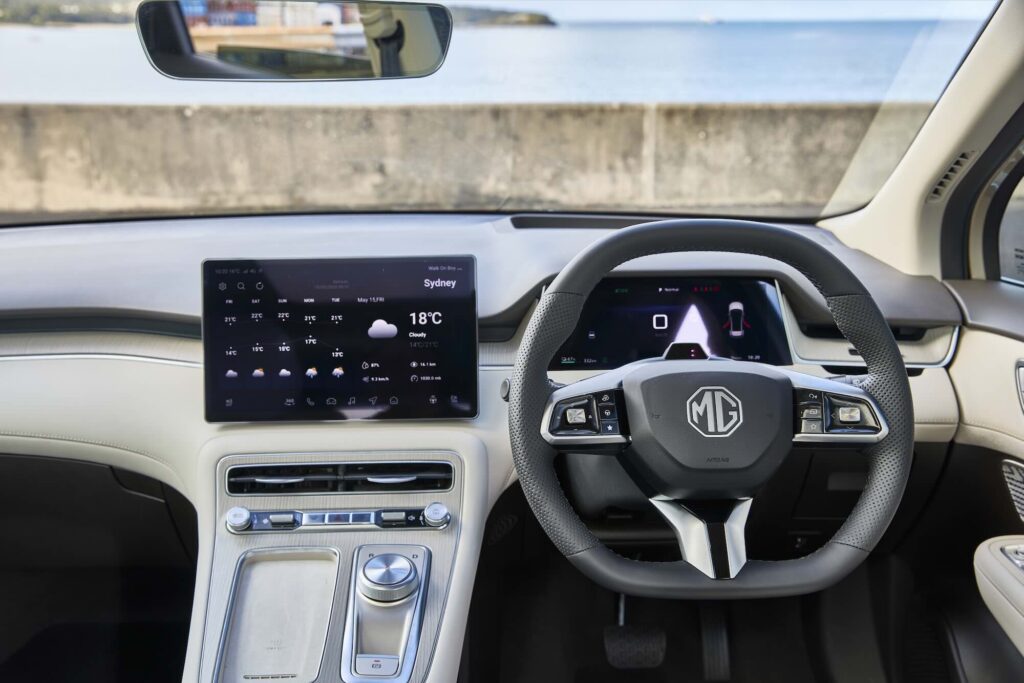
The design at the front of the cabin is neat and contemporary without being overly stark. Material quality feels generally good, and the driving position is comfortable.
The central 12.8-inch touchscreen is joined by a 10.25-inch driver display and a head-up display. Wireless Apple CarPlay and Android Auto are standard, along with wireless phone charging, satellite navigation and an 11-speaker audio system. The presence of physical button for climate and volume controls is a welcome addition.
Regular listeners to The Driven Podcast, which I co-host with Sarah Aubrey, will know I prefer physical buttons. People sometimes ask why I don’t just use voice commands. Because I don’t want to.
The built-in navigation system can place directions in the driver display, but smartphone navigation does not appear to receive the same integration. That is unfortunate because most owners (including myself) will for the most part use Google Maps or Apple Maps, leaving the native system to enjoy the digital solitude experienced by built-in navigation systems everywhere.
Steering is light, visibility is good and its controls require little acclimatisation. Around town, it feels calm and approachable. This isn’t a sports car nor is it pretending to be, but nor does it need to be.
There are Standard, Comfort and Sport drive modes, although the absence of adaptive suspension means the differences are largely confined to accelerator response and steering feel. Comfort mode suits the car particularly well. It smooths the response from the accelerator and makes the AWD’s considerable performance easier to meter out in everyday traffic. Sport mode adds urgency, but the MGS6 never becomes a particularly engaging driver’s car.
The MGS6 comes with MG Pilot, incorporating features such as adaptive cruise control, blind-spot monitoring, lane-departure warning and autonomous emergency braking. The basic technology works as expected. The default warning settings are less successful.
The speed-limit alert is eager to intervene and begins chiming as soon as the vehicle edges fractionally above the detected limit. The result is a car that can feel deeply disappointed in the driver for travelling at 61km/h.
This is hardly an MG-only issue. Excessive warning sounds have become one of the big talking points of modern cars, with some manufacturers seemingly working on the assumption that safety is best achieved by replicating the acoustic atmosphere of a casino.
We discuss this issue of ADAS with a former pilot in the most recent episode of The Driven Podcast.
MG deserves some credit for making the settings reasonably easy to manage. Drivers can save a preferred combination within the MG Pilot custom menu and recall it through a quick screen shortcut after starting the car.
It would be better if those preferences remained active permanently, but the workaround is less irritating than the menu-diving required in some rivals.
In terms of size, price and intended use, the MGS6 inevitably finds itself compared with the likes of the Tesla Model Y, BYD Sealion 7, Kia EV5 and Zeekr 7X. It does not clearly defeat those vehicles in every area.
The Tesla has a more established charging ecosystem and excellent efficiency. The Zeekr offers faster charging and a more premium feel. The BYD presents a strong equipment and performance package, while the Kia is another particularly practical family option.
The MG’s strength is that it combines many of the things buyers want without demanding a major compromise elsewhere.
It has useful range, plenty of interior space, strong standard equipment and a comfortable driving experience. It is also priced below several of its most obvious rivals, particularly in rear-wheel-drive form.
The cabin is comfortable and well equipped, the second row is genuinely family-friendly and the driving experience is smooth and undemanding. The rear-drive model also offers a compelling combination of 530km WLTP range at a sub-$50,000 drive-away price.
There are some weaknesses. The maximum charging speed is only average by the latest standards, the regenerative braking settings could be better integrated, and the safety alerts remain irritating until customised.
The MGS6 may lack a single spectacular headline feature, but it does the ordinary work of being a car remarkably well. Perhaps that is the headline feature.
For more reviews, please click here, and for a run-down on all EV models available in Australia, please go to our Compare EVs page.
Sign up for The Driven’s free daily newsletter and get the latest EV news and analysis delivered straight to your inbox.