Australia has a well-documented love affair with the ute.
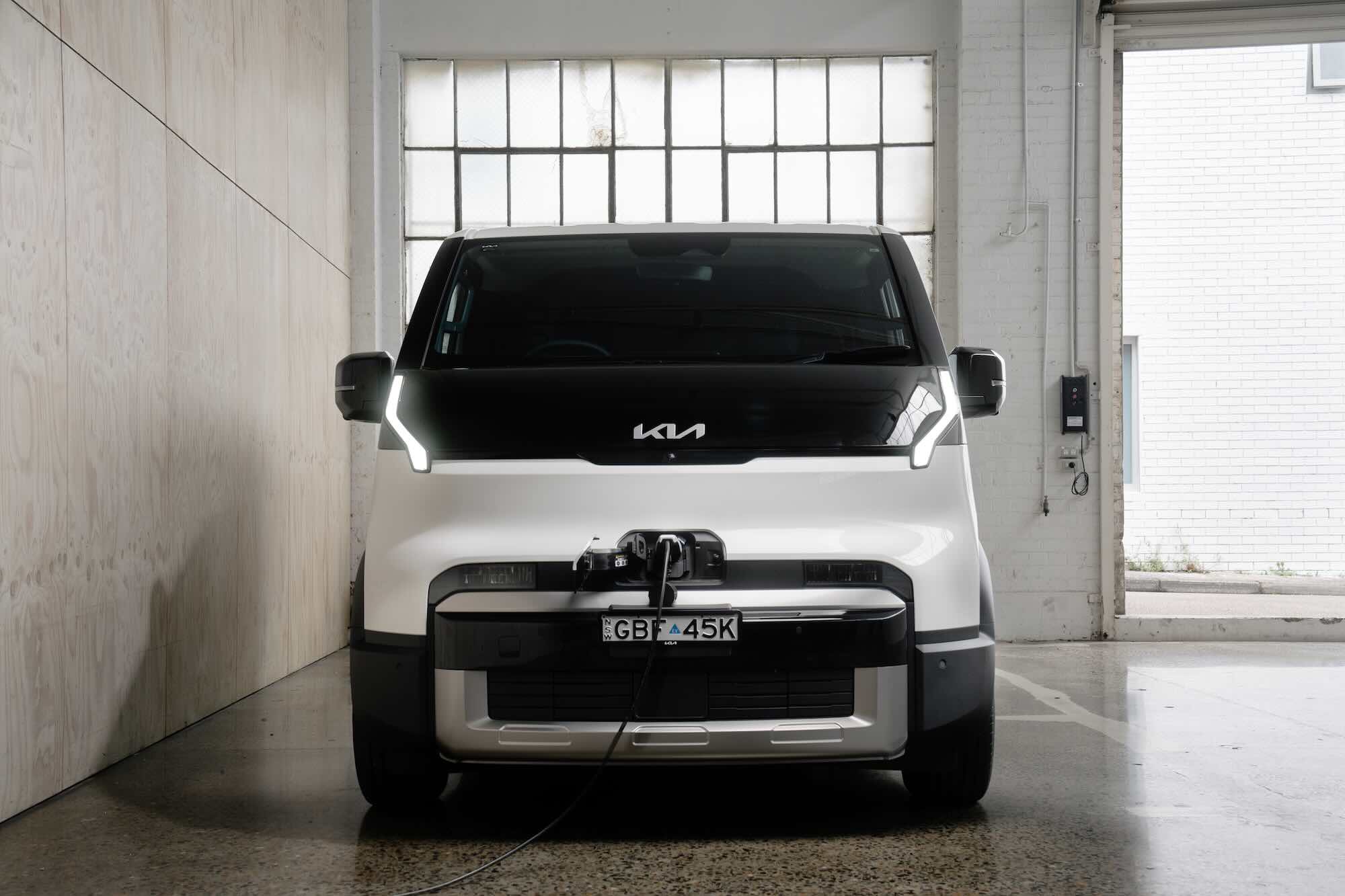
For every van sold locally, around seven utes find homes in driveways, job sites and supermarket car parks. Yet after spending time behind the wheel of Kia‘s new PV5 electric van, it’s hard not to wonder whether some of those buyers might actually be better served with something that has a roof over the cargo area.
Of course, an electric van like the PV5 isn’t a replacement for every ute. If you regularly tow heavy loads, head off-road, or genuinely need a dual-cab’s capabilities, you’ll know who you are.
But I suspect there’s also a sizeable group of Australians who have convinced themselves they need a ute when what they really need is space.
One of the biggest advantages of the PV5 is that it wasn’t originally conceived as a diesel van. Built on Kia’s dedicated E-GMP.S architecture, the battery pack sits beneath the floor, helping free up interior space while creating a more open cabin environment.
Starting from $55,990 before on-road costs for the Cargo variant, it also enters the market as one of Australia’s more affordable electric vans in a relatively small electric van market, which includes Ford’s E-Transit, LDV’s eDeliver, Peageot’s e-Partner, VW’s ID. Buzz, and Renault’s Kangoo.
The dashboard features a 7.5-inch digital driver display and a large central infotainment screen running a new operating system developed specifically for the PBV range. While it looks different from the software found in models such as the EV5 and EV9, it remains intuitive enough on first acquaintance.
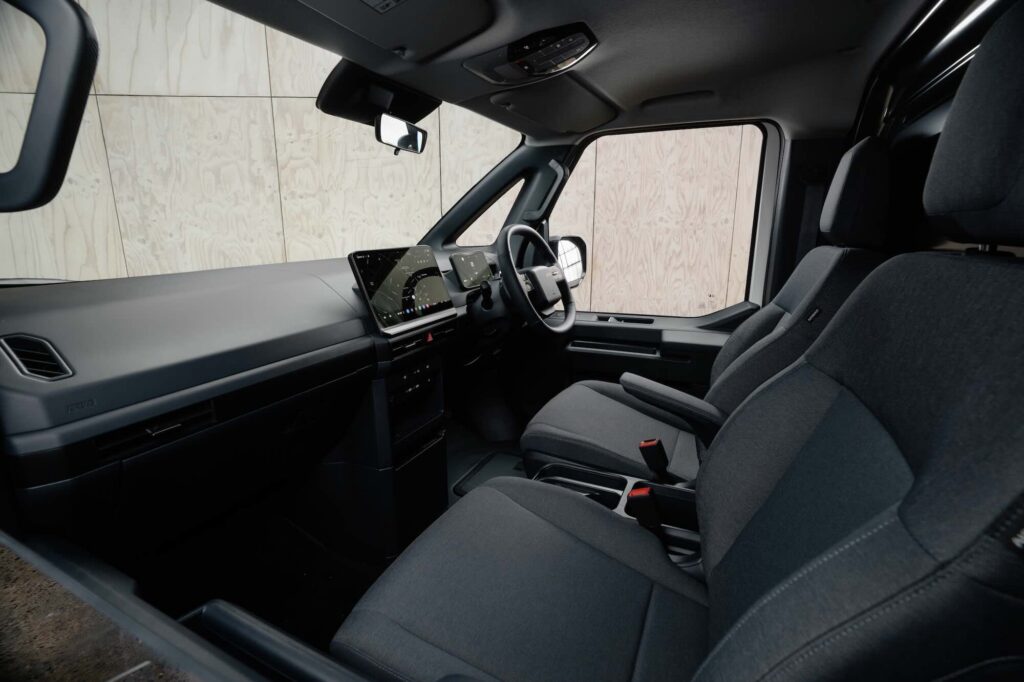
There are plenty of storage spaces, two USB-C ports, wireless phone charging, a dashboard shelf, and a traditional glovebox. The column-mounted gear selector also frees up additional cabin space. The floor is flat, and the driving position is upright and commanding. Visibility is excellent thanks to the huge windscreen and additional windows on either side of it.
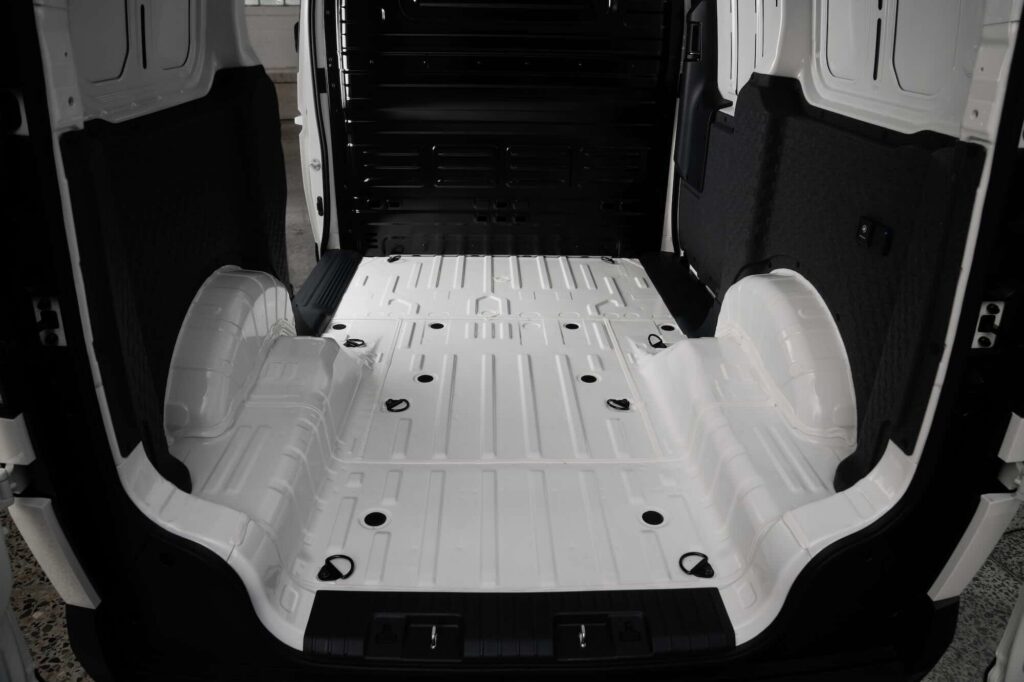
The PV5 Cargo offers up to 4,420 litres of cargo capacity and a maximum payload of 740kg, while the electric platform also enables one feature that many tradespeople may find particularly appealing: vehicle-to-load (V2L).
With up to 3.6kW of V2L power available from the rear of the van, the PV5 can power tools, equipment and appliances directly from its 71.2kWh battery pack, which is paired with a 120kW front-mounted electric motor producing 250Nm of torque.
Kia claims a WLTP driving range of up to 416 kilometres, with DC fast charging capable of taking the battery from 10 to 80 per cent in around 30 minutes.
The PV5 is clearly aimed at urban operators, fleet users and last-mile delivery services rather than long-distance touring. For that sort of work, 416 kilometres is plenty.
Driving the PV5 for the first time, the most striking thing isn’t its performance. It’s the quietness. Anyone who has driven an old diesel commercial vehicle knows exactly what I’m talking about. The rattles, the vibration, the engine noise, the feeling that every mechanical component is working extremely hard simply to exist.
The steering is very light and clearly tuned for urban delivery work rather than driver engagement. While it lacks the sharper responses of something like Ford’s E-Transit Custom, the turning circle of 11 metres makes the PV5 easy to place in traffic and surprisingly stress-free to manoeuvre around tight city streets.
In an interview with Kia’s executive team including CEO Dennis Piccoli, Kia said it initially viewed the PV5 as a niche product aimed largely at existing EV buyers. But after displaying the van at events including the Australian Open and Melbourne Motor Show, he says the feedback has come from an entirely different audience.
“Initially, we probably were more so into just the EV space,” Picolli said. “But through this pre-launch phase we’re broadening that scope.” Kia says it’s receiving interest not only from fleets but also directly from tradespeople, small businesses and owner-operators who may never have previously considered an electric vehicle.
Perhaps the strongest argument for the PV5 isn’t environmental at all. Kia says they are producing ownership costs showing savings running into the thousands of dollars over a typical ownership period.
“We initially thought we were targeting the two or three per cent of the market already interested in EVs. What we’ve found is we’re actually competing against diesel vans.”
Another big advantage is the service intervals of 30,000km or two years, which significantly reducing downtime for operators whose vehicles earn their living on the road.
Interestingly, Kia doesn’t expect fleets to be the sole driver of demand. While large corporate and government fleets continue to trial EVs cautiously, Kia believes smaller operators may move faster.
The company says much of the early interest has come from tradies and SMEs looking at the practical benefits of an electric van rather than making an environmental statement. Vehicle-to-load capability, secure cargo storage and lower running costs appear to be resonating just as strongly as the electric drivetrain itself.
The Kia PV5 won’t replace Australia’s beloved dual-cab ute overnight, with many buyers genuinely needing the towing capability, off-road performance or payload offered by larger utility vehicles. But it does raise an interesting question: how many ute owners actually need those things?
For urban tradespeople, delivery operators, fleets and small businesses, the PV5 makes a compelling case for the electric van, offering lower running costs, strong practicality and a driving experience that is far more refined than most diesel alternatives.
Sign up for The Driven’s free daily newsletter and get the latest EV news and analysis delivered straight to your inbox.