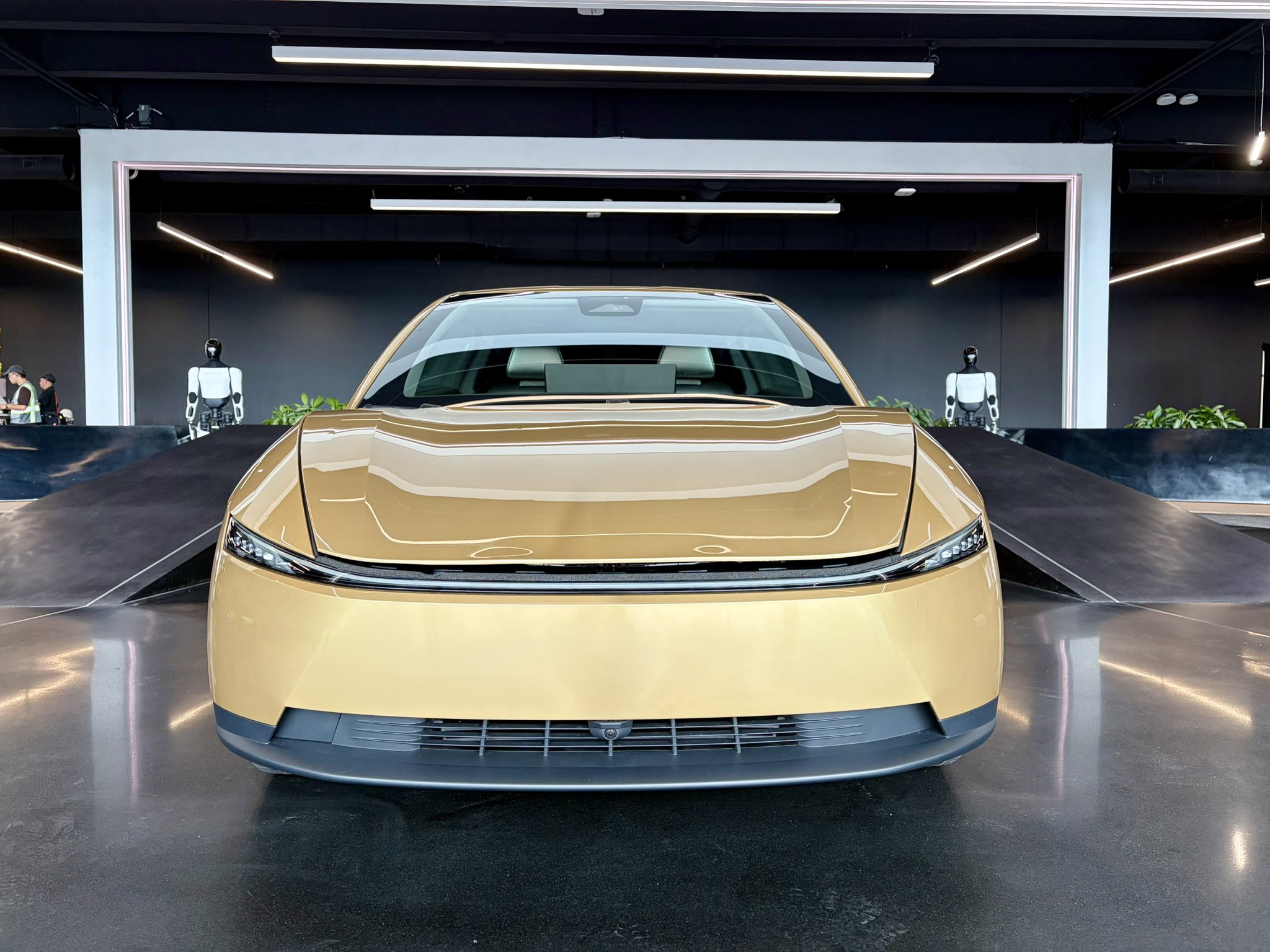
Tesla’s two-seater Robotaxi, the Cybercab, was spotted in February with its bonnet open, providing a glib of its internals and powertrain setup for the first time.
Now, key specs of the model have been revealed through EPA approval documentation in the US, highlighting that Tesla’s lightest model, with the smallest battery, will deliver an impressive 600+ km of range.
In the latest documentation, the Cybercab haa a kerb weight of 1,412 kg and is powered by a 48 kWh battery pack which feeds the front motor.
This is the first front-wheel-drive Tesla in history with all other models either a rear or all-wheel-drive.
This motor has a peek output of 163 kW and uses permanent synchronous motor tech.
The video taken in February in Chicago revealed the location of the heating, ventilation and air conditioning system, washer fluid reservoir, steering motors for autonomous operation, full-self-driving (FSD) computer, low voltage battery, lithium-ion battery and more.
Tesla first showed the Cybercab at the company’s “We, Robot” event in late 2024.
Hundreds of demos with the Cybercab and Model Y Robotaxis were held at the event on closed roads at Warner Bros. studios in California.
Following that, plenty of sightings of the golden model have been made, with most either at Tesla’s test track near Fremont California, on the roads, at Tesla showrooms in the US and even Europe.
The Cybercab is expected to cost around $A45,000 for a self-driving robotaxi with a good amount of space in the rear and a reduction in parts on the inside, compared to its other passenger car products.
Previously, a lead Tesla engineer said the Robotaxi is expected to have 50% fewer parts than Tesla’s Model 3 electric sedan, hence reduction in weight of over 400 kg compared to the sedan.
This cost factor will help the company scale much quicker than the very specialised vehicles used by its autonomous driving competitors like Waymo in the US.
Production of the unique two-seater vehicle started in April 2026.
With fewer parts, a smaller battery and lightness factored into the design, the new model will be one of the most interesting products from the company to date. Now we just have to see when consumers can buy one and at what price.
Please sign up for The Driven’s free daily newsletter and get the latest EV news and analysis delivered straight to your inbox.